
The damage done to Paris outdoor advertising infrastructure in mid-October 2026 was swift and visible: poster columns set on fire, bus shelters smashed, shop windows destroyed. These are streets people call home — where residents commute, shops open each morning, and a bus shelter is part of the daily routine. This article looks at what the incident reveals about static poster formats, and how a digital Morris column changes the recovery equation for media owners and city operators.
Key Takeaways
- The Paris incident put the fragility of static poster columns on public display: glass and paper recover slowly, and none of it can publish an urgent notice.
- Digital columns decouple content from hardware: CMS republishing takes minutes, and repairs are module-level instead of full-column rebuilds.
- The resilience baseline is three-layered: flexible GOB outdoor LED modules, a rigid steel core, and IP65-grade weatherproofing verified by test reports.
- Once digital, a column can serve the city beyond advertising — emergency notices and community information scheduled alongside commercial content.
- Replacement does not have to cost the city its streetscape: the classic Morris silhouette and a modern LED face can coexist.
What happened to Paris street furniture in October 2026?
In mid-October 2026, demonstrations across France left a heavy toll on street furniture in Paris and other cities, including advertising columns, bus shelters and public information panels. Out-of-home operator JCDecaux described the destruction in a company statement as violence with harmful consequences for citizens, public transport users, shopkeepers and businesses, and said its crews had been securing and marking out vandalised furniture since dawn the following Sunday while coordinating repairs and replacements with the municipalities concerned (operator statement, October 2026).
What the statement makes clear is that street furniture is a public utility, not just an advertising surface:
- A vandalised bus shelter degrades the public transport service people rely on every day.
- A kiosk set on fire is described by the operator as an attack on press pluralism and access to information.
- A ransacked public toilet is a public hygiene problem, not a maintenance ticket.
- Destroyed map and information panels cut citizens off from useful, practical messages.
The relevant question for the out-of-home industry is narrower: once a street face is damaged, how fast can the city get it back?
Why does the damage expose the limits of static poster columns?
The incident underlines three structural weaknesses of paper-and-glass formats: fragility, slow restoration and the absence of any emergency function.
- Fragile by construction. A poster column is a glass box around printed paper. An impact that cracks the glazing usually ruins the copy inside, and a burned column is a total loss.
- Restoration means re-printing. Every damaged face needs new posters printed, transported and pasted by hand, so recovery is measured in days or weeks — and each day the site earns nothing.
- No emergency role. A static face cannot publish a storm warning, a diversion notice or a public-safety message, which is precisely the content cities need when normal services are disrupted.
The commercial context pushes in the same direction. WOO (World Out of Home Organization) estimates global DOOH revenue at US$25.5 billion in 2025, rising to a forecast US$28 billion in 2026, with programmatic buying at roughly US$2.1 billion — about 8.4 percent of the total (third-party estimate; commercial research methodologies differ, so treat the figures as directional context). Operators are not migrating to digital only for visual impact — they are buying faster content cycles and shorter downtime. The economics of that shift are examined in the cost gap between static and digital OOH formats.
How can digital street furniture recover faster after damage?
A digital column separates content from hardware, so the message returns in minutes while physical repairs run in parallel.
- Remote content restore. Once the screen and connectivity are back, the CMS re-pushes the playlist from the cloud. There is nothing to print, transport or paste.
- Module-level replacement. Flexible LED modules are replaced by zone. A damaged module in the 216-module face is swapped on site instead of rebuilding the whole column, which shortens the repair scope and the parts list.
- Remote status monitoring. A networked column reports screen status centrally, so an operator can confirm which units are down and prioritise dispatch instead of waiting for complaints.
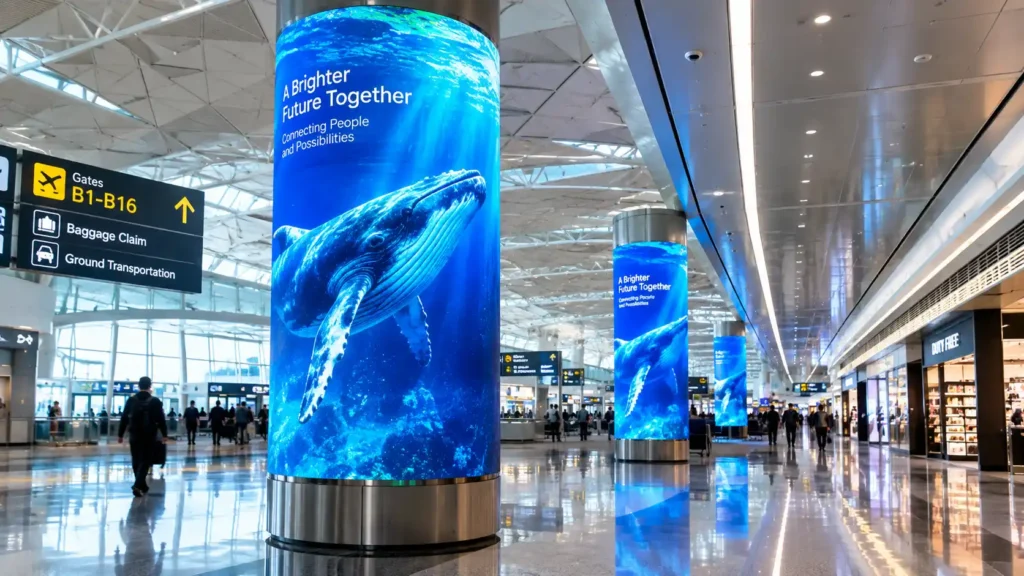
That recovery model is what a digital Morris column LED display is built around: the advertising surface is software-defined, so a destructive weekend does not erase weeks of scheduled campaigns the way a burned poster run does.

Which design features make a digital Morris column more resilient?
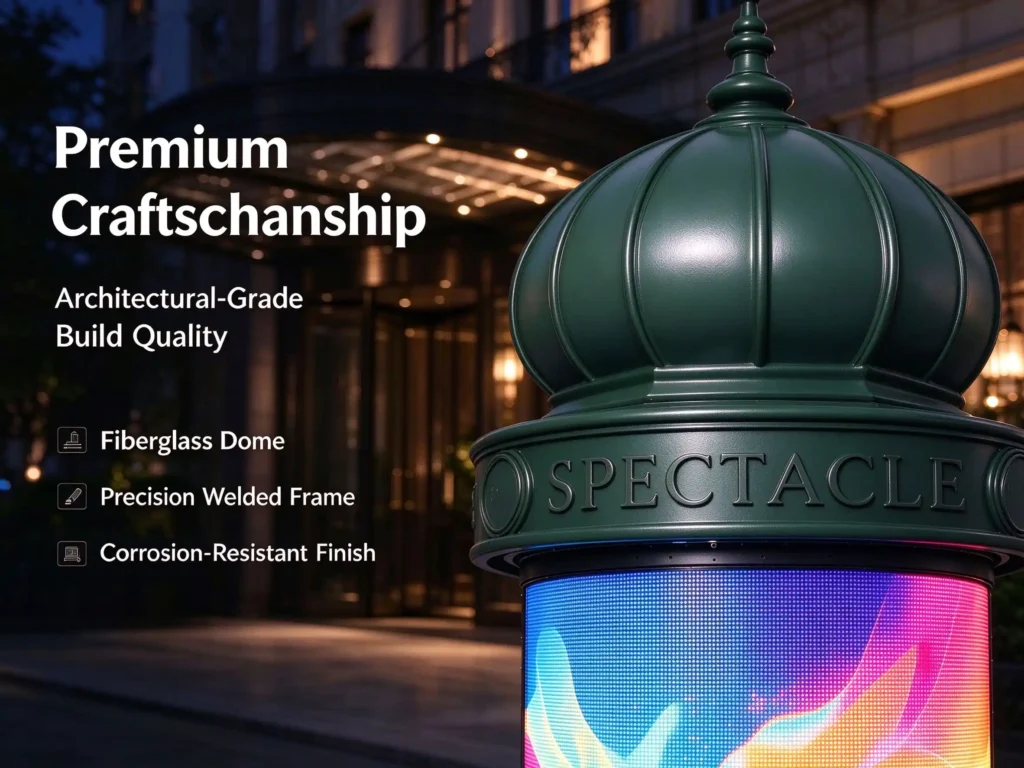
Resilience comes from three layers: flexible GOB LED modules, a rigid steel core, and weatherproof sealing rated IP65.
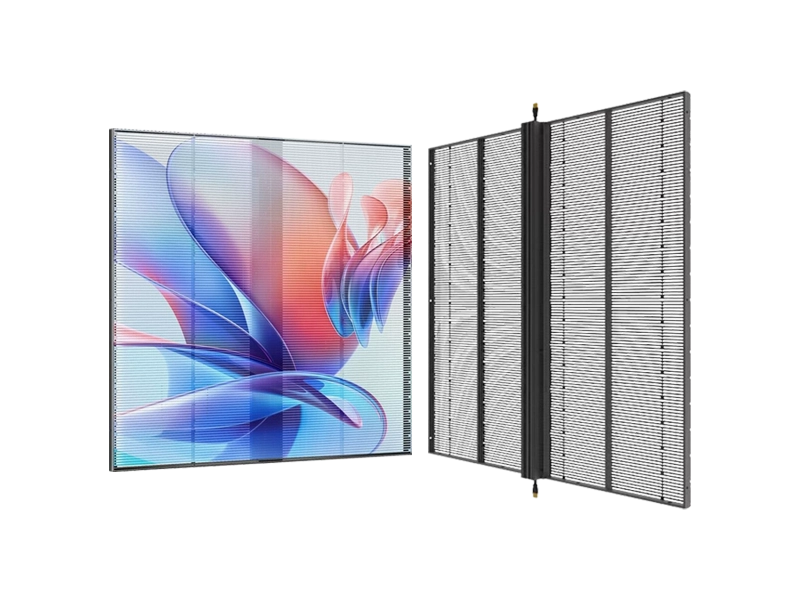
- Flexible GOB modules. The display face is built from 320 × 160 mm outdoor flexible modules — 12 per ring around a 3,840 mm circumference, 18 rings high, 216 modules in total — wrapped around the cylinder. GOB (glue-on-board) encapsulation covers the LED surface with a protective transparent layer, which improves resistance to impact and moisture compared with exposed-mask modules.
- Rigid steel core. The column stands 4,780 mm tall with a 2,880 mm display height and a 1,222 mm outer screen diameter; the load-bearing structure is steel, and the curved LED face follows the classical column profile (operator-reported figures, per engineering drawings — confirm the final specification before ordering).
- Street-readable display spec. The reference design runs P2.5 at 1,536 × 1,152 px, a pitch chosen for the short viewing distances of a pavement, not a motorway.
- IP65-grade sealing. Weatherproofing is rated IP65 on the product imagery. Ask for the laboratory test report rather than accepting a caption figure — the IP code is defined by IEC 60529, and a rated value is only as good as the test behind it.
None of this makes a column indestructible. It makes damage a repairable, parts-level event instead of a full replacement — which is the realistic goal of vandal-resistant outdoor advertising design.
What should media owners and city operators verify before upgrading?
Treat vandalism resistance as a set of checkable acceptance criteria, not a brochure word.
- Structure and installation. Wind-load and foundation calculations, anti-tipping design and lockable access panels, sized for the actual site.
- Encapsulation evidence. GOB or equivalent protection backed by a test report, not a mention in an image caption.
- Ingress protection. The claimed IP rating supported by a laboratory report, with the test standard named.
- CMS resilience. Offline caching so playlists survive connectivity loss, playback that resumes after a power cut, and coordinated publishing across a fleet of columns.
- Compliance boundary. A digital column is not an officially certified replacement for any existing municipal advertising system; approval rests with the local authority and the project permit, and the rules differ by country.
The wider screen-side selection logic — brightness, pitch, refresh, weather protection, build quality and energy use — follows the same six-factor selection framework for outdoor LED displays used for larger DOOH formats.
Can digital columns serve the city beyond advertising?
Yes — once a column is digital, it doubles as city information infrastructure for emergency notices and community messages.
- Emergency publishing. Severe-weather warnings, transport diversions and public-safety notices can be pushed to every column in a network within minutes, which is exactly the capability a city lacks on the weekend its paper furniture burns.
- Public-service content. Municipal announcements, cultural programmes and community information can occupy scheduled slots, giving the city a visible channel in daily life.
- Mixed scheduling. The CMS decides when a face runs commercial copy and when it runs civic content, which is the operational argument for digitising the asset in the first place.
Ask the manufacturer for the documentation pack — specification downloads and technical support — early in the project, because compliance files are part of what a municipality will review.
Where does classic Parisian design meet modern display technology?
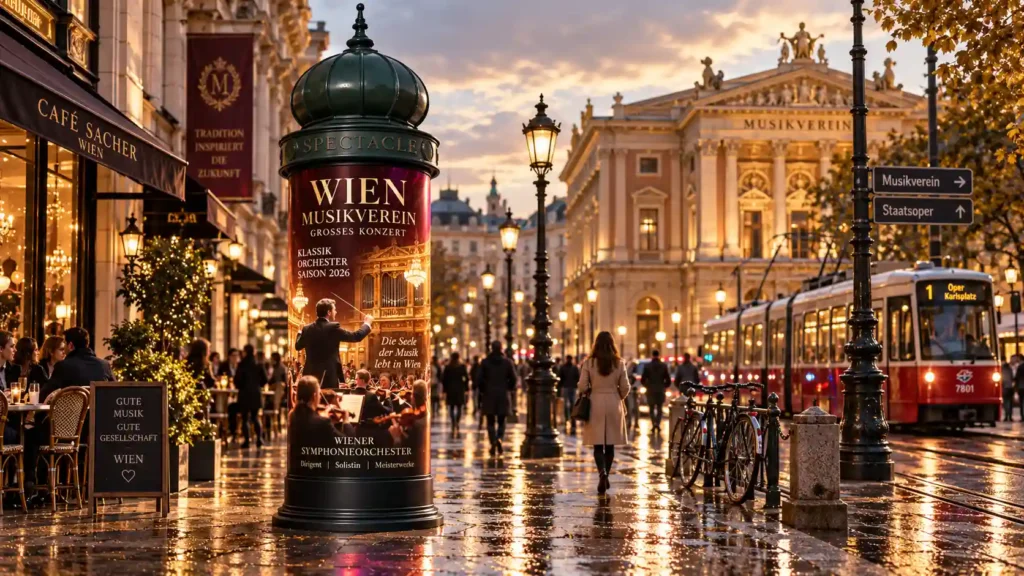
Replacing a damaged column does not have to cost the city its streetscape: the Morris silhouette can stay while the display face goes digital.
- Classical form, digital core. The cylindrical body and its 1,400 mm decorative dome follow the 19th-century Morris column profile, while the advertising surface is a curved, flexible LED face — a column that reads as street heritage but behaves as a networked screen.
- Project-based engineering. Adhaiwell, a Shenzhen manufacturer with more than 15 years of LED display production experience, builds each column as a project-engineered product: module count, structure, control system and compliance documentation are fixed at the quotation stage, which suits municipal work where no two sites are identical.
- What to weigh in a supplier. Engineering customisation for site conditions, willingness to put test reports behind claims, integration with the control system your fleet already runs, and spare-parts availability for module-level repairs. A custom digital advertising column for city projects is judged on those criteria, not on a catalogue price.

Frequently Asked Questions About Resilient Digital Street Furniture
The answers below come from Adhaiwell’s engineering and export team, which builds project-based outdoor LED products — including cylindrical and custom-format displays — for advertising operators and engineering integrators.
Is a digital Morris column more vandal-resistant than a static poster column?
It is more repairable rather than indestructible. Flexible GOB modules on a steel core turn an impact into a module-level repair, while a glass poster column usually needs a full face rebuild. Content also returns remotely in minutes, which no paper format can do.
What does GOB mean for outdoor LED modules?
GOB stands for glue-on-board: a transparent protective layer is encapsulated over the LEDs and the module surface. Compared with an exposed-mask module, it adds impact and moisture resistance — useful on a street-level face within reach of passers-by.
How quickly can content be restored after physical damage?
Once the screen and network connection are restored, the CMS re-pushes the playlist within minutes. Hardware repairs are module-level and run in parallel, so the face returns to service far sooner than a re-printed poster run.
Can a digital advertising column be approved by European city authorities?
Approval depends entirely on the local authority and the project permit; there is no blanket certification. Expect to submit structural calculations, safety documentation and visual-impact drawings, and confirm local rules before committing to a site.
What is the lead time for a project-based column order?
It is quoted per project because module count, structure and control configuration vary by site. Plan for engineering confirmation at the quotation stage, production after drawing sign-off, and factory ageing tests before shipment.
Rebuilding after the Paris damage is not only a repair programme; it is a procurement decision about what kind of street furniture the city wants for the next decade. A column that keeps its classical profile, publishes in minutes and repairs at module level gives media owners and municipalities a format that serves ordinary campaigns and abnormal weekends alike.