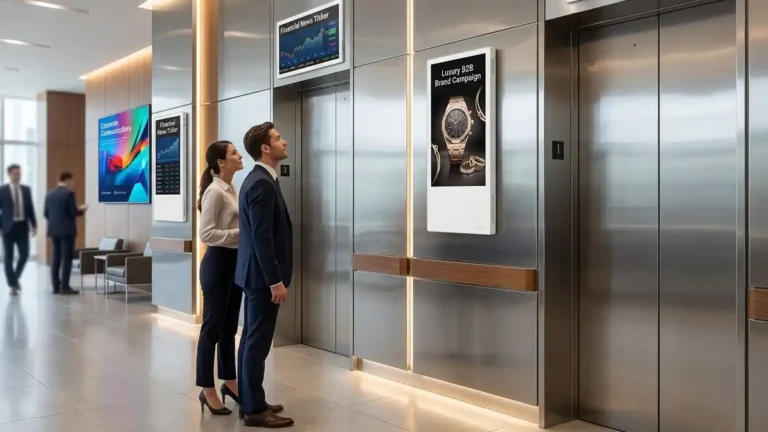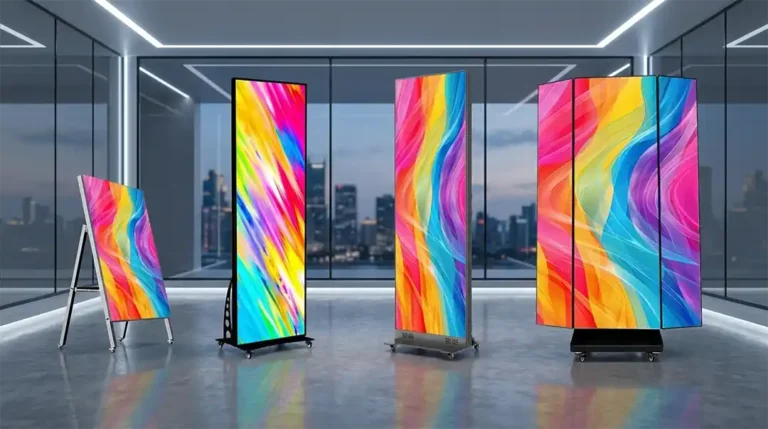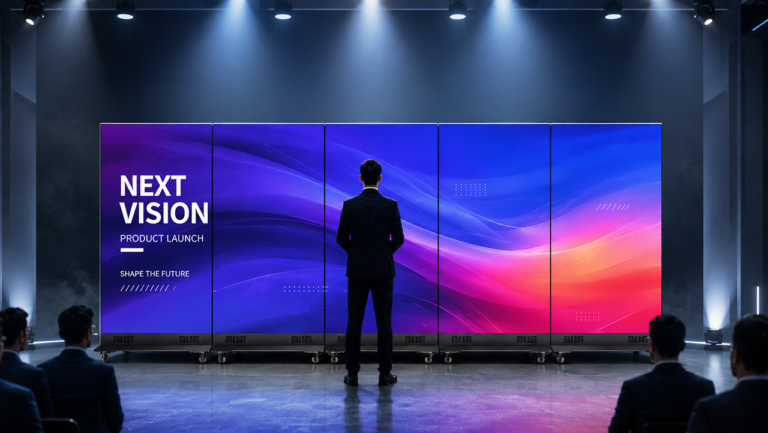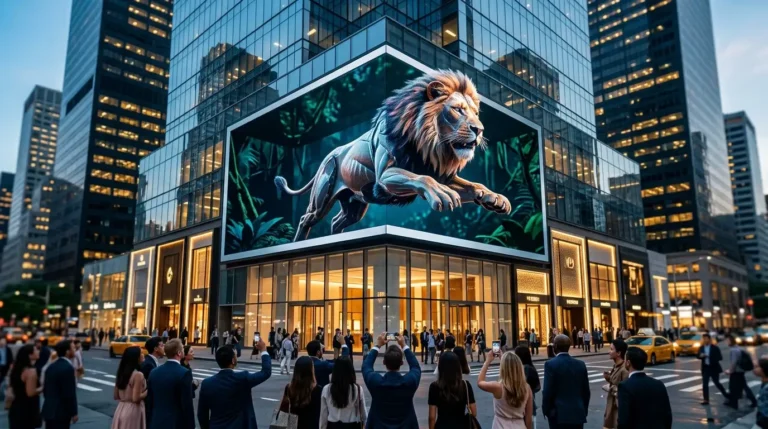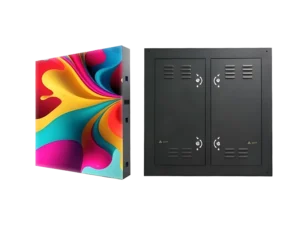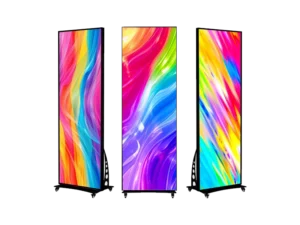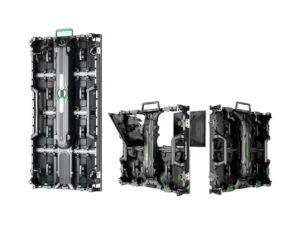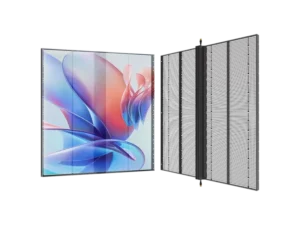
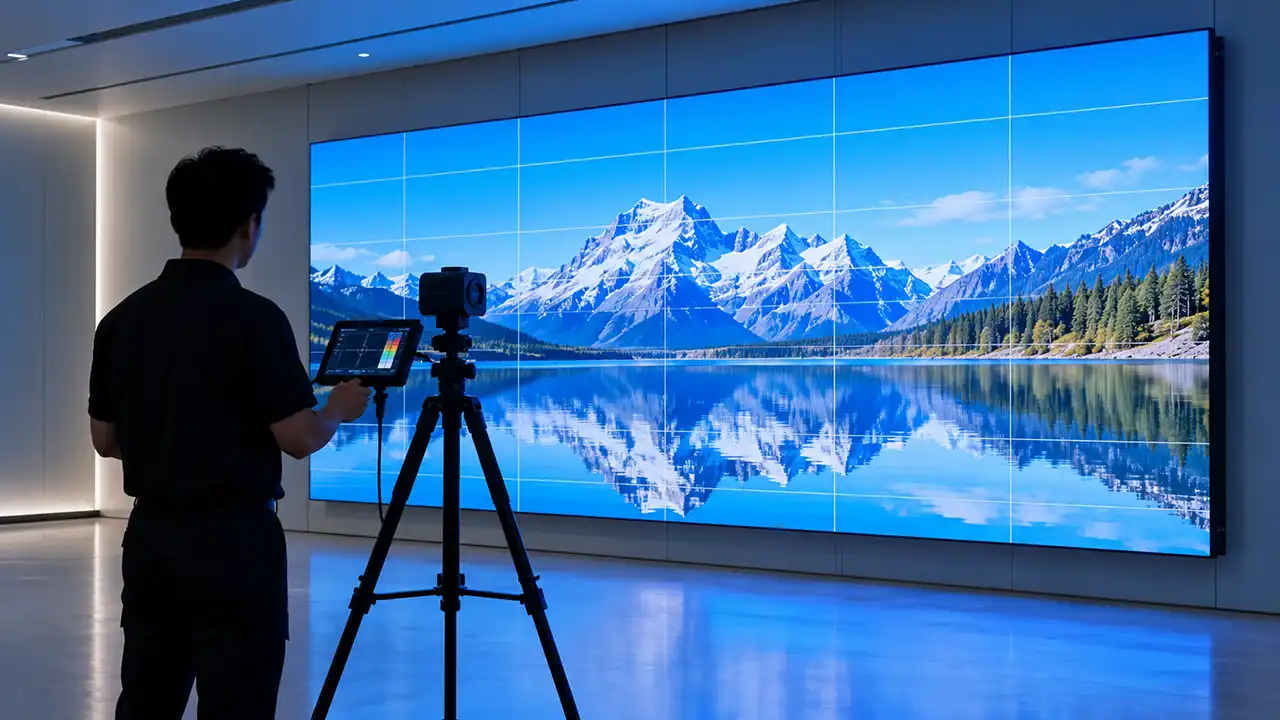
A COB fine-pitch LED display has become the default answer for control rooms, executive boardrooms, Churches & Places of Worship, and corporate showrooms that need a native 4K image at close viewing distance. But many projects still end up with a soft picture, compressed detail, or a wall that cannot actually resolve a 4K signal — not because the content was wrong, but because the wall, its pitch, and its control system were never specified for 4K in the first place. This guide sets out what “True 4K” means for a COB small-pitch LED wall, and which configuration items a buyer should verify before signing.
Key Takeaways
- Native 4K is a physical-pixel question: the wall must total 3840×2160 = 8,294,400 LEDs. The source content has nothing to do with it.
- At P1.25 that means roughly 13 m² of wall; at P1.56, about 20 m². Size the wall first, then confirm the pixel math.
- COB (chip-on-board) packaging is why sub-P1.2 pitches are now reliable at volume: sealed surface, no exposed lamp legs, better heat spread into the PCB.
- The control chain is the most value-eroded part of a 4K quote: a 4K@60Hz-capable sender, correctly loaded receiver cards, and fiber for long runs are not optional.
- By 2030, COB and MIP packaging are projected to reach roughly half of total LED display output value (Hangjia Research, 2026) — buyers who lock specifications now avoid re-purchasing later.
What Is a COB Fine-Pitch LED Display, and Why Is It Replacing SMD?
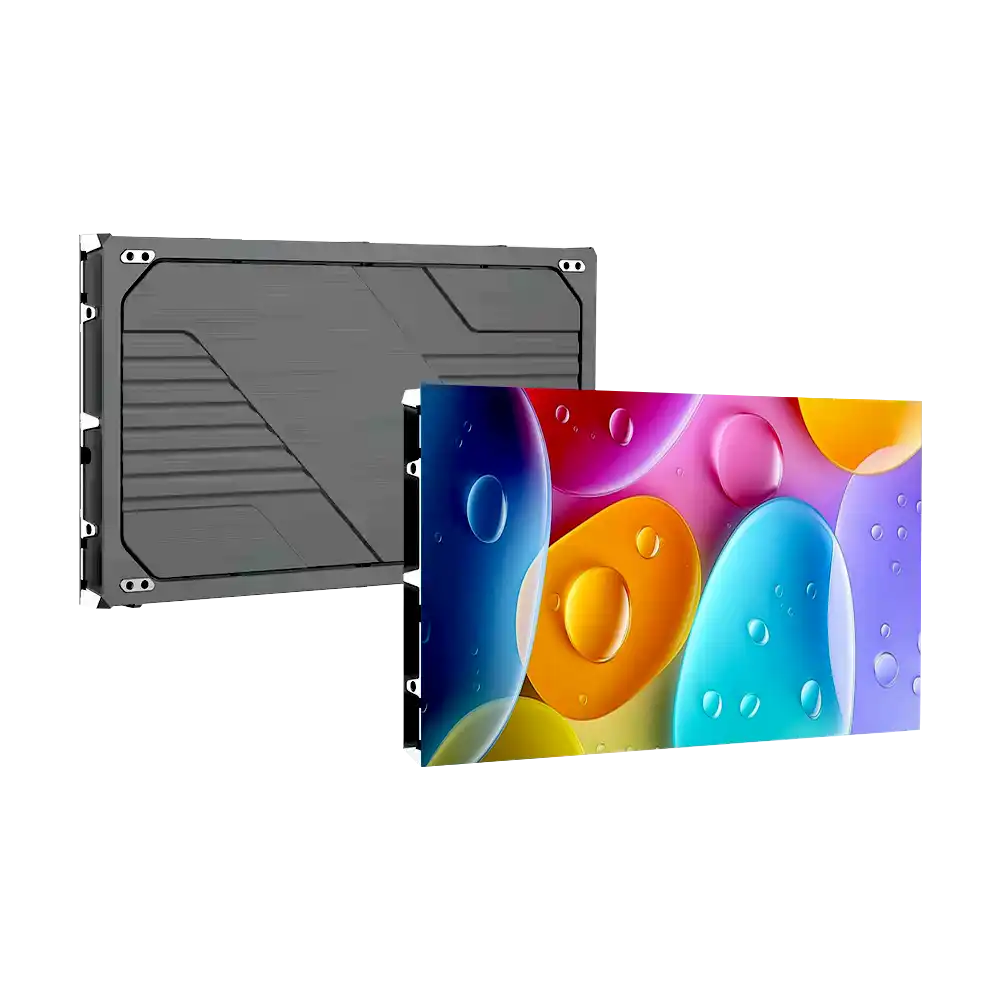
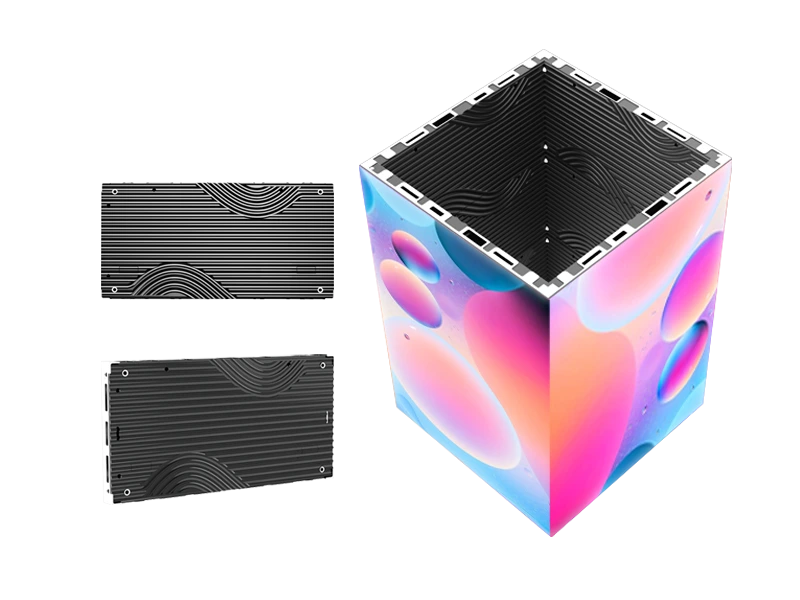
A COB (chip-on-board) fine-pitch LED display mounts bare LED chips directly onto the printed circuit board and seals the whole array under an epoxy encapsulation, instead of soldering three discrete SMD lamp packages per pixel. That structural difference is what allows stable operation at P1.2 and below, where SMD lamp packages become fragile and dead-pixel rates climb.
The market shift is measurable. Hangjia Research’s 2026 COB/MIP Display Survey reported that LED displays built on COB reached roughly RMB 7.7 billion of output value in 2025 — about 16% of the LED display industry — and projects this to rise to about RMB 23 billion, or 36% of industry output, by 2030, with P1.2 remaining the largest shipment pitch today and P1.5+ pitches overtaking it in the longer term. A separate commercial estimate from Market Intelo (2026) puts the global COB LED fine-pitch display market at US$2.1 billion in 2025, growing to US$11.4 billion by 2034 at a 20.5% CAGR, with Asia-Pacific holding 52.4% of 2025 revenue. These figures come from commercial research reports whose methodologies differ; treat them as directional context, not as a forecast for any single project.
Adhaiwell’s COB small-pitch LED display series extends this packaging approach to boardroom- and control-room-scale walls. For readers new to the vocabulary, our LED display terminology guide covering pixel pitch and nits explains the units used below.
Why Does Playing a 4K Video Not Make Your LED Wall 4K?
It doesn’t, because 4K is a count of physical pixels on the wall, not a property of the signal. The industry-standard 4K UHD resolution is 3840×2160 — 8,294,400 pixels. An LED wall is a physically tiled display: if the total LED count across all cabinets is below that figure, the receiving system must downscale the incoming 4K signal to fit, and the audience sees 2K- or 1080p-equivalent detail no matter what the player outputs.
- Source ≠ screen. A 4K media player or 4K laptop feed is an input signal; the wall’s pixel grid determines what actually gets lit.
- Downscaling is automatic and silent. The video processor resamples the image to the wall’s native resolution, so the symptom is not an error message — it is simply a picture that never looks as sharp as the demo.
- The test is arithmetic, not marketing. Ask for the wall’s total pixel count in writing: cabinet count × cabinet resolution. If the product falls short of 8,294,400, it is not a 4K wall.
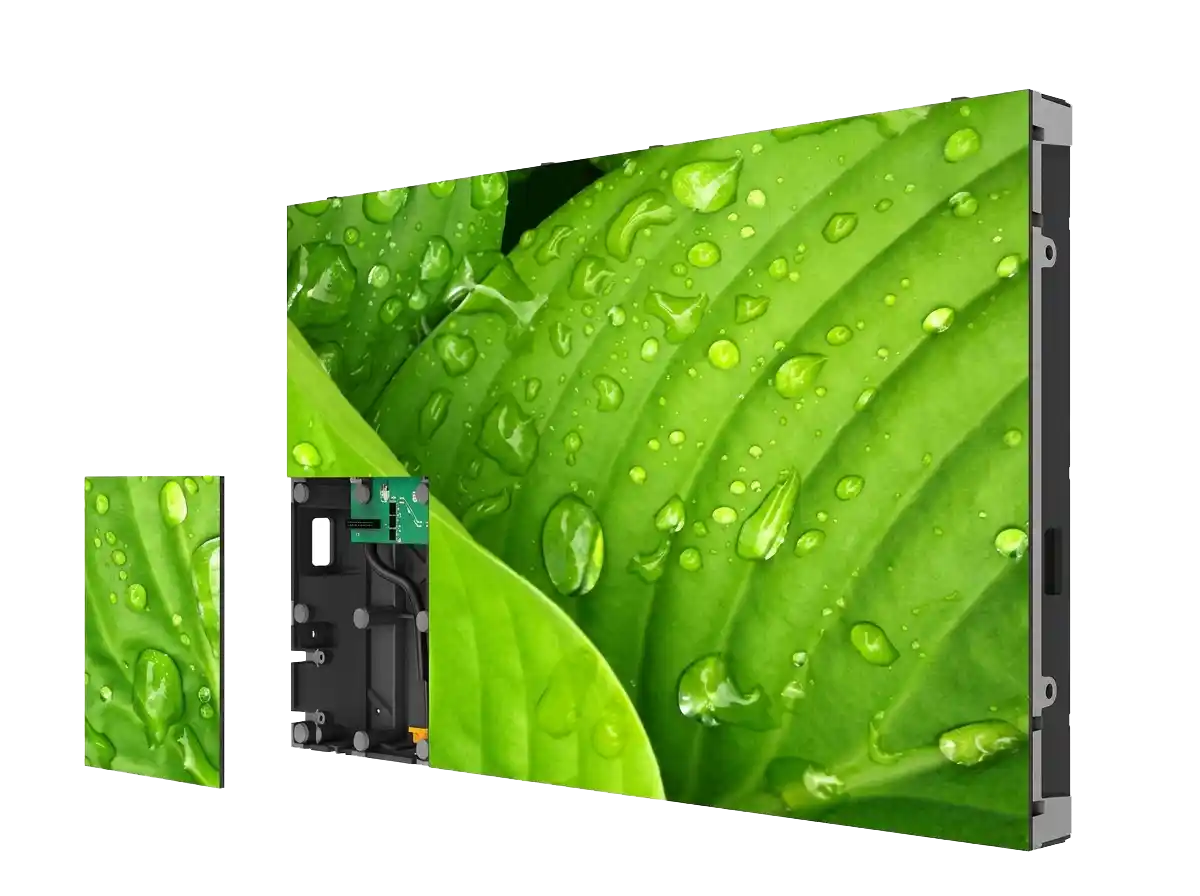
Seamless 4K & 8K COB Video Walls Built for Close-Range Precision
How Much Wall Area Does a Native 4K COB LED Display Need?
Enough area to hold 8,294,400 pixels, which is decided by pixel pitch. The arithmetic is fixed: pixels per metre = 1000 ÷ pitch (mm). The table below shows the minimum 16:9 wall geometry that reaches exactly 3840×2160 — practical builds usually round up to whole cabinet counts, so treat these as floors, not finished designs.
| Pixel pitch | Pixels per metre | Minimum 16:9 4K wall | Minimum area | Comfortable viewing from |
|---|---|---|---|---|
| P0.9 | 1,111 px/m | 3.46 × 1.94 m | ≈ 6.7 m² | ~0.9 m |
| P1.2 | 833 px/m | 4.61 × 2.59 m | ≈ 11.9 m² | ~1.2 m |
| P1.25 | 800 px/m | 4.80 × 2.70 m | ≈ 13.0 m² | ~1.3 m |
| P1.56 | 641 px/m | 5.99 × 3.37 m | ≈ 20.2 m² | ~1.6 m |
Two consequences follow. First, in a meeting room or showroom where wall width is capped, a finer pitch is the only way to keep the pixel count — this is exactly where COB earns its premium over SMD. Second, in larger halls, a coarser pitch with more area can still reach 4K at a lower cost per pixel. Adhaiwell’s fine pitch indoor LED video wall spans P1.25 to P3.91 in 250×250 mm modules (640,000 px/m² at P1.25), which covers both paths; our site’s selection guide treats pixel pitch as roughly equal to the minimum viewing distance in metres.
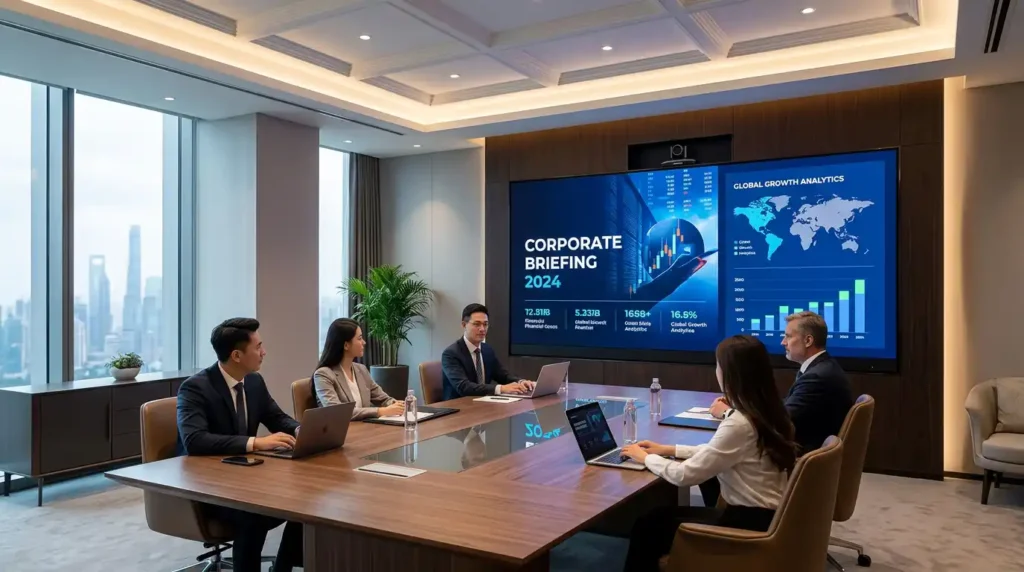
Which Control System and Signal Chain Can Carry a 4K COB Wall?
One that is specified for 4K end to end — this is the part of a quote most often quietly degraded, because the wall looks identical with a cheap control chain until you feed it real 4K content.
- Sending hardware must accept 4K@60Hz input. Insist on HDMI 2.0 or DisplayPort-class inputs on the sender. A low-bandwidth sender compresses, stutters, or drops frames under a 4K load.
- Receiver cards have a hard pixel-load ceiling. Each card drives a fixed number of pixels; a 4K wall at 3840 Hz refresh generally needs multiple receiver cards and, on larger walls, a multi-sender synchronized configuration. Ask the supplier to show the load calculation, not just the card count.
- Long distances call for fiber. For runs beyond standard copper reach — between floors, across a campus, control room to wall — fiber transmission avoids the signal degradation that uncompressed 4K suffers over long network cable.
- Video processing should decode, scale, and window natively at 4K. Multi-window layouts (a dashboard beside a video feed) need a processor that handles 4K layers without silently downscaling.
Our NovaStar LED controller guide (TB, TU, VX Pro series) breaks down which sending platforms handle which wall scales, and pairs with Adhaiwell’s standard NovaStar-based control offering on fine-pitch models.
How Does COB Packaging Change Reliability, Thermal Load, and Protection?
COB changes failure physics: the LED chips are sealed under one epoxy surface, so there are no exposed lamp legs to bend, no discrete lamps to shear off during cleaning or transport, and heat spreads directly into the PCB instead of through a plastic lamp package.
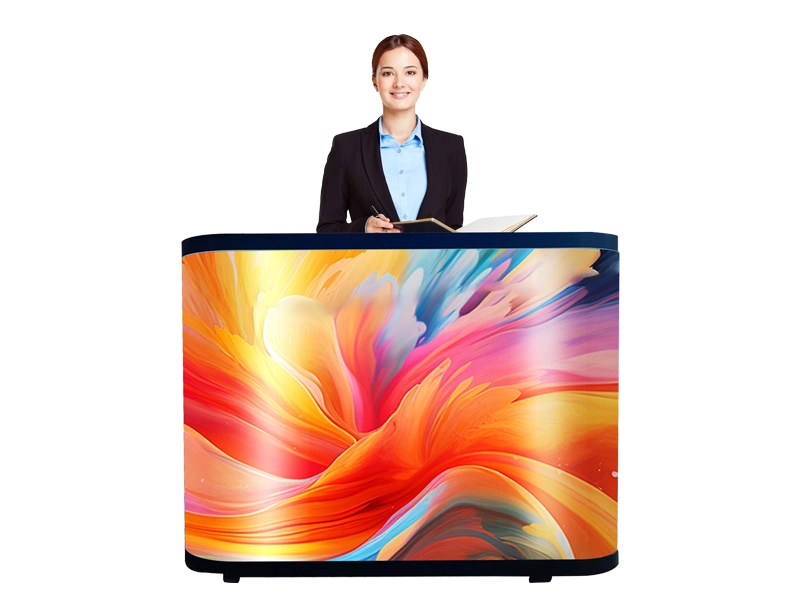
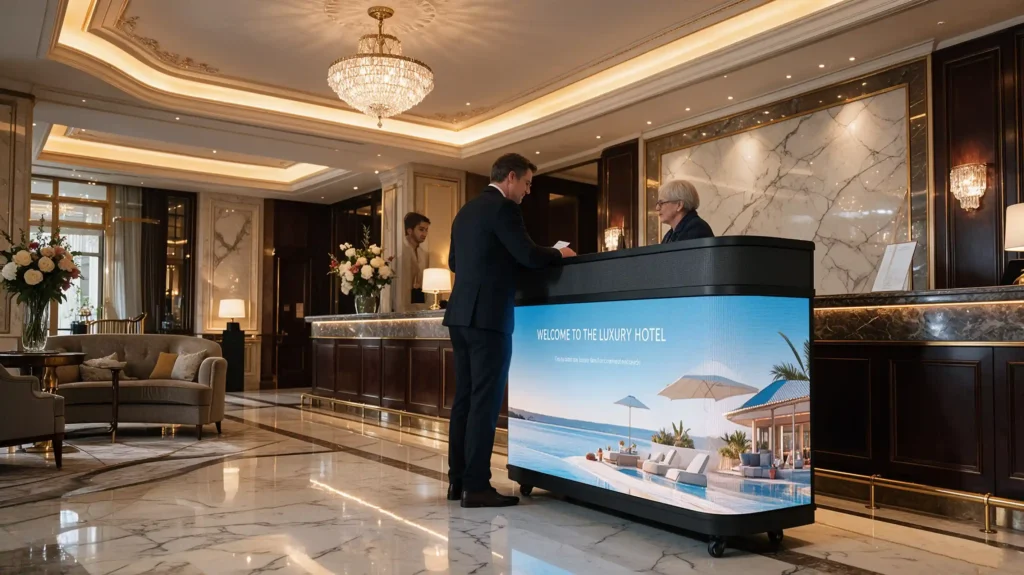
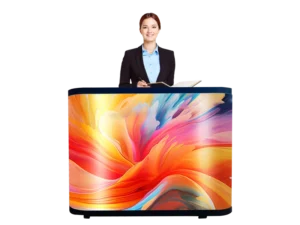
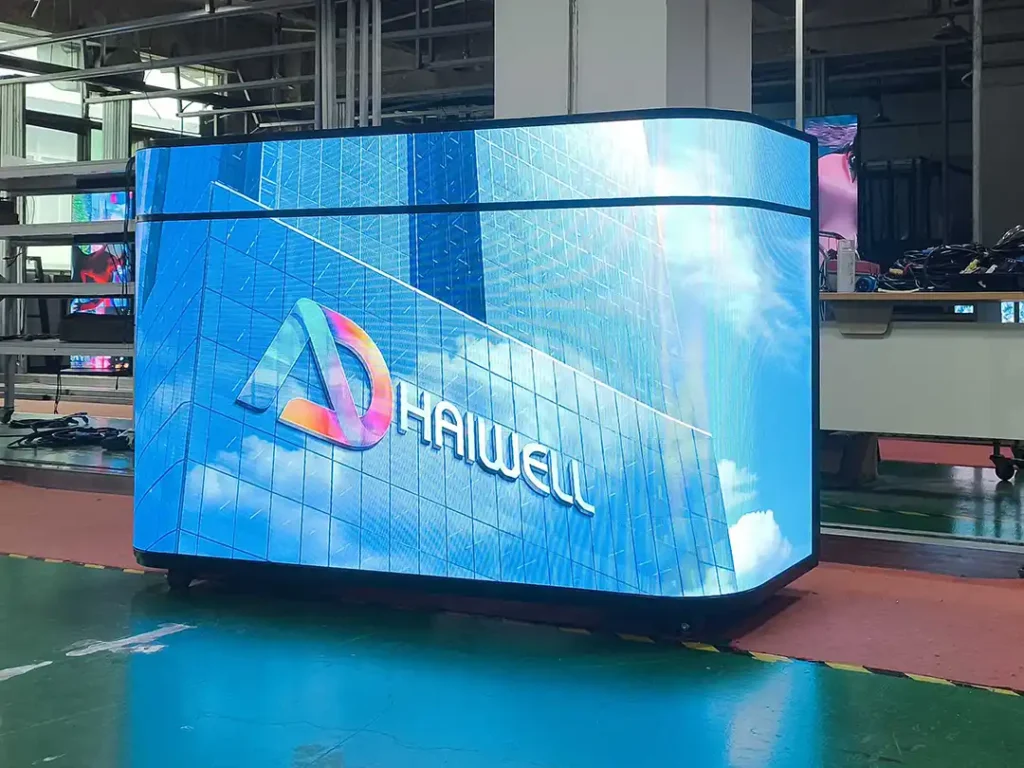
- Protection is structural, not added on. The encapsulated surface resists dust, moisture, and incidental contact — relevant for lobbies and public-facing showrooms. GOB (glue-on-board), by contrast, is a protective coating applied over conventional SMD modules; Adhaiwell offers optional GOB1010/GOB1515 on its P1.25–P1.95 fine-pitch models and ships a curved GOB reception counter LED display for high-touch front-desk use. COB builds the same robustness into the package itself, which is why it dominates at P1.2 and below.
- Thermal headroom matters more at 4K density. A native-4K wall packs 8.3 million LEDs and their drive circuitry into a few square metres, so power and heat planning is not optional. As a reference point, Adhaiwell’s P1.25–P3.91 SMD fine-pitch series is rated at 100–200 W/m² average and 400 W/m² maximum; Market Intelo (2026) estimates COB configurations deliver 30–40% lower power consumption per lumen than equivalent SMD — a supplier-side estimate, but directionally consistent with COB’s better heat path.
- Verify factory screening. Ask for the aging-test protocol; Adhaiwell runs a 72-hour aging test on every unit (operator-reported). For 4K COB walls, also confirm color-by-color calibration across cabinets so the sealed surface reads as one uniform image.
What Should Buyers Verify Before Ordering a COB 4K LED Wall?
The written specification, not the demo video. Four walls can all be called “4K LED” in a brochure and perform very differently in a boardroom. Before placing an order, put these items into the contract:
- Total pixel count in writing — cabinet map with per-cabinet resolution, confirming ≥ 3840×2160 at the content area, not including any bezel or structure.
- Pitch matched to viewing distance — P0.9–P1.25 for desks-to-3-metre viewing in meeting rooms; P1.5+ where the audience sits further back.
- Control-chain specification — sender input standard (HDMI 2.0/DP), receiver card load calculation, refresh rate (≥3840 Hz is Adhaiwell’s fine-pitch baseline), and fiber where runs are long.
- Encapsulation choice — COB where sub-P1.2 reliability is needed; GOB-coated SMD where a P1.25–P1.95 SMD budget is acceptable with added surface protection.
- Serviceability — front-service magnetic modules, cabinet weight and depth (Adhaiwell’s die-cast fine-pitch cabinets run 33 mm deep, 3.0–9.8 kg), spare-module policy, and lead time (15–25 days standard on fine-pitch series).
- Supplier qualification — factory-direct OEM/ODM capability with in-house SMT and aging-test records, export documentation (CE/FCC/RoHS as applicable to your market), and a spare-parts and warranty commitment in the contract.
Compare these items against the published specification of Adhaiwell’s T3-PRO fine-pitch indoor LED video wall — the P1.25–P3.91 die-cast series that shares its control architecture with our COB builds — and browse the COB fine-pitch LED display product page for the encapsulated series. A supplier who can produce every figure above on request is a supplier whose “4K” claim will survive commissioning.
Frequently Asked Questions About COB Fine-Pitch 4K LED Displays
Adhaiwell has manufactured LED and LCD display systems in Shenzhen for more than 15 years, supplying fine-pitch and COB-class walls for control rooms, boardrooms, and showrooms across export markets. These are the questions procurement teams ask most often.
Is COB better than SMD for a 4K LED wall?
For walls below roughly P1.5, yes — COB’s sealed package and better heat path are what make sub-P1.2 pitches dependable. At P1.5 and above, a well-built SMD (or GOB-coated SMD) wall remains a sound, lower-cost choice. Match the packaging to the pitch and the viewing distance rather than to a label.
What pixel pitch do I need for 4K in a meeting room?
Work backwards from wall space: at P1.25 you need about 4.8 × 2.7 m of wall for native 4K; at P0.9, about 3.5 × 1.9 m. If your wall is smaller than that at a given pitch, the wall cannot hold 8.29 million pixels and will not be 4K, whatever the quote says.
Can I upgrade my existing LED wall to 4K?
Only if its physical pixel count already reaches 3840×2160 — in which case it is a control-chain upgrade (4K sender, receiver loading, processing), not a screen upgrade. If the pixel count is short, no sender or processor can add pixels; the wall itself must be rebuilt at a finer pitch or larger size.
Does a COB LED wall still need a GOB coating?
No. GOB is a protective epoxy layer applied over SMD modules; COB encapsulates the chips natively during manufacture, giving the sealed surface without an added coating step. Offering GOB on a COB product is generally redundant — ask what problem the vendor claims it solves.
How is a 4K COB LED wall priced?
Pricing follows pixel count and pitch: a finer pitch multiplies LED and driver cost per square metre, so a P0.9 4K wall costs materially more per m² than a P1.5 build of equal area. Share your wall dimensions and viewing distance with the factory for a configuration-specific quote rather than a per-m² guess — published list ranges on any website should be confirmed against current specifications.
A true-4K COB wall is a system — pixel count, pitch, control bandwidth, and packaging specified together. Buyers who pin these four items in the contract get the picture they were shown; buyers who don’t get a downscaled approximation of it.