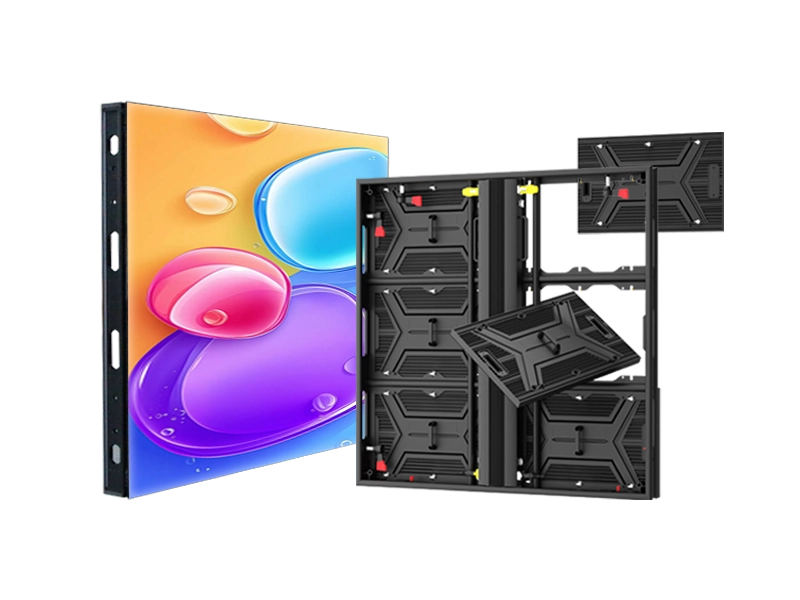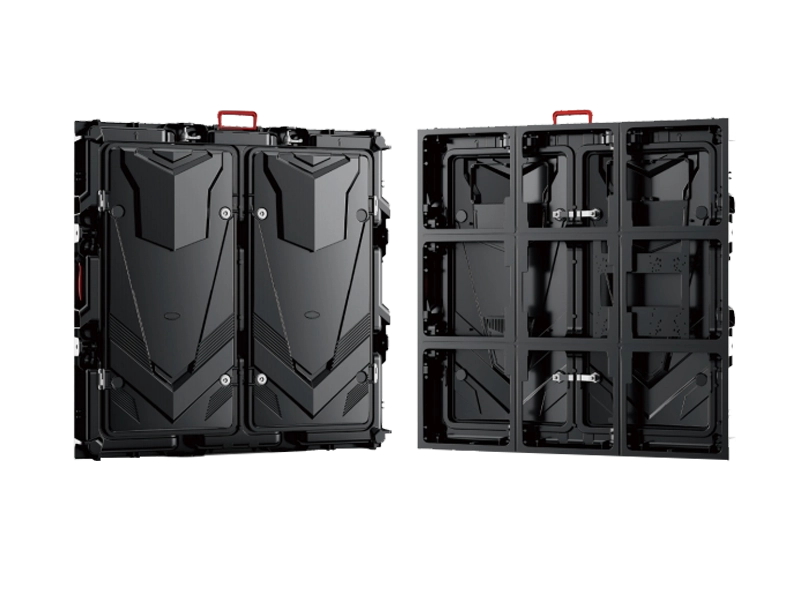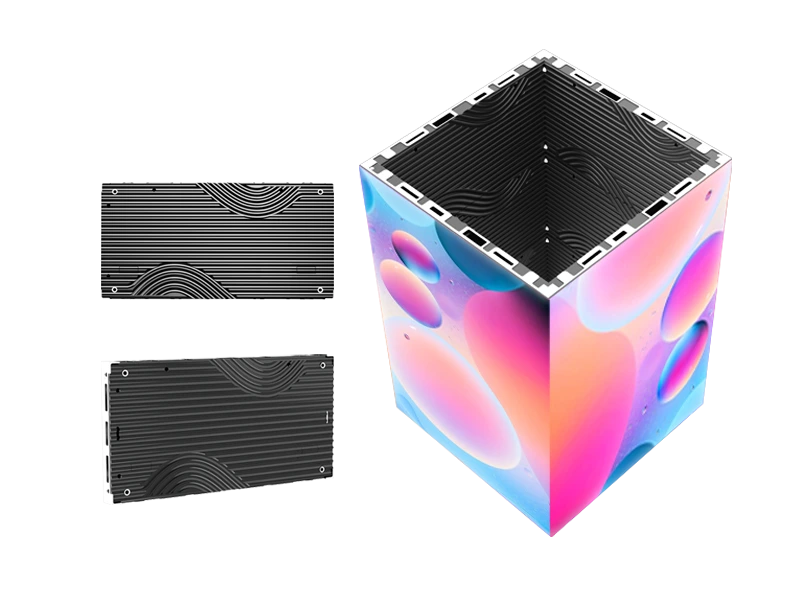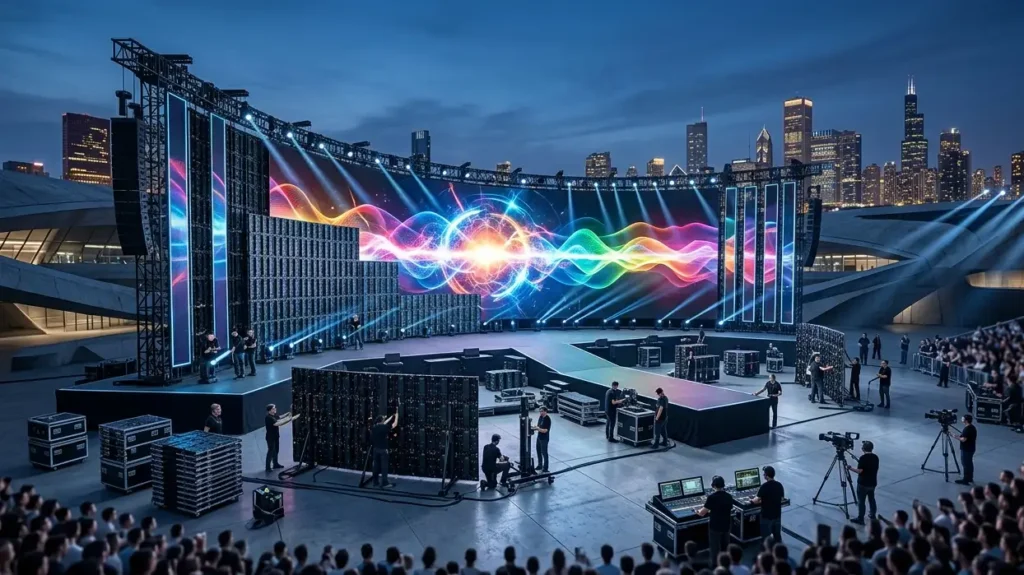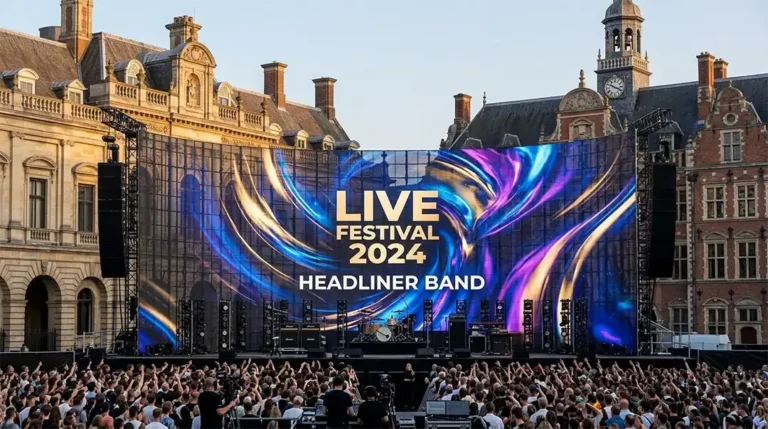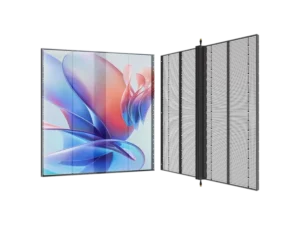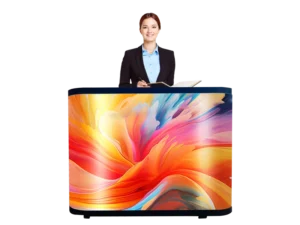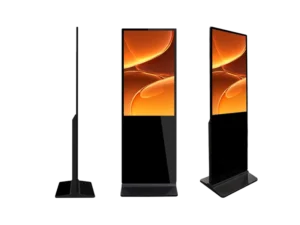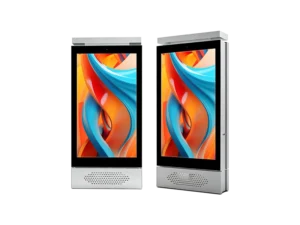
Choosing the right LED display requires understanding key technical specs. Pixel pitch (mm) determines resolution, viewing distance, and LED density; Nits measure peak brightness but effective visibility also depends on contrast and anti-glare; Refresh Rate (Hz) affects camera compatibility, not just smoothness.
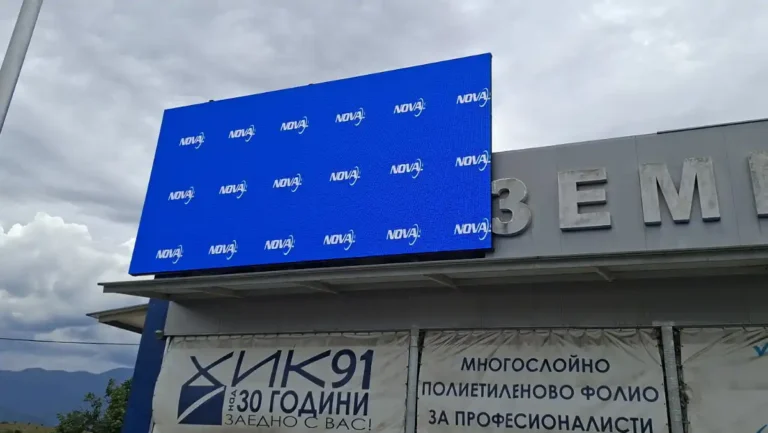
For outdoor use, demand ≥5500 nits + IP65 + copper pillar encapsulation.
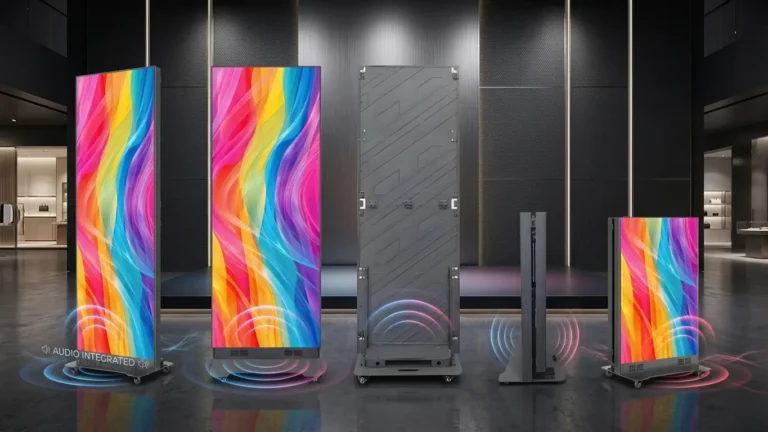
For indoor close viewing, pixel pitch < P2.5 + 3840Hz refresh + 16-bit grayscale.
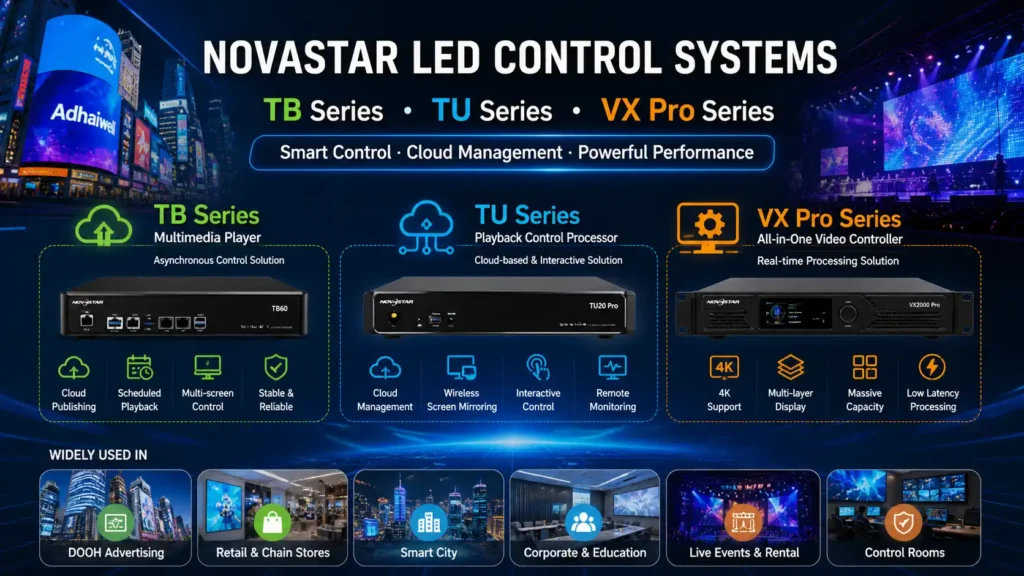
Adhaiwell Display integrates Nationstar LEDs, Mean Well power, and NovaStar control to exceed these benchmarks.
Core Technical Summary
| Parameter | Unit | Typical Range | Critical for | Adhaiwell Standard |
|---|---|---|---|---|
| Pixel Pitch | mm | P1.2 – P16 | Viewing distance, resolution, cost | P1.2 (fine pitch) to P10 (billboard) |
| Brightness | nits (cd/m²) | 600 – 7500 | Outdoor/indoor use, power consumption | 800 (indoor) / 6500 (outdoor) |
| Refresh Rate | Hz | 1920 – 7680 | Flicker-free video & camera sync | 3840Hz (default), 7680Hz (high-end) |
| Gray Scale | bit | 14 – 22 | Color depth, smooth gradients | 16-bit |
| IP Rating | IPXX | IP20 – IP66 | Dust/water protection | IP54 (indoor) / IP65 (outdoor) |
| LED Encapsulation | – | SMD, GOB, COB | Durability & viewing angle | SMD (standard) / COB (fine pitch) |
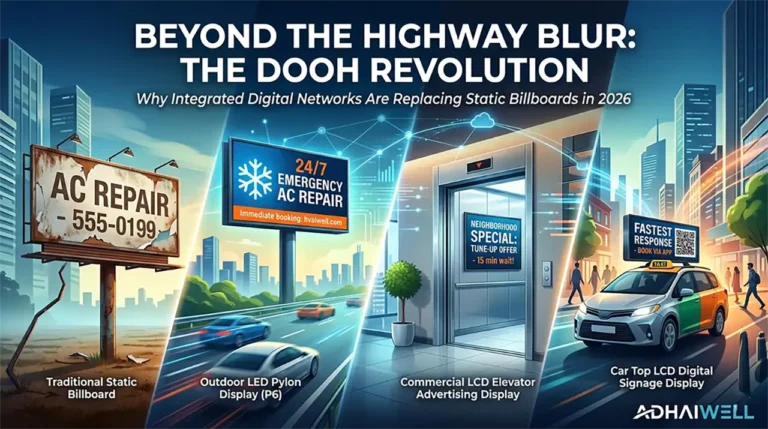
In the rapidly evolving world of digital out-of-home (DOOH) advertising, technical jargon can be overwhelming. As a global leader in display manufacturing, Adhaiwell Display believes that a well-informed client is a successful partner. This guide deconstructs the “Big Three” metrics that define 90% of your screen’s performance.
1. Pixel Pitch: The Foundation of Resolution
Definition: Pixel Pitch refers to the center-to-center distance between two adjacent pixels (LED clusters), typically measured in millimeters (mm).
Adhaiwell’s Professional Insight: The “P” in P3 or P10 stands for Pitch. A smaller pixel pitch means higher pixel density and higher resolution. For example, an Adhaiwell P2.5 Indoor Screen offers a much sharper image for retail environments than a P10 screen designed for highway billboards.
Hidden Engineering Truths :
- Power & Heat Relationship – Smaller pitch means more LEDs per square meter. A P1.8 cabinet at the same brightness draws ~30% more power than a P3.9. Adhaiwell’s power efficiency design uses common-cathode technology to reduce heat.
- Optimal Viewing Distance Formula – Not a single value:
- Minimum distance: Pitch (mm) × 0.8 (meters) – for 4K content
- Recommended distance: Pitch (mm) × 1.5 to 2.5
- Max distance: Pitch (mm) × 10 (legibility still maintained)
- Cost vs. ROI – Halving pixel pitch roughly quadruples module cost. For a 20 m² billboard seen from 15 m away, upgrading from P6 to P4 gives marginal perceived improvement but doubles budget. Adhaiwell provides free viewing‑distance simulation.
Adhaiwell’s Application Matrix
- Retail indoor (2–4 m viewing): P2.5 or P1.9
- Conference room (1–3 m): P1.2 – P1.5 (fine-pitch COB for anti-blue light)
- Stadium perimeter (10–30 m): P4 – P6
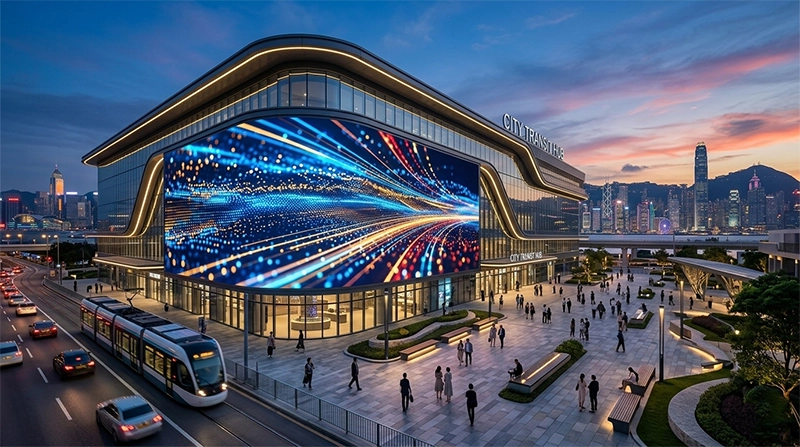
- Highway billboard (30–100 m): P8 – P10
2. Nits (Brightness): Fighting the Sun
Definition: A “Nit” is a unit of measurement for luminance, equivalent to one candela per square meter ($1 cd/m^2$). It represents the total light output of the display.
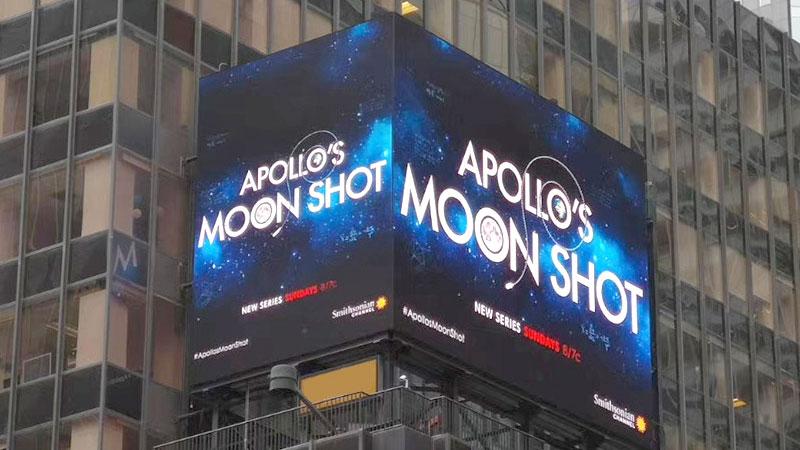
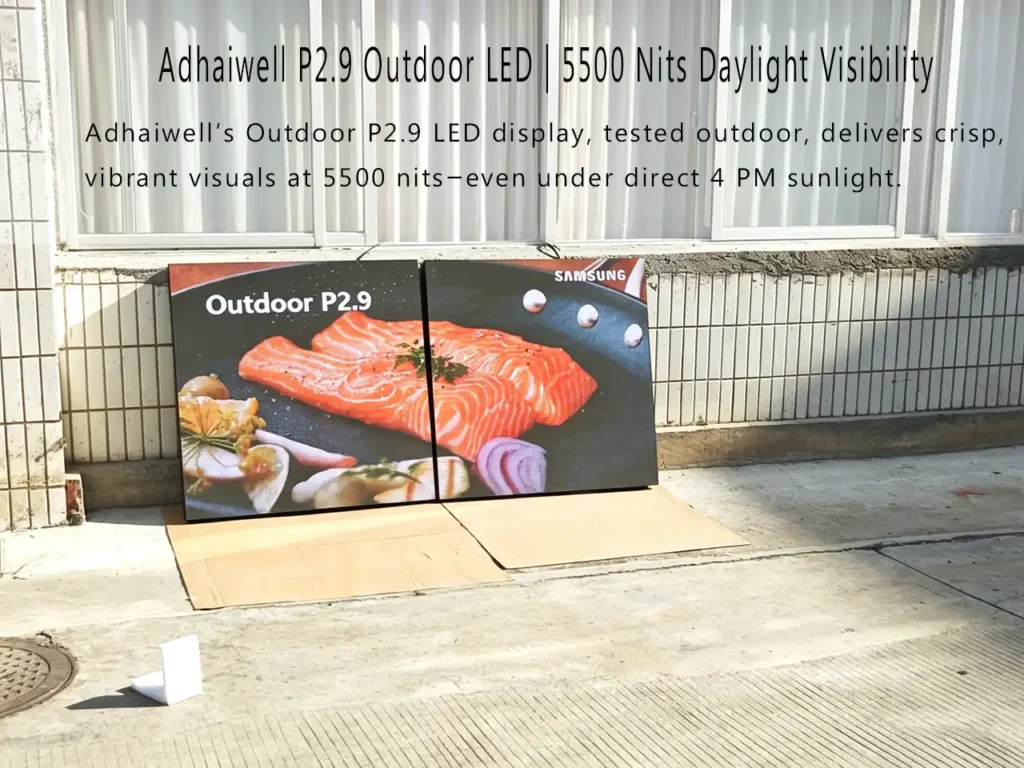
Adhaiwell’s Professional Insight: Brightness is the most critical factor for outdoor visibility. Standard indoor screens operate at 800–1,200 Nits, while Adhaiwell Outdoor Displays are engineered to reach 5,500–7,500 Nits. This ensures that even under the harsh midday sun in regions like the Middle East or Africa, your content remains vivid and readable.
Common Mistake: High nits guarantee readability. False. Glare, reflection, and ambient contrast ratio matter equally.
Adhaiwell’s 5‑Factor Visibility Formula
Effective Visibility = F( Nits, Reflectivity, Viewing Angle, Ambient Light, Content Contrast )
- Outdoor requirement (direct sunlight): 5500–7500 nits. Adhaiwell uses Nationstar copper-wire high-brightness SMD to improve contrast by 40%.
- Indoor overkill: 2000+ nits in a dark conference room causes eye strain. Adhaiwell indoor series includes auto‑brightness sensors (from 300 to 1200 nits).
- Power trade-off: Increasing nits from 5000 to 7000 adds ~30% power. For LED walls running 16h/day, the lifetime electricity cost becomes significant. Ask for power consumption data per sqm.
Real‑world test: A 5500-6500‑nit Adhaiwell outdoor panel remains readable under 100,000 lux sunlight, verified by third‑party optical measurement.
3. Refresh Rate: Fluidity and Camera Compatibility
Definition: The Refresh Rate is the number of times per second that the LED controller draws the data on the screen, measured in Hertz (Hz).
Adhaiwell’s Professional Insight: Do not confuse this with Frame Rate (FPS). A low refresh rate (e.g., 1920Hz) might look fine to the naked eye but will show ugly black scan lines when photographed with a smartphone. Adhaiwell utilizes NovaStar high-end control systems to achieve a 3840Hz Ultra-High Refresh Rate, ensuring your brand looks perfect in every social media post or live broadcast.
Why High Refresh Rate >3840Hz Is Mandatory:
| Refresh Rate | Visible to naked eye | On smartphone camera (1/1000s shutter) | On professional camera (1/2000s) |
|---|---|---|---|
| 1920 Hz | Acceptable | Black scan lines | Severe flickering |
| 3840 Hz | Smooth | No visible lines | Very occasional faint line |
| 7680 Hz | Perfect | Perfect | Perfect |
Adhaiwell Implementation:
We pair NovaStar A5s Plus receiving cards with a High-Refresh PWM driver IC (MBI5153, ICND1065L, etc., equivalent). Even at low brightness (20% screen intensity), refresh rate remains constant – a weakness of cheaper displays where dimming reduces refresh to 960 Hz.
Common Misconception: “60 Hz video input doesn’t need >60 Hz refresh.” Wrong. LED displays are sample‑and‑hold devices. Low refresh produces a visible stroboscopic effect on motion. For sports and live events, Adhaiwell recommends a minimum of 3840 Hz.
Do You Really Need 7680Hz? Balancing Performance and Economy:
While 7680Hz is available, it is primarily engineered for highly specialized applications like film/TV studio backgrounds and XR virtual production, where professional cameras require zero flickering. For standard advertising playback, especially outdoor LED displays, 3840Hz is already more than sufficient.
From an economic and technical perspective, blindly pursuing a higher refresh rate is unnecessary. Pushing the screen to 7680Hz compresses the time resources for each frame, which inevitably sacrifices the screen’s brightness. For outdoor advertising where high brightness is critical for sunlight visibility, maintaining a 3840Hz refresh rate ensures you get the best balance of flawless camera compatibility, smooth visual fluidity, and maximum brightness without wasting budget on redundant specifications.
4. Hidden Parameters
Below are nontrivial metrics that separate professional from consumer content.
| Hidden Spec | Why It Matters | Adhaiwell Standard |
|---|---|---|
| Gray scale (bits) | Gradients in sky or skin tones – 14‑bit shows banding, 16‑bit smooth. | 16‑bit (up to 22‑bit optional) |
| LED wavelength binning | Consistency of color across cabinets. ΔE <2 required. | 3‑step binning |
| Driver IC refresh method | PWM vs. constant current – PWM gives higher refresh. | PWM with 16‑bit |
| Panel flatness (mm) | Gaps cause visible seams. Tolerance ≤0.2 mm. | ±0.1 mm for fine pitch |
| Hot‑swap redundancy | If power or signal fails, does screen go dark? | Dual power + data backup |
5. Selection Framework – Adhaiwell’s 5‑Step Decision Flow
- Define viewing environment
- Indoor / Outdoor / Semi‑outdoor (covered but sunlight)
- Average viewing distance → select pitch
- Determine required brightness
- Outdoor sunny: ≥5500 nits
- Outdoor shaded: 3500–4500 nits
- Indoor retail: 800–1500 nits
- Indoor studio/control room: 600–800 nits
- Check camera / broadcast requirement
- If screen will be photographed or live‑streamed → mandatory 3840+ Hz
- Calculate total cost of ownership
- Initial module cost + power consumption (3‑5 years) + maintenance (module replacement ease)
Why Adhaiwell Display?
- Component traceability: Nationstar LEDs, Mean Well power, NovaStar control – no unbranded generic parts.
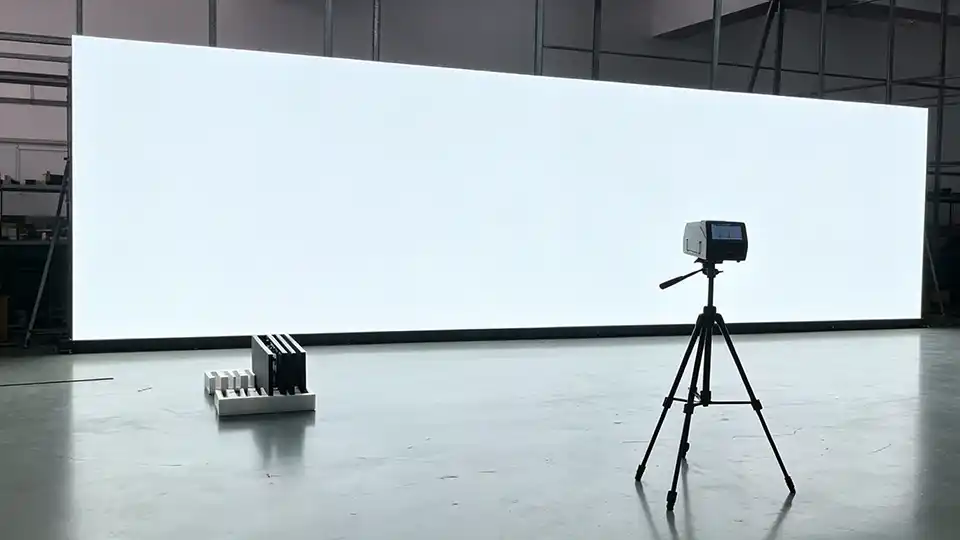
- Factory test: each cabinet burned‑in for 72 hours, calibrated with SRC‑200.
- Global deployment: operating in 50+ countries, with CE, FCC, RoHS.
- Support: free viewing distance simulation, structural drawing, and D‐VIX evaluation (daylight visibility index).
Precision Calibration: Adhaiwell’s Final Step to LED Excellence
Before every shipment, Adhaiwell Display executes a rigorous 72-hour burn-in period followed by professional spectral calibration using the SRC-200s Spectral Color Luminance Meter. This precise tuning process synchronizes brightness, color temperature, and CIE coordinates to ensure 100% visual uniformity across every single LED panel.
Advanced spectral tuning guarantees that every Adhaiwell LED display maintains peak color accuracy and luminance consistency from the first day of operation. By strictly implementing these factory tests, we deliver a flawless viewing experience specifically engineered for high-end digital out-of-home advertising projects.