Static signage is dying. In a world where consumer attention spans have dropped below 8 seconds and 73% of purchase decisions are made in-store, brands can no longer afford passive communication. The tri-fold double-sided foldable LED poster isn’t just an upgrade—it’s a fundamental rethinking of how physical spaces tell visual stories. From the chaotic aisles of CES to the polished storefronts of Fifth Avenue, this portable digital display is replacing banners, backdrops, and fixed LED walls with something far more intelligent: a screen that adapts to your space, not the other way around.
The Problem with Traditional Displays in Dynamic Spaces
Why Static Signage Fails Modern Retail and Events
Walk through any major trade show floor and you’ll see the same tragedy: exhibitors wrestling with vinyl banners that wrinkle, tear, or arrive three days late. Retailers face a parallel nightmare—printed posters that require ladders, adhesives, and a maintenance crew to update. The average brand spends 4.5 hours and 340 per location every time they refresh static promotional materials. Multiply that across 50 retail locations updating content monthly, and you’re looking at204,000 annually in labor alone—before printing costs.
The deeper issue isn’t just cost. It’s cognitive invisibility. The human brain processes images 60,000 times faster than text, but we’ve trained ourselves to ignore static visuals. Banner blindness—the phenomenon where consumers unconsciously overlook traditional advertising—now affects 86% of display ads. Static signage has become environmental noise.
The Hidden Costs of Fixed LED Installations
Fixed LED walls solve the content update problem but create new ones. Installation requires structural surveys, rigging teams, and often building permits. A typical 3×2 meter fixed LED wall installation takes 2-3 days and costs 8,000-15,000 in labor alone. Once installed, it’s immovable—meaning that premium visual asset is locked to a single wall, unable to follow customer flow or seasonal layout changes.
For event marketers, fixed LED is even more problematic. Shipping a traditional LED video wall to a trade show requires 4-6 flight cases, specialized freight, and a technical crew for assembly. The total logistics cost often exceeds the equipment rental fee. When the show ends, that investment evaporates.
What Is a Tri-Fold LED Poster?
Anatomy of a Foldable Double-Sided Display
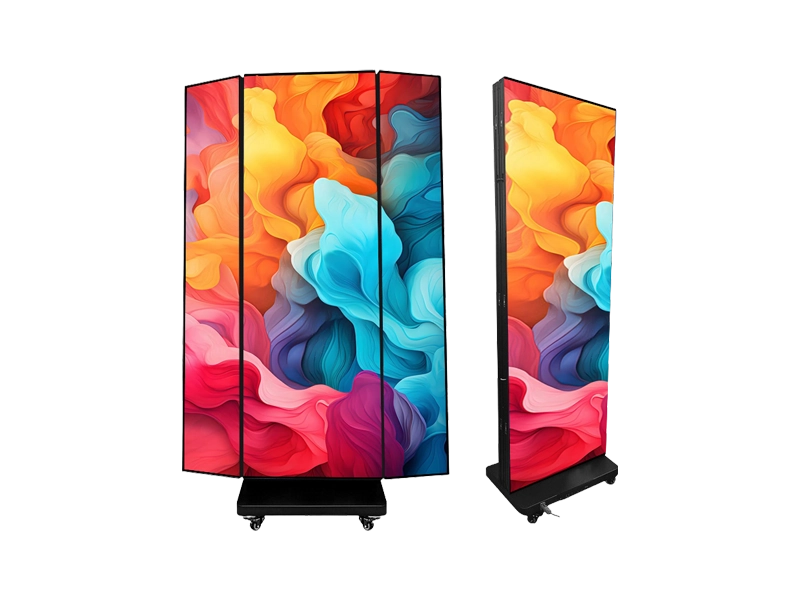
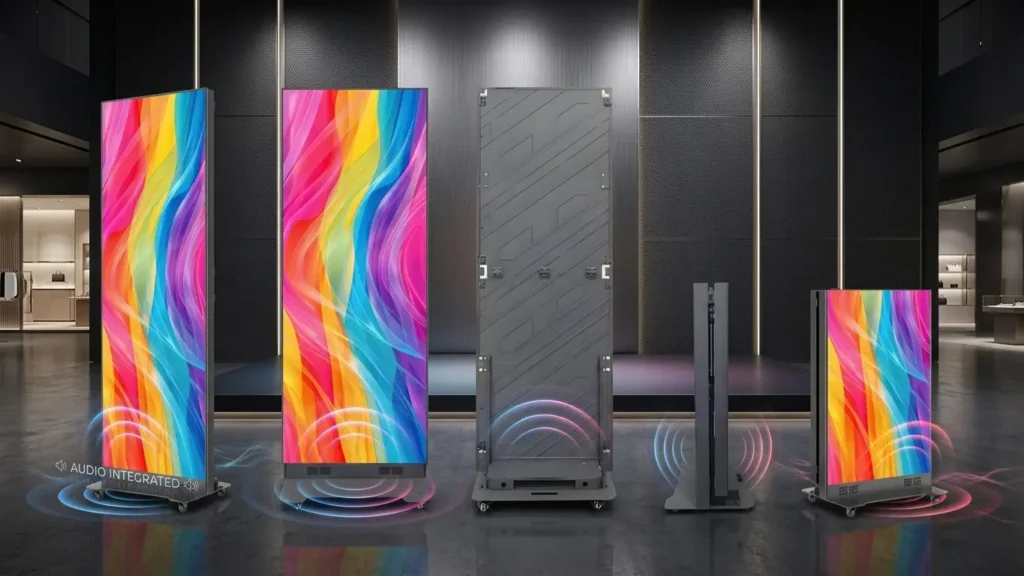
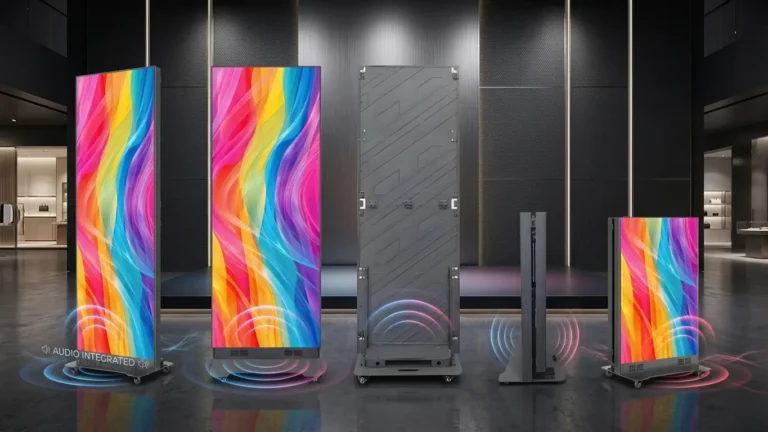
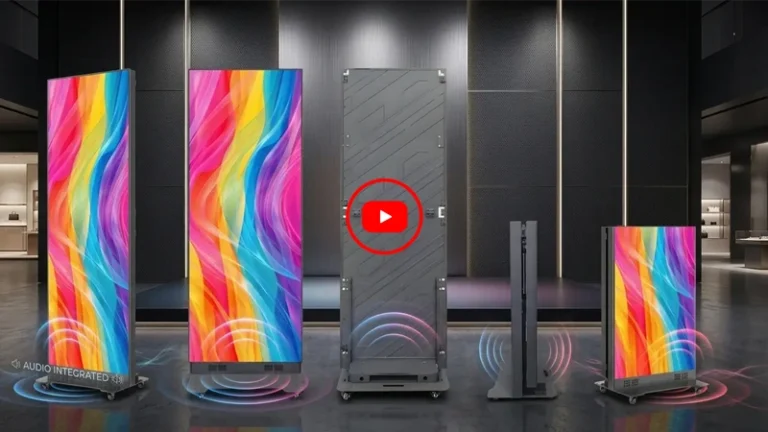
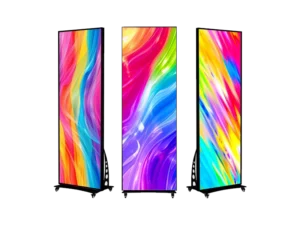
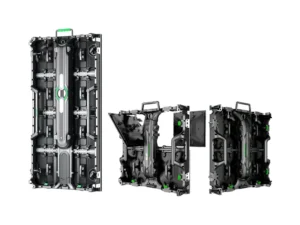
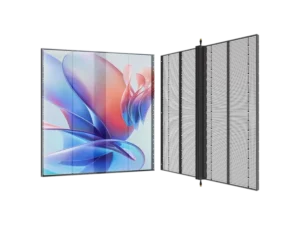
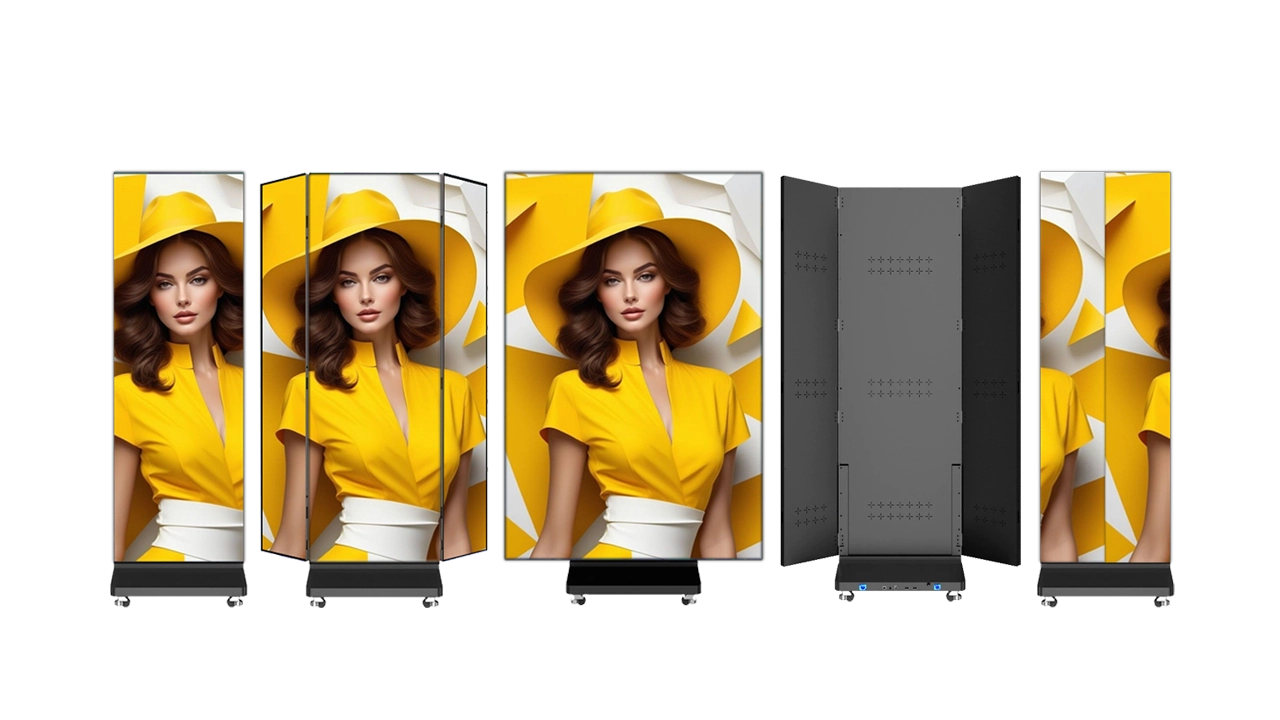
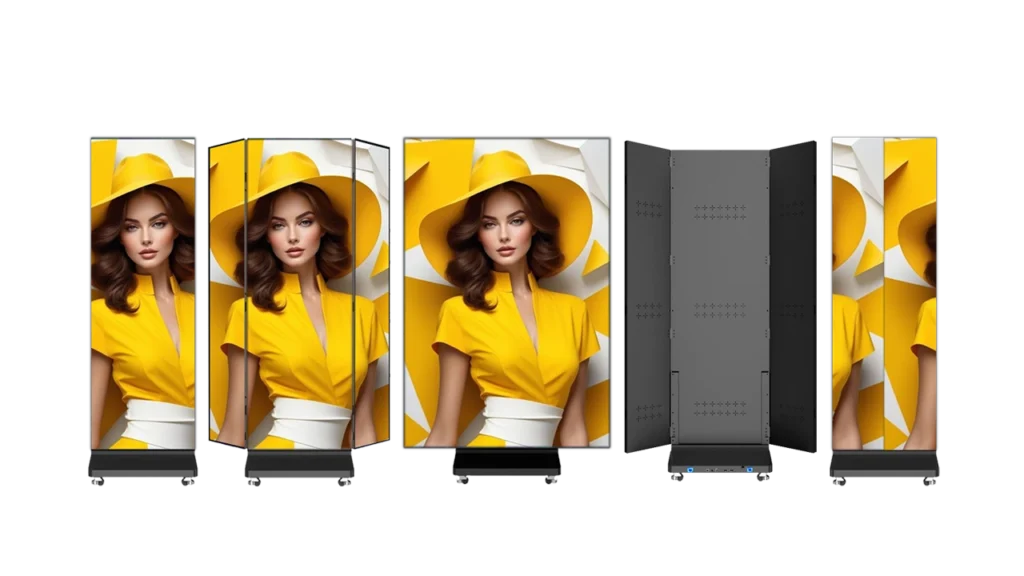
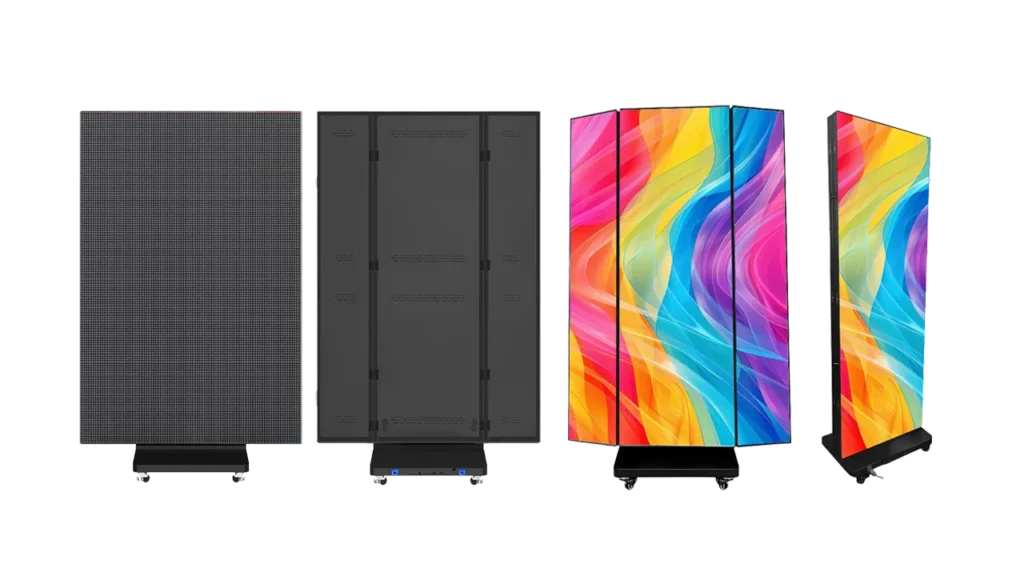
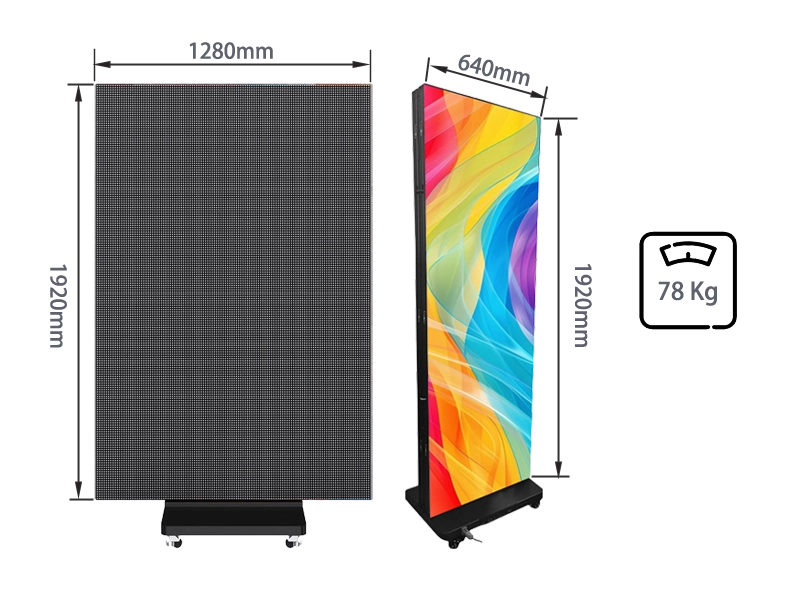
The tri-fold LED poster display is a self-contained digital signage system built around a precision-engineered hinge mechanism. Unlike traditional LED totems that occupy fixed footprints, this unit features two 640×1920mm wing panels that fold from a central spine. When fully expanded, it creates a 1280×1920mm unified canvas. When folded to 90°-180° angles, it becomes a double-sided display serving two audience directions simultaneously.
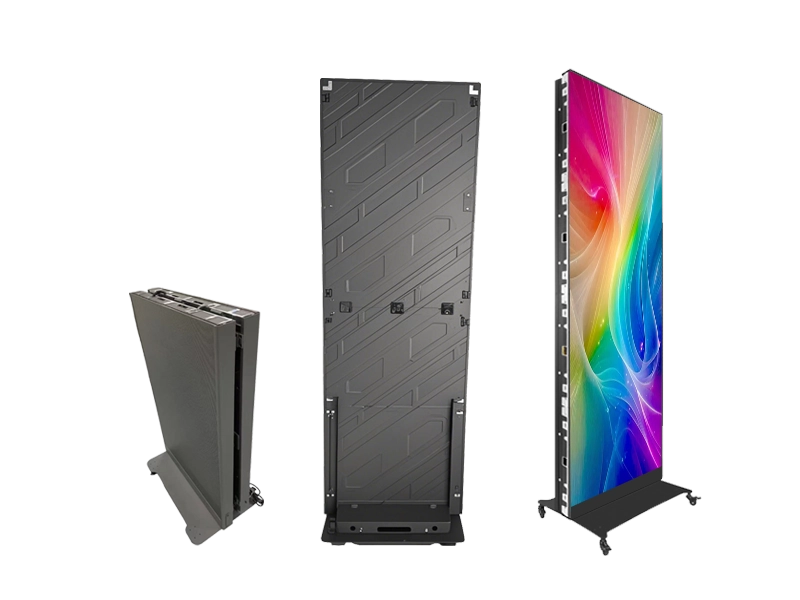
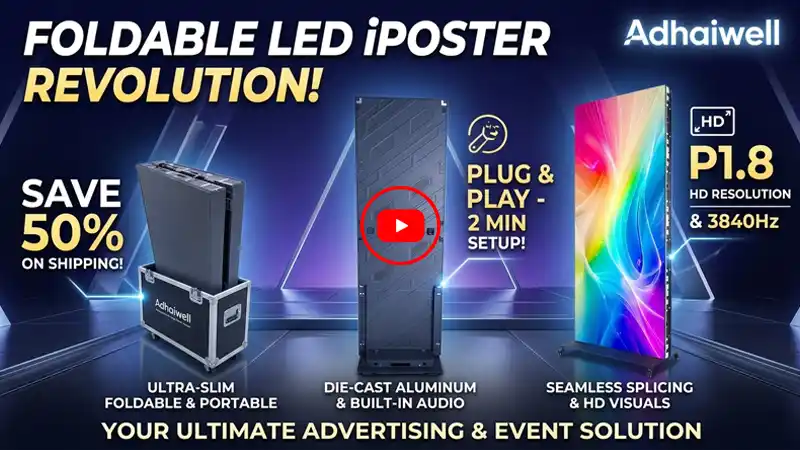
The entire system weighs 78kg and rolls on heavy-duty casters. It ships fully assembled in a single protective flight case. There are no loose modules, no separate controllers, no bags of screws and cables. This is a zero-installation device—a category that barely existed in professional LED display until recently.
From Compact Totem to Expanded Canvas: The 2-in-1 Transformation
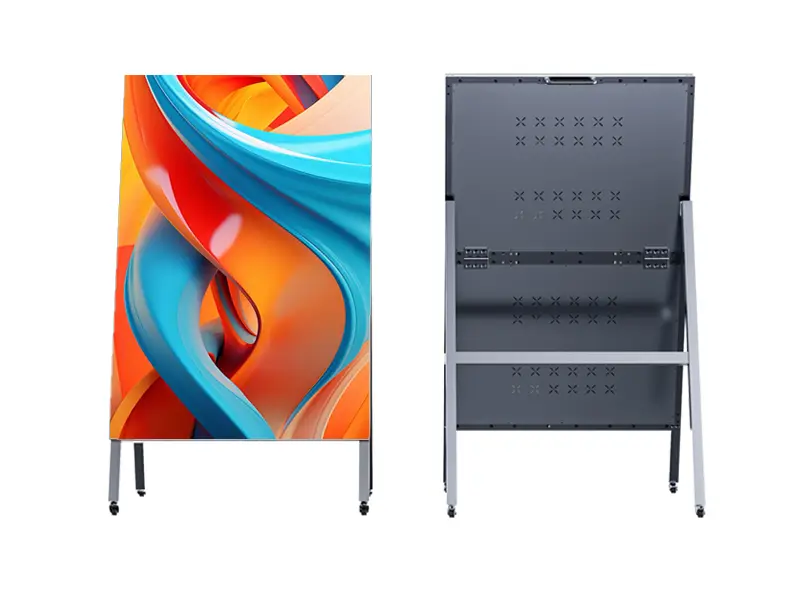
What makes this architecture revolutionary is geometric adaptability. In its folded state, the unit occupies less than 0.4 square meters of floor space—smaller than a standard office chair. This allows it to fit in elevators, through standard doorways, and into compact storage closets. Unfolded, it commands a visual presence comparable to a 55-inch commercial display tower, but with the scalability of modular LED.
The transformation takes under 30 seconds. Release two locking levers, extend the wings to your desired angle, and lock. No tools. No technical training. This means your marketing team—not AV contractors—controls the spatial layout.
Multi-Angle Visual Storytelling: Beyond Flat Screens
Creating Spatial Narratives with Wing-Fold Geometry
Flat screens communicate in one direction. The tri-fold display communicates in architectural dimensions. When positioned at 120° angles in a corner, the wings create a natural visual funnel that guides foot traffic toward a focal point. When set at 180° in a corridor, both sides capture audiences moving in opposite directions—effectively doubling your reach without doubling your investment.
This isn’t merely functional. It’s compositional. The fold line becomes a design element. Savvy content creators use the hinge as a natural break point: one wing shows the product, the other shows the lifestyle. Or both wings display a continuous panoramic image that physically envelops the viewer. The screen becomes a spatial storyteller, not just a billboard.
360-Degree Audience Engagement Without Extra Hardware
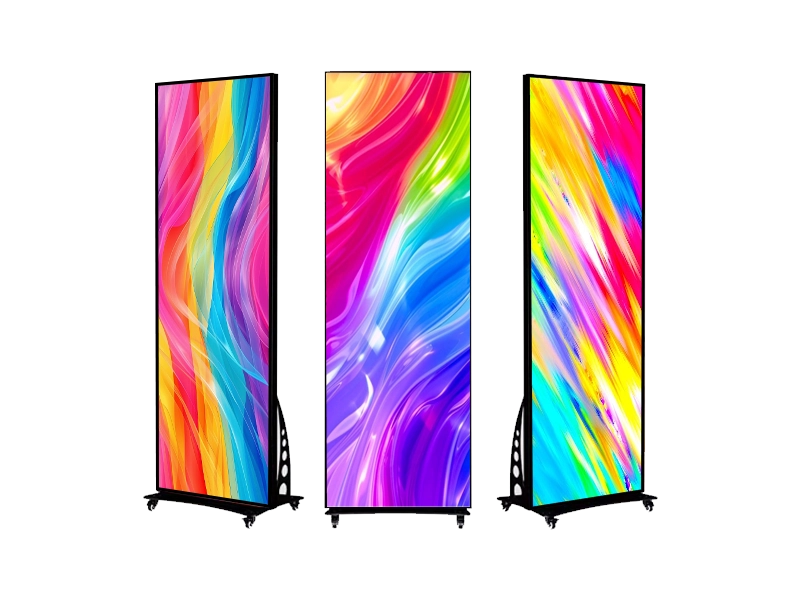
Traditional double-sided displays require two separate screens mounted back-to-back—increasing weight, power consumption, and cost by 80-90%. The tri-fold achieves true double-sided visibility with a single LED spine, reducing hardware overhead while maintaining independent content control for each face.
At trade shows, this means your booth attracts aisle traffic from both directions. In retail, it means your window display speaks to sidewalk shoppers and in-store browsers simultaneously. In airports, it means a single unit can serve departing and arriving passengers from one strategic position.
Space Intelligence: How Foldable Design Transforms Venue Logistics
The 60% Shipping Volume Advantage
Here’s a number that procurement managers remember: 60% reduction in shipping volume. When folded, the tri-fold poster’s dimensions drop to approximately 700×600×1900mm—compact enough that two units fit in a standard cargo van. For international exhibitors, this translates to air freight savings of $800-$1,200 per event compared to traditional LED wall shipments.
Rental companies report even greater impact. One European AV rental firm replaced six traditional LED totems with eight tri-fold units, reducing their transport fleet from two trucks to one. The foldable design allowed them to store 12 units in the same warehouse space previously occupied by four—effectively tripling inventory capacity without expanding facilities.
Zero-Installation Deployment in Under 5 Minutes
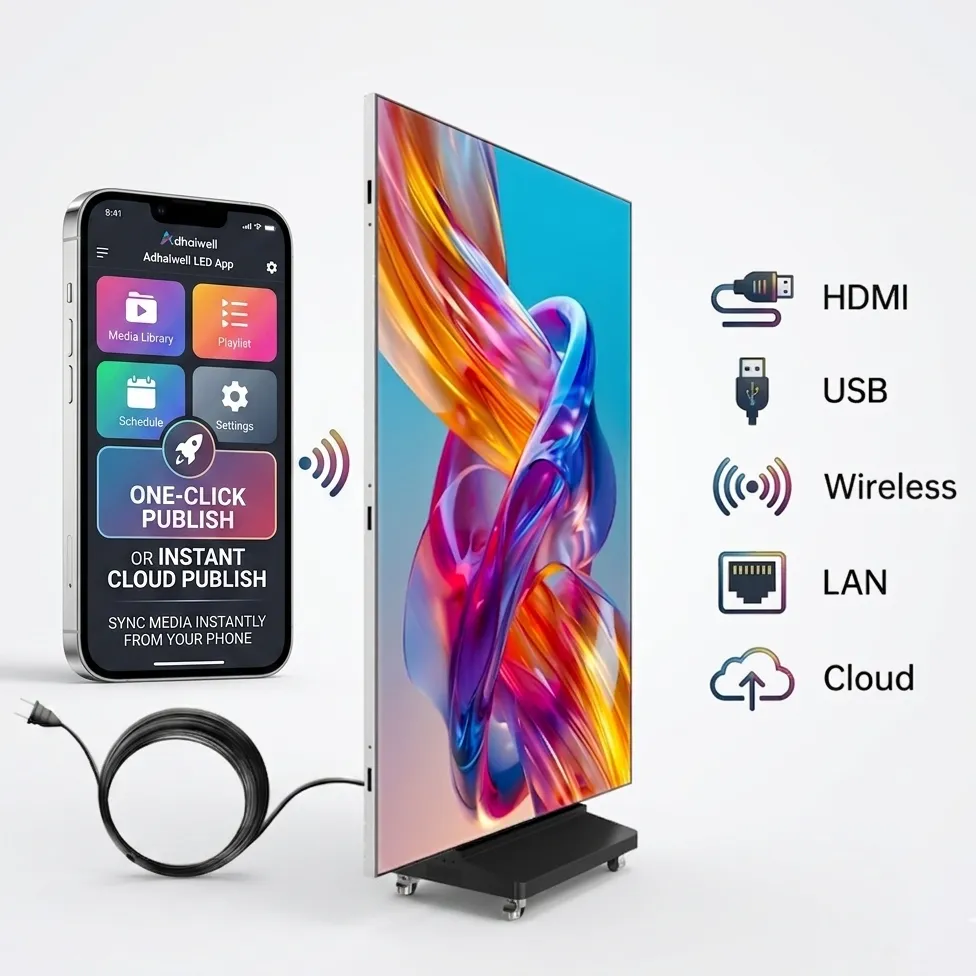
The phrase “plug-and-play” is overused in tech marketing. For the tri-fold LED poster, it’s literally accurate. Remove from flight case. Roll to position. Connect power. Upload content via smartphone or USB. Begin displaying.
No brackets. No rigging points. No calibration. No technician with a laptop debugging signal paths. The Novastar control system auto-detects panel configuration, so the display understands whether it’s in single-sided or double-sided mode without manual input.
For retail environments, this means store managers can reposition displays during peak hours—moving from entrance to checkout area to promotional end-cap without calling corporate facilities. For event marketers, it means setup crews of one, not teams of four.
Mobility as a Feature: Casters, Corners, and Crowded Floors
The heavy-duty casters aren’t an afterthought—they’re a strategic feature. Locking wheels allow positioning on uneven trade show carpet, polished retail tile, or outdoor event pavement. The 78kg weight provides stability against accidental bumps while remaining manageable for single-person operation.
In crowded retail environments, this mobility enables dynamic merchandising: moving the display to follow customer flow patterns, seasonal layouts, or promotional cycles. A unit that sits at the entrance during morning rush can roll to the fitting room area during afternoon shopping peaks, then position at checkout for evening impulse purchases.
Technical Performance That Matches the Visual Promise
3840Hz Refresh Rate: Flicker-Free for Cameras and Eyes
Standard LED displays refresh at 1920Hz—adequate for human vision but problematic for cameras. When attendees photograph your trade show booth or record Instagram Stories in your store, 1920Hz displays produce visible scan lines and color banding. The tri-fold LED poster’s 3840Hz refresh rate eliminates this entirely.
This matters more than most marketers realize. User-generated content (UGC) featuring your brand generates 6.9x higher engagement than brand-created content. When customers share photos of your display, you want those images to look professional—not like they were shot in front of a 1990s CRT monitor.
P1.8 vs P2.5: Choosing Pixel Density for Your Viewing Distance
The tri-fold display offers multiple pixel pitch options, each optimized for different engagement models:
- P1.8 (640,000 pixels/m²): Ideal for viewing distances under 3 meters. Luxury retail, product showcases, and intimate brand experiences where customers approach closely. The density ensures text remains crisp at arm’s length.
- P2.5 (250,000 pixels/m²): Optimized for 3-6 meter viewing distances. Trade show aisles, shopping mall atriums, airport terminals—environments where audiences first encounter the display from across a space. The slightly larger pixel pitch reduces cost while maintaining visual impact at intended distances.
Both options feature 10,000:1 contrast ratios and 16-bit grayscale, ensuring deep blacks and smooth color transitions even in dimly lit exhibition halls.
Brightness, Contrast, and Color Temperature in Real Environments
At 750+ nits brightness, the display remains visible under standard indoor lighting without appearing washed out. For environments with significant natural light—atrium spaces, window displays—higher brightness options maintain readability.
Color temperature is adjustable from 5000K to 12000K. This isn’t a trivial feature. Warm 5000K tones create inviting retail atmospheres. Neutral 6500K matches standard photography lighting, ensuring product colors appear accurate. Cool 9000K+ conveys technological sophistication for corporate and automotive applications.
Application Blueprints: Where Tri-Fold Displays Deliver Maximum ROI
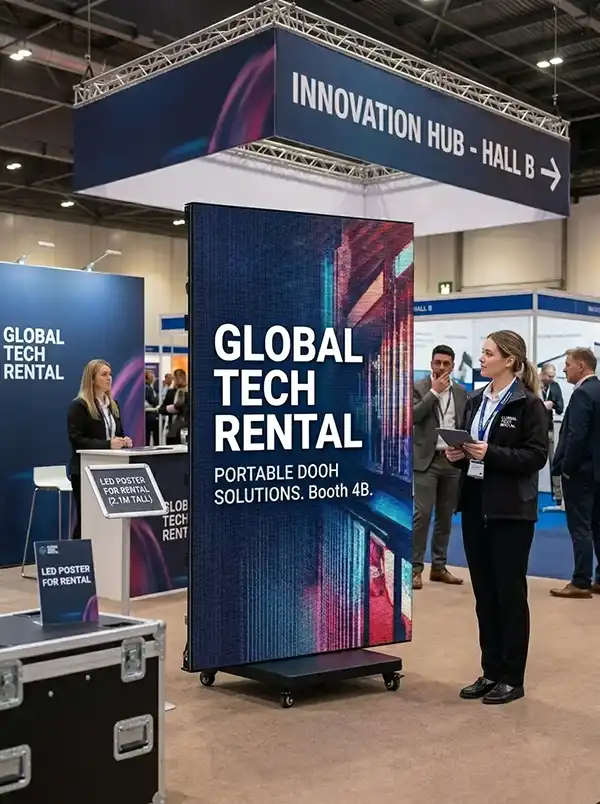
Trade Show Booths: Attract, Engage, Convert
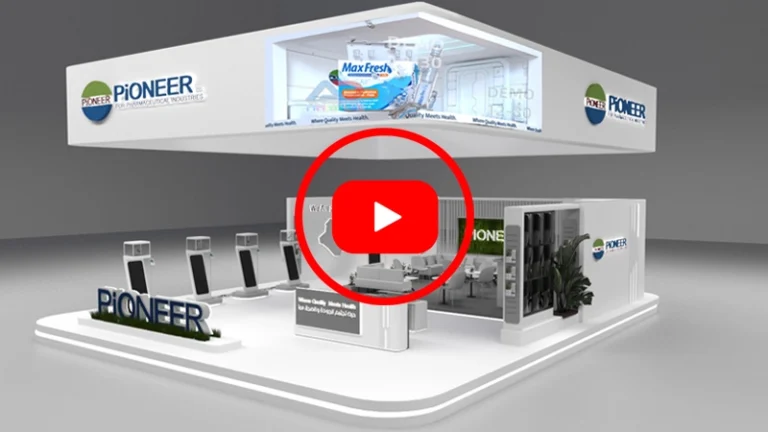
At CES 2026, a robotics startup deployed two tri-fold displays at their 10×10 booth entrance. The wing-fold configuration created a visual gateway that increased foot traffic by 40% compared to their previous static backdrop. The double-sided design meant aisle traffic from both directions encountered vibrant motion graphics simultaneously.
Key deployment pattern: Position at booth entrance with wings at 120° angles, creating a natural threshold. Use one face for brand awareness video, the other for product demonstration. As visitors enter, rotate one wing to create a single large canvas for detailed technical presentations.
Retail Environments: From Window Display to In-Store Journey
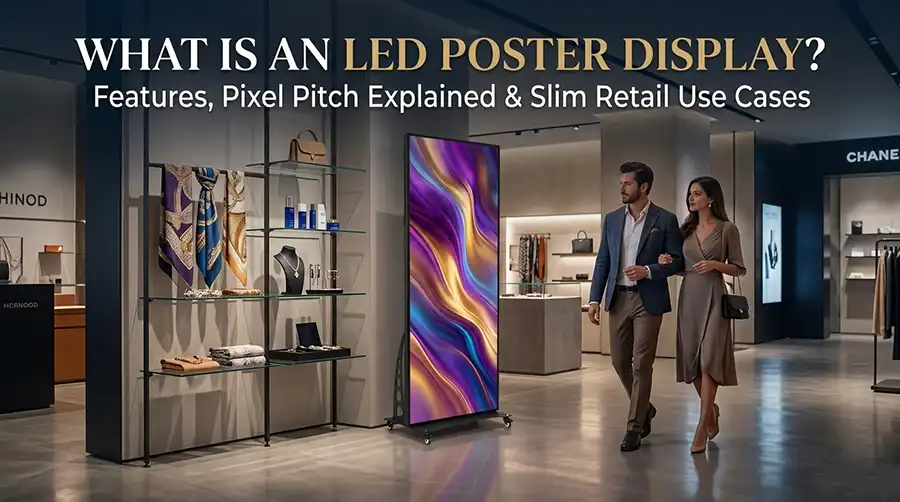
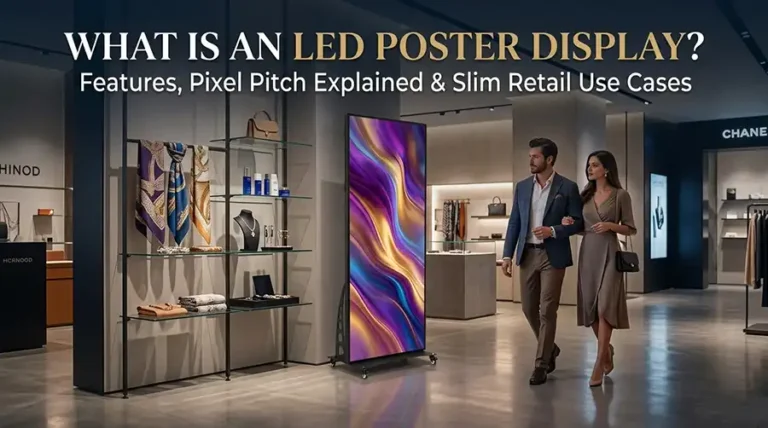
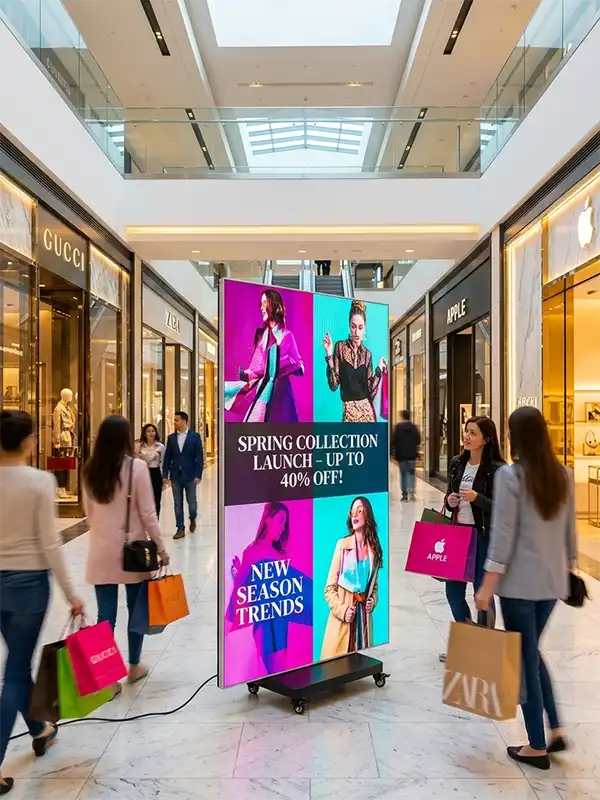
A luxury skincare brand installed tri-fold units in 15 flagship stores across Europe. In window displays, the double-sided configuration served sidewalk browsers and in-store customers simultaneously. During promotional periods, staff moved units to checkout areas to reduce perceived wait times with engaging content.
The mobility enabled campaign synchronization: when launching a new product line, all 15 locations updated content within 2 hours via cloud CMS, then repositioned displays to high-traffic zones without facilities support.
Corporate Lobbies and Showrooms: First Impressions at Scale
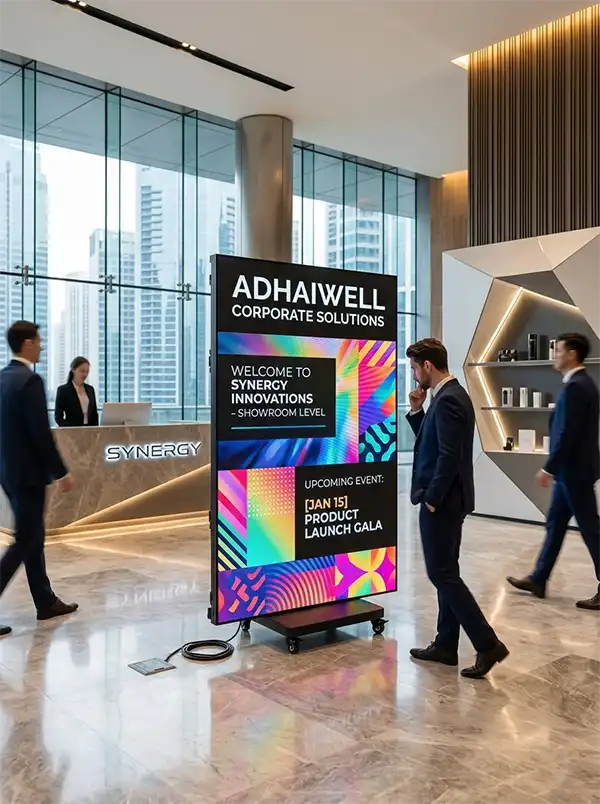
Corporate reception areas face a unique challenge: communicating brand identity to diverse audiences—job candidates, investors, partners, delivery personnel—who each need different information. The tri-fold display solves this through temporal programming: morning content welcomes employees with company news, afternoon content showcases products for client meetings, evening content displays security reminders for cleaning crews.
The 3840Hz refresh rate ensures that when C-suite executives record video messages or media teams film B-roll, the background display performs flawlessly on camera.
Event Marketing and Brand Activations: Content That Travels
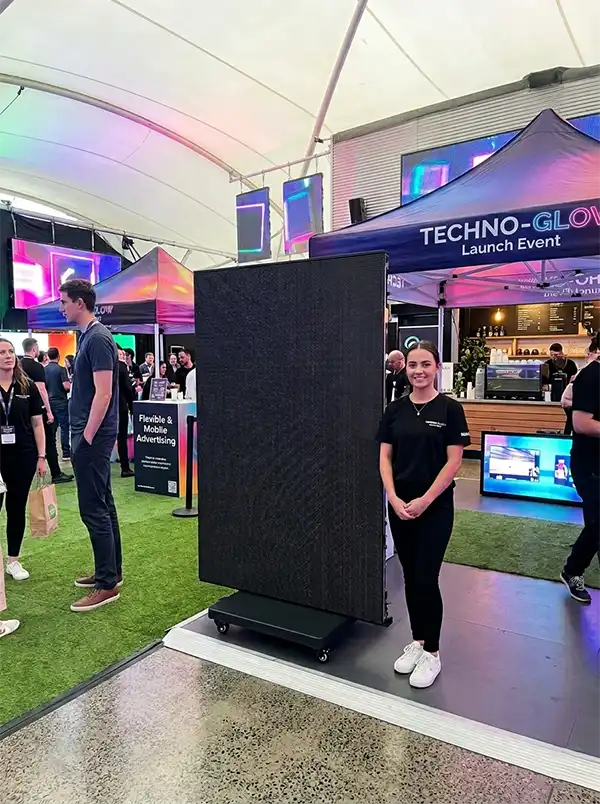
For pop-up activations and touring campaigns, the tri-fold display functions as a reusable asset rather than a disposable expense. A beverage brand’s summer tour across 20 music festivals used four units that traveled in a single van, setting up in under 20 minutes per location. Total logistics cost for 20 events: $8,400. Previous year’s traditional LED wall approach: $34,000.
Content Strategy for Multi-Angle Displays
Designing for Split-Screen vs. Unified Canvas
The tri-fold architecture demands intentional content design. Three primary approaches:
Continuous Canvas: Treat the 1280×1920mm expanded surface as a single canvas. Ideal for panoramic imagery, sweeping video, or immersive brand worlds. The hinge area becomes a natural focal point—position key messaging along the center axis.
Split Narrative: Each 640×1920mm wing tells a complementary story. Left wing shows the problem, right wing shows the solution. Or left wing displays product features, right wing shows customer testimonials. This creates visual dialogue rather than monologue.
Dual-Audience: In double-sided mode, each face targets a different audience segment. In retail, one face speaks to new customers (brand introduction), the other to returning customers (loyalty rewards). In trade shows, one face attracts aisle traffic, the other provides detailed specs for engaged visitors.
Motion Graphics That Leverage Fold Geometry
Motion designers can exploit the physical fold with dimensional transitions: content appears to “flow” from one wing to another, or elements physically rotate around the hinge axis. These effects create memorable visual moments that static displays cannot replicate.
Parallax scrolling—where background and foreground elements move at different speeds—becomes more dramatic across angled surfaces. A butterfly appearing to fly from the left wing, around the hinge, and onto the right wing creates an illusion of physical depth that captivates attention for 3-4 seconds longer than flat-screen equivalents.
Remote Management and Real-Time Campaign Updates
The integrated Novastar control system supports WiFi, LAN, and 4G connectivity. Marketing teams can push content updates across global display networks from a single dashboard. A campaign manager in London can update displays in New York, Dubai, and Tokyo stores simultaneously, then monitor playback status in real-time.
For event applications, this means last-minute speaker changes, schedule updates, or social media feeds can appear on displays within minutes of decision—without technical staff on-site.
Procurement Guide: What Buyers Should Evaluate
Total Cost of Ownership: Beyond the Unit Price
When evaluating digital signage investments, calculate 5-year TCO, not just purchase price:
| Cost Factor | Tri-Fold LED Poster | Traditional LED Wall | Static Signage |
|---|---|---|---|
| Initial Purchase | \$4,500-\$6,500 | \$8,000-\$15,000 | \$200-\$500 |
| Installation (first use) | \$0 | \$2,000-\$5,000 | \$150-\$300 |
| Content Updates (annual) | \$0 (DIY) | \$500-\$1,000 | \$2,000-\$5,000 |
| Shipping (per event) | \$200-\$400 | \$800-\$1,500 | \$50-\$100 |
| Storage (annual) | \$100 | \$500 | \$50 |
| 5-Year TCO | \$5,500-\$8,500 | \$15,500-\$30,000 | \$12,500-\$28,500 |
The tri-fold display achieves lower TCO than static signage after approximately 18 months, due to eliminated printing and installation labor. Compared to traditional LED, savings are immediate and compound with each relocation.
Flight Cases, Logistics, and Global Deployment
Professional flight cases are non-negotiable for mobile displays. Evaluate:
- IP rating: IP31 minimum for indoor protection against dust and accidental liquid contact
- Stacking design: Cases should support 3-4 unit vertical stacking for warehouse efficiency
- Wheel quality: Industrial casters with brakes, not plastic luggage wheels
- Interior padding: CNC-cut foam that immobilizes the display during transport
For international buyers, confirm voltage compatibility (90-264V universal input) and certification (CE, FCC, RoHS) to avoid customs complications.
OEM Customization and Brand Integration Options
For brands deploying 10+ units, OEM customization transforms generic hardware into branded assets:
- Cabinet color: Match Pantone brand colors rather than accepting standard black
- Logo integration: Laser-etched or silk-screened logos on cabinet sides and rear
- Boot screen: Custom startup animation displaying brand identity during power-on
- Flight case branding: Logo and handling instructions on transport cases
- Content templates: Pre-loaded brand-compliant motion graphics templates
Contact our OEM team for custom configurations starting at 1-unit MOQ.
FAQ: Practical Questions from Real Deployments
A tri-fold LED poster is a portable, double-sided digital signage system with foldable wing panels. It transforms from a compact totem into a large-format screen, offering zero-installation deployment, 360-degree visibility, and 60% lower shipping costs than traditional LED walls—ideal for retail, trade shows, and event marketing.
The Future of Flexible Visual Communication
The shift from static signage to digital display isn’t about technology—it’s about adaptability. Modern brands operate in environments that change daily: seasonal collections, flash promotions, viral moments, global events. The tri-fold double-sided foldable LED poster is the first display architecture built for this reality.
It collapses to fit your logistics. It expands to dominate your space. It rotates to follow your audience. And it connects to your cloud, so your message evolves as quickly as your strategy.
Static signage asks spaces to conform to its limitations. The tri-fold display conforms to your spaces, your campaigns, and your ambition. That’s not just an upgrade. That’s a new category entirely.
Ready to replace static signage with spatial intelligence?
Explore the tri-fold LED poster display or contact our display experts for a customized quote tailored to your deployment needs.