From Scoreboards to Immersive Infrastructure
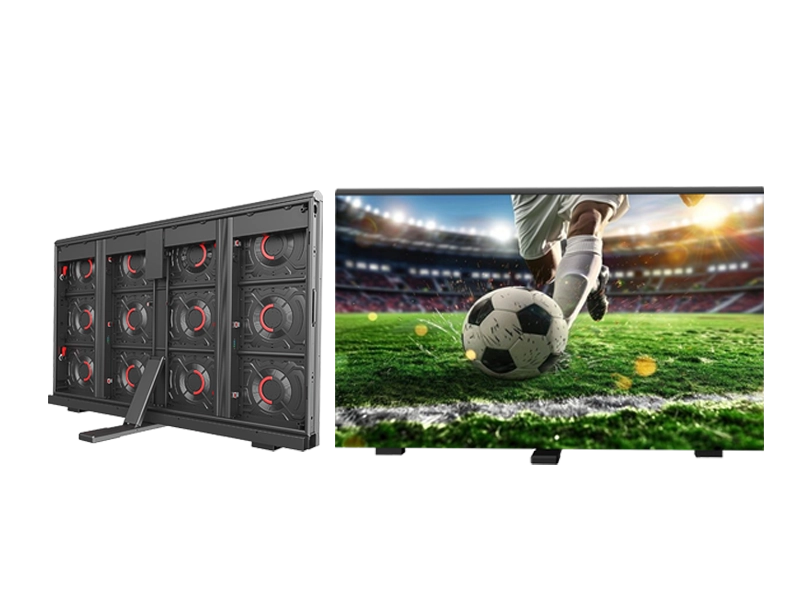
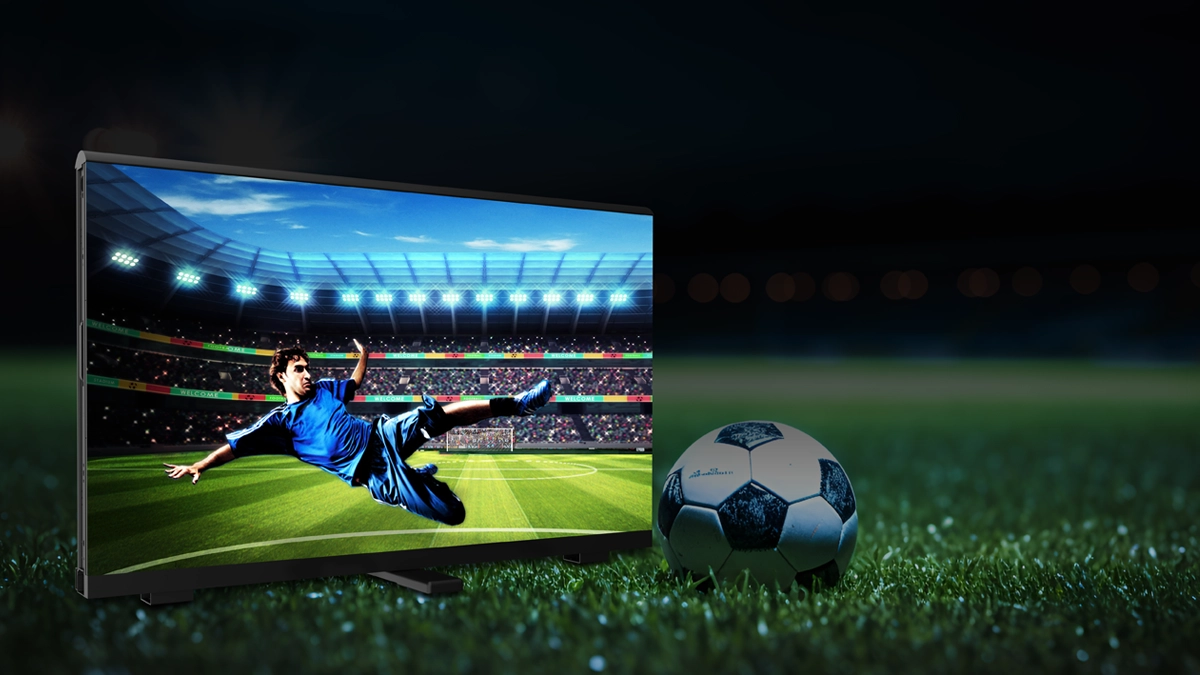
For decades, the only job of a stadium display was to show scores and simple messages. Today, LED video walls have become the most strategic asset in modern sports venues. The transformation is happening worldwide: from the 11‑faced centerhung system at the University of Tennessee’s Food City Center, to the massive LED upgrades ahead of the FIFA World Cup 2026, to The O2 Arena in London, saving £75,000 per year with 2,000 m² of custom LEDs. Sporting venues are undergoing a silent revolution – a shift from “seat count” to visual bandwidth.
For stadium operators and event organizers, understanding the core technical specifications and emerging trends of LED displays is no longer optional – it is a strategic necessity.
At Adhaiwell, we don’t just manufacture LED displays; we engineer complete visual ecosystems tailored to your venue’s unique architecture, budget, and performance goals.
Part 1: The Complete Application System of LED Displays in Stadiums
Modern sports venues use a layered, multi‑position LED ecosystem. Based on installation location and function, here are the six major types:
1.1 Centerhung Display Systems
The centerhung display is the most visually dominant and technically demanding element. For example, the system at Illinois State University (by Daktronics) includes a main four‑sided display (16.5 ft × 21.5 ft per side) plus two underbelly displays and a 360° ring (899 ft long).
Key engineering challenges: achieving high resolution within weight limits (roof load capacity), managing heat, and ensuring seamless integration. In Salzburg’s Red Bull Ice Hockey Hall, a roof weight limitation was solved using Leyard’s Tfree transparent displays (2.6 mm pitch, ultra‑lightweight), replacing an old rear‑projection system.
1.2 Perimeter Advertising Displays
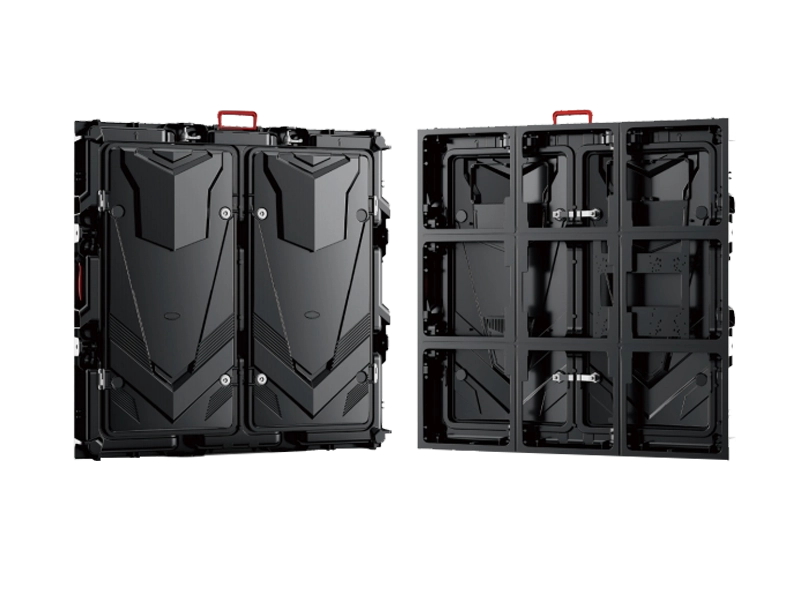
Perimeter LED boards have the highest commercial value – they deliver sponsor messages directly next to the field of play. But they also face the toughest safety and reliability standards.
Slovakia’s AS Trenčín stadium upgrade installed perimeter LEDs that meet UEFA Category 4 standards: redundant power and signal backup, plus impact‑resistant design to survive collisions with players or balls. Technical must‑haves: refresh rate ≥7680 Hz to avoid scan lines on super‑slow‑motion cameras, and a soft silicone rubber face instead of hard plastic to minimize injury risk.
1.3 Main Scoreboards & Primary Video Walls
FIFA’s 2026 World Cup technical specifications mandate a minimum brightness of 7,500 nits for main scoreboards, pixel pitch ≤P6 (≤P4 for close‑up perimeter boards), support for 4K input, HDR10, and 120 fps refresh rate. Dual power and dual signal redundancy are mandatory for zero‑downtime operation during live broadcasts.
1.4 Ribbon Boards & Fascia Displays
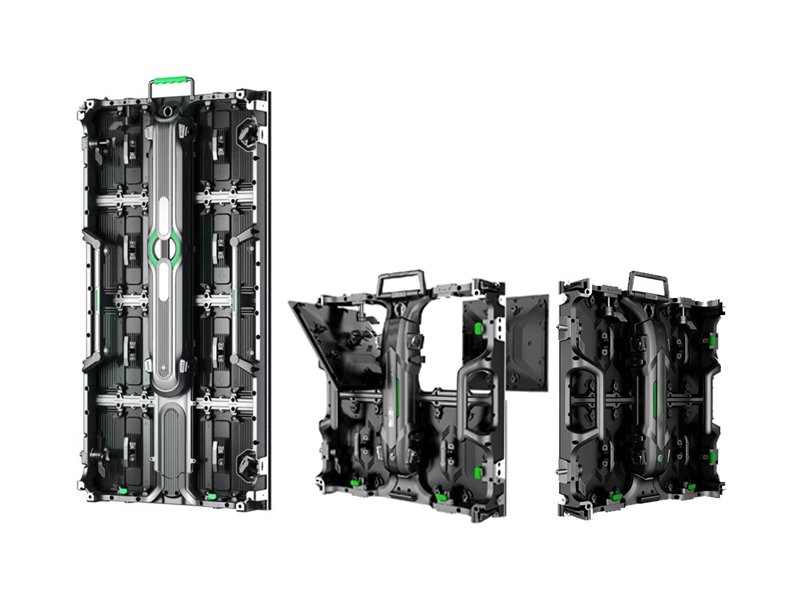
Ribbon boards wrap around seating bowls to show sponsor messages, real‑time stats, and game alerts. The biggest challenge: an 800‑meter long ring may have a tolerance of just 2 mm in curvature. Modular box design and sectional installation (every 10–15 m as one segment) are the proven solutions.
1.5 Entrance & Facade Displays
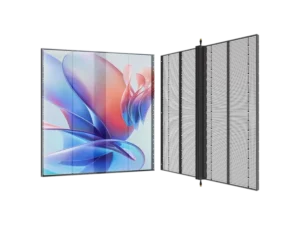
LED walls on the exterior and at entry gates welcome fans, promote upcoming events, and build pre‑game excitement. The Baltimore Ravens’ 2025 renovation includes 2,300 ft² of transparent mesh LED on the exterior plaza facade, combined with high‑resolution entrance screens.
1.6 Auxiliary & Scorer’s Table Displays
Top‑tier venues add corner auxiliary displays, scorer’s table integrated screens, and other “supplemental” screens. At Tennessee’s Food City Center, the total of 24 LED displays includes six scorer’s table screens (3.9 mm pitch) and two entrance lobby displays – each supporting independent variable content zoning.
Part 2: Deep Dive – Core Technical Specifications for Stadium LED Displays
When selecting a stadium LED system, these six technical parameters determine the fan experience and system ROI.
2.1 Brightness & Contrast – The Power to Fight Sunlight
Outdoor or open‑air stadiums require 5,000–10,000 nits to remain readable under direct sun. FIFA World Cup 2026 mandates 7,500 nits minimum for main scoreboards.
But brightness alone is not enough. High contrast (combined with deep black levels) delivers vivid, realistic images. Modern MicroLED and MiniLED technologies achieve 30% better energy efficiency while maintaining 10,000 nits brightness.
Adhaiwell’s outdoor stadium LEDs are rated up to 10,000 nits with auto‑dimming sensors that adjust brightness based on ambient light – saving energy without compromising visibility.
2.2 Pixel Pitch & Viewing Distance – The Secret to Sharpness
Pixel pitch (mm) determines resolution and the optimal viewing distance. Smaller pitch (≤P2.5) for close viewing; larger pitch (P4–P10) for far‑away main screens.
For the FIFA 2026 World Cup, main scoreboards must have pitch ≤P6, and close‑up perimeter boards ≤P4. MicroLED has pushed pitch down to 0.4 mm – opening new possibilities for ultra‑HD stadium displays.
Adhaiwell offers a full range from P2.5 to P10, with customized pitch selection based on your stadium’s seating layout and viewing distances. Our engineering team provides free line‑of‑sight analysis before you buy.
2.3 Refresh Rate – The Hard Requirement for Broadcast
A low refresh rate causes motion blur and – worse – scan lines (waterfall effect) on slow‑motion replays. For standard HD broadcast, 3,840 Hz is sufficient. But for 4K/8K broadcasts and 120 fps super‑slow‑motion cameras, 7,680 Hz or higher is required.
Some manufacturers use the “low‑bright‑high‑refresh” trick – they lower brightness to claim high refresh. Adhaiwell’s driver ICs deliver true 7,680 Hz at full brightness, verified by third‑party tests.
2.4 Viewing Angle – No Dead Spots in the Stands
Sports venues have seats at every angle. A high‑performance LED wall must have horizontal viewing angle ≥160° and vertical ≥140° with consistent color and brightness.
Adhaiwell’s SMD and COB panels use advanced optical design to ensure uniform brightness even from steep side angles – so fans in the corners get the same quality as those center court.
2.5 Ingress Protection & Durability – Weather‑Proof and Player‑Safe
Outdoor stadium LEDs need IP65 minimum for dust and water jets. But physical protection is just as critical: perimeter boards must survive ball and player impacts.
- GOB (Glue‑on‑Board) encapsulation adds a protective glue layer that improves impact resistance and waterproofing.
- For player safety, soft silicone rubber faces and flexible bumper frames are essential.
Adhaiwell’s GOB‑encapsulated perimeter displays meet both IP65 and FIFA safety standards, combining ruggedness with athlete protection.
2.6 Energy Efficiency & Thermal Management – The Green Stadium Imperative
High‑brightness LEDs generate heat and consume power. But innovation is changing that:
- MicroLED reduces power consumption by 30% compared to traditional SMD.
- Absen’s A25 series consumes less than 1 kWh/m²/day – saving $200,000 over five years for a 300 m² installation.
- digiLED’s ZEUS technology at The O2 Arena saves £75,000/year.
Adhaiwell’s energy‑optimized stadium displays feature intelligent thermal design and adaptive brightness control – lowering your electricity bill and carbon footprint without sacrificing performance.
Part 3: 2025–2026 Major Industry Trends & Cutting‑Edge Technologies
3.1 The FIFA World Cup 2026 “Mandatory Upgrade” Wave
The 2026 World Cup (USA, Canada, Mexico) is the single biggest catalyst for stadium display upgrades in a decade. As of April 2026, at least eight NFL‑grade stadiums have announced major LED renovations to meet FIFA’s new technical specs.
Common upgrade features: IP65+, active cooling, GOB encapsulation, and 7,680 Hz refresh rate. SoFi Stadium, MetLife Stadium, and AT&T Stadium are all completing upgrades within the FIFA window.
Adhaiwell is ready to help stadiums worldwide achieve FIFA compliance – our systems are designed to meet or exceed the 2026 World Cup technical standards.
3.2 MicroLED & MiniLED Commercialization
2025 saw MicroLED and MiniLED become commercially mainstream. Omdia reported 6.2% YoY growth in the global LED video display market in Q2 2025, driven by these technologies.
MicroLED offers pixel pitch as low as 0.4 mm, 30% lower power, and wider color gamut than traditional SMD. Meanwhile, MIP (MicroLED‑in‑Package) technology makes MicroLED more affordable, and COB (Chip‑on‑Board) has reduced costs by ~60% since 2023 while enabling 7,680 Hz as standard.
Adhaiwell offers both COB and MIP‑based stadium displays – giving you premium image quality without the premium price tag.
3.3 Sustainability & Green Operations – From Nice‑to‑Have to Must‑Have
ESG standards are tightening globally. Modern energy‑efficient LED systems now feature:
- AI‑driven adaptive brightness (sensors adjust output to ambient light)
- Smart power management (zero‑power standby when not playing content)
- Lightweight structural design (reduces shipping emissions and steel usage)
- Modular, repairable design (extends product lifetime)
Adhaiwell’s modular design and lightweight aluminum frames not only reduce installation costs but also lower your venue’s carbon footprint. We provide full LCA (Life Cycle Assessment) data upon request.
3.4 Industry Landscape & Key Players
Daktronics remains the global leader (Q1 FY2026 orders up 35.4% to $238.5 million). In China, Unilumin, Leyard, and Absen are driving COB and MicroLED innovation. Samsung, LG, and Sony are also entering the market with MicroLED transparent displays.
Where does Adhaiwell fit? We focus on delivering custom‑engineered, direct‑from‑factory stadium LED solutions at competitive prices, with free structural design, turnkey installation support, and global warranty. Our clients include stadiums, arenas, and sports complexes in Mozambique, the Caribbean, Southeast Asia, and beyond.
Part 4: Global Case Studies – Lessons for Your Venue
4.1 University of Tennessee Food City Center – 24 Displays, One Ecosystem
Daktronics installed 24 LED displays, including an 11‑face centerhung system (main video boards 15 ft × 24.5 ft, 5.9 mm pitch), a 360° ribbon (880 ft long), and six scorer’s table screens.
Takeaway: A truly immersive experience requires multiple display layers working together. Adhaiwell can design and deliver comparable multi‑display ecosystems at a fraction of the cost.
4.2 Salzburg Red Bull Ice Hockey Hall – Lightweight Solution for Weight‑Limited Roofs
The venue’s roof could not support a traditional LED system. Leyard’s Tfree transparent displays (2.6 mm pitch, ultra‑lightweight) solved the problem, creating a 4 m × 2.5 m LED cube.
Takeaway: Weight constraints are common in older venues. Adhaiwell offers lightweight and transparent LED options specifically designed for retrofit projects with load limits.
4.3 London’s The O2 Arena – Energy Savings Without Compromise
digiLED’s ZEUS technology saved £75,000 per year in electricity while maintaining broadcast‑grade image quality.
Takeaway: Energy efficiency directly impacts operating profit. Adhaiwell’s low‑consumption stadium LEDs help you achieve similar savings – we can provide a customized ROI calculation for your venue.
Part 5: Stadium LED Display Selection & Installation Guide (For Adhaiwell Customers)
5.1 Site Assessment & Needs Analysis
Before quoting, our engineers evaluate:
- Viewing distances → recommend optimal pixel pitch
- Ambient light (angles of sun throughout the day) → determine required brightness
- Structural load capacity → ensure safe mounting
- Budget & ROI goals → propose phased or full‑scale deployment
5.2 Key Installation Engineering Considerations
- Curvature control for ribbon boards: We use modular boxes and laser‑assisted segment installation to keep tolerance <2 mm over hundreds of meters.
- High‑altitude safety: Our displays feature tool‑less, wireless connections between boxes – reducing manual wiring at height.
- Signal & power redundancy: Fiber optic transmission with dual independent signal paths ensures no single point of failure.
- Thermal management in IP65 enclosures: Our smart temperature control systems balance waterproofing with heat dissipation.
5.3 Maintenance & Support – Designed for Zero Downtime
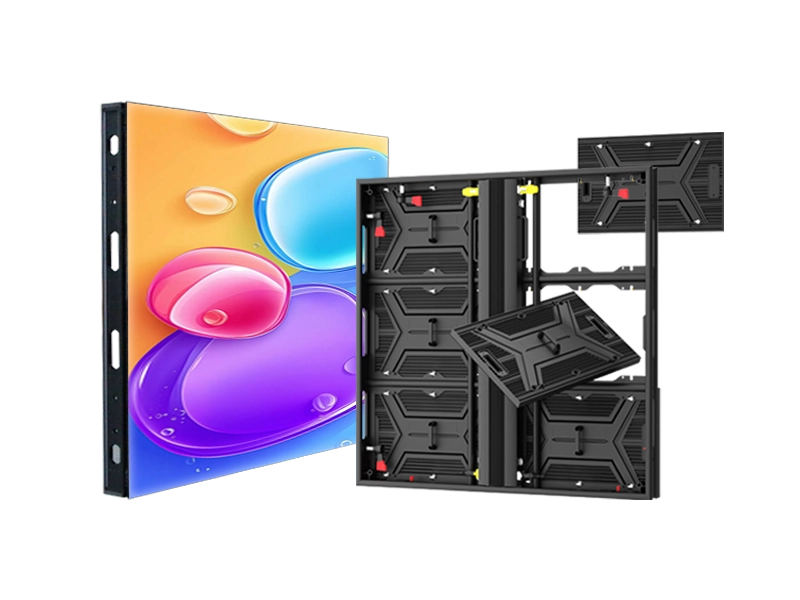
- Dual‑access maintenance: Service from front or rear – no need to clear seats.
- Hot‑swappable modules: Replace any module in under 30 seconds.
- Cloud monitoring: Real‑time status, predictive failure alerts, remote diagnostics.
Adhaiwell provides a full life‑cycle warranty – from installation to daily operation to future upgrades.
Conclusion: LED Displays Are Redefining the Value of Sports Venues
The year 2026 is a milestone for stadiums worldwide. With the FIFA World Cup and other major events imposing hard technical standards, venues are accelerating their LED upgrades. The global stadium display market is set to reach $2.58 billion by 2032 (CAGR 4.8%). But this is not just about meeting standards – it is about capturing new revenue.
Today, a stadium’s value is no longer measured only by seat count or suite numbers. The new metric is visual bandwidth – how many viewing zones can be served with what quality of visual experience. From a centerhung screen’s crystal clarity, to perimeter dynamic ads, to a 360° ribbon board’s immersive atmosphere – LED displays are elevating live sports to an unprecedented level.
Technology is not the end; experience is. The true ROI of a stadium LED system is measured in:
- Longer fan dwell time → more concessions & merchandise sales
- Higher sponsor visibility → premium advertising rates
- Broadcast‑ready image quality → rights holder satisfaction
- Sustainable operation → lower energy & maintenance costs
At Adhaiwell, we are not just selling LED panels. We are engineering visual platforms that maximize your venue’s commercial and experiential potential.
Why Choose Adhaiwell for Your Stadium LED Project?
| Feature | Adhaiwell Advantage |
|---|---|
| Custom engineering | Free structural design and line‑of‑sight analysis |
| Broadcast‑grade specs | 7,680 Hz refresh, 10,000 nits, HDR10 ready |
| FIFA compliance | IP65, GOB, dual redundancy, ≤P6 pitch options |
| Energy efficiency | <1 kWh/m²/day with adaptive dimming |
| Global delivery | Factory‑direct pricing + worldwide shipping |
| Full lifecycle support | 5‑year warranty, cloud monitoring, on‑site service |
Ready to transform your stadium into a visual powerhouse? Contact Adhaiwell today for a free consultation and customized proposal.
📧 Email: [email protected]
🌐 Website: https://adhaiwelldisplay.com
📍 Shenzhen, China – Serving stadiums worldwide.