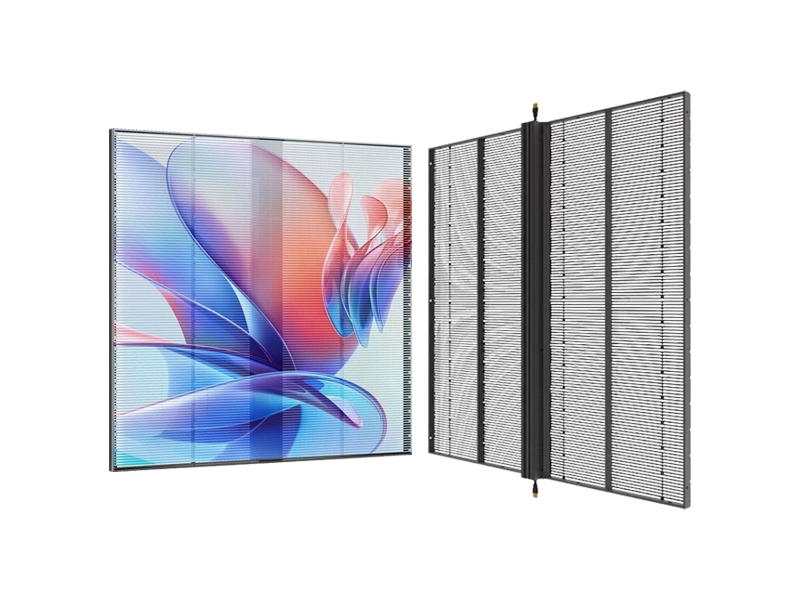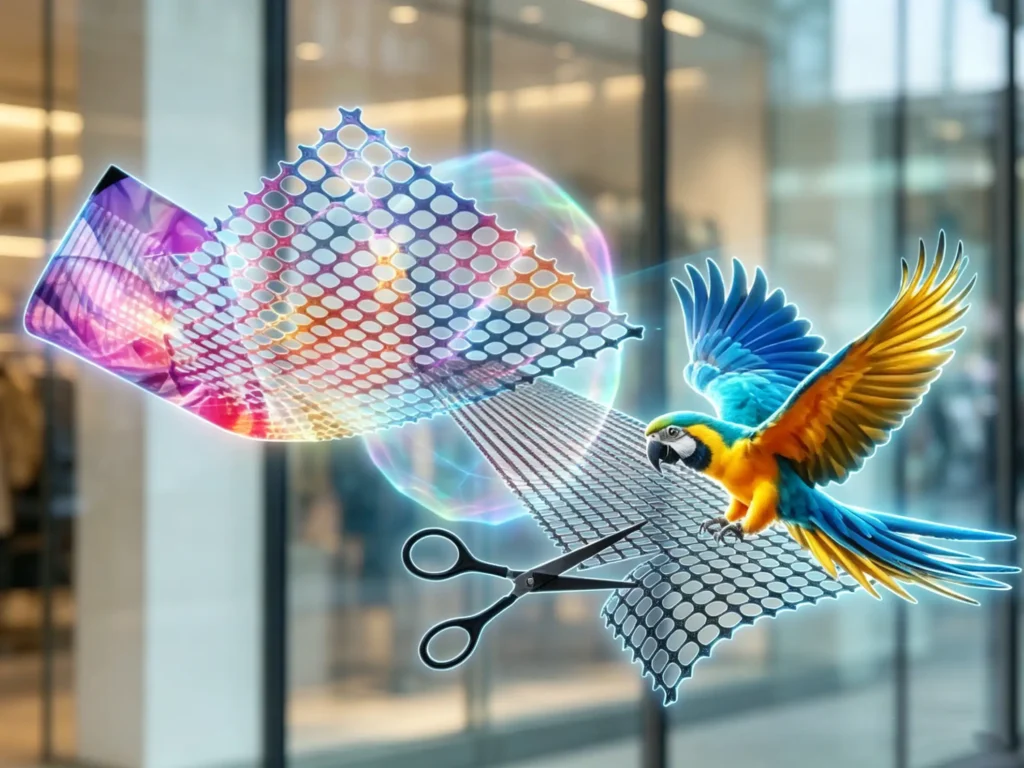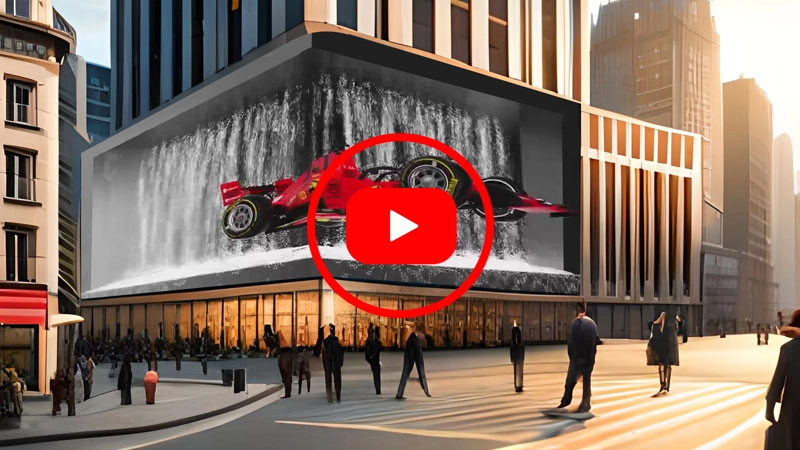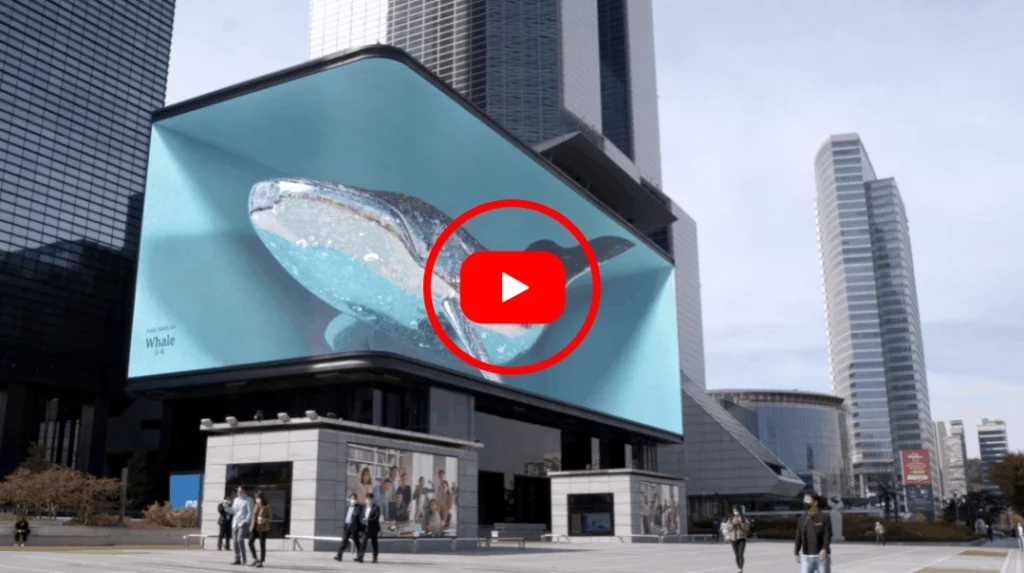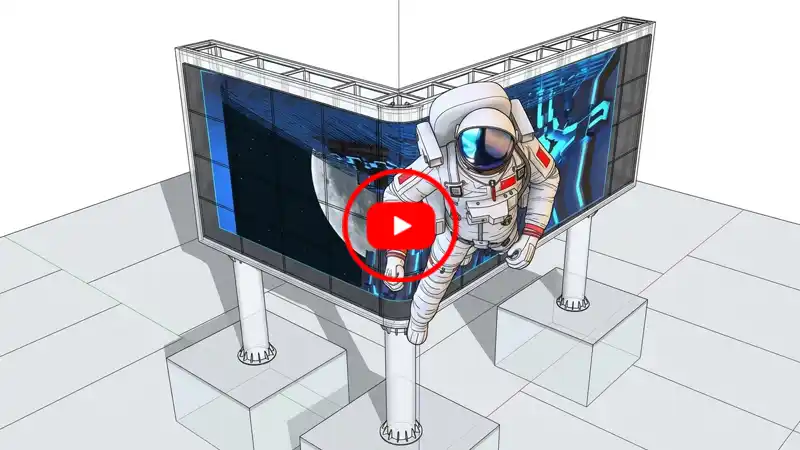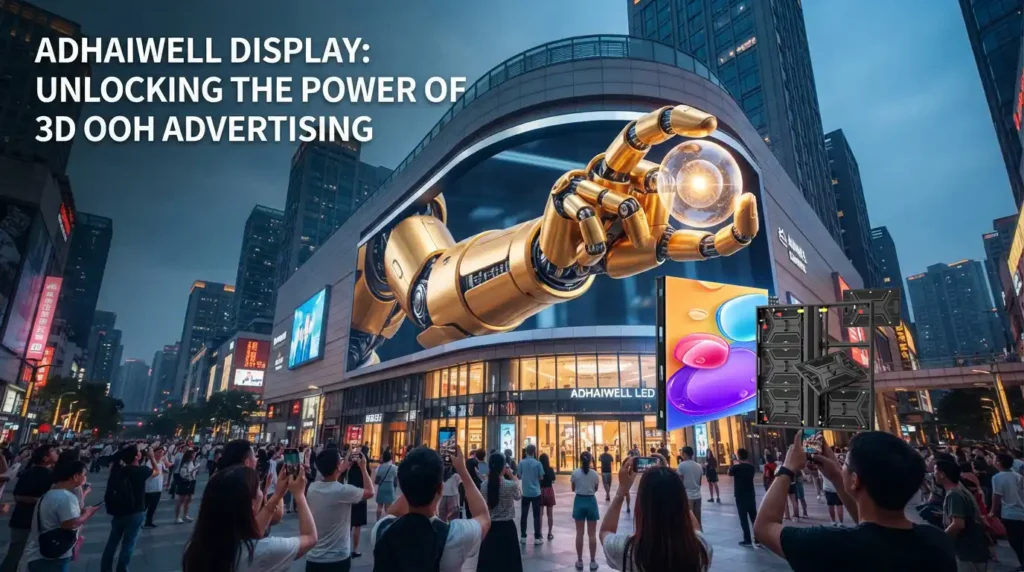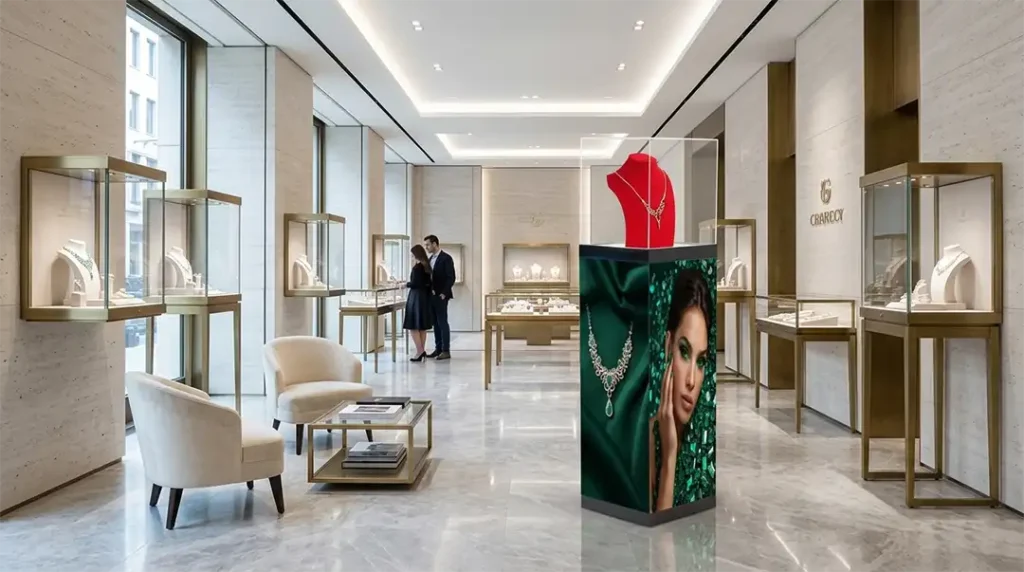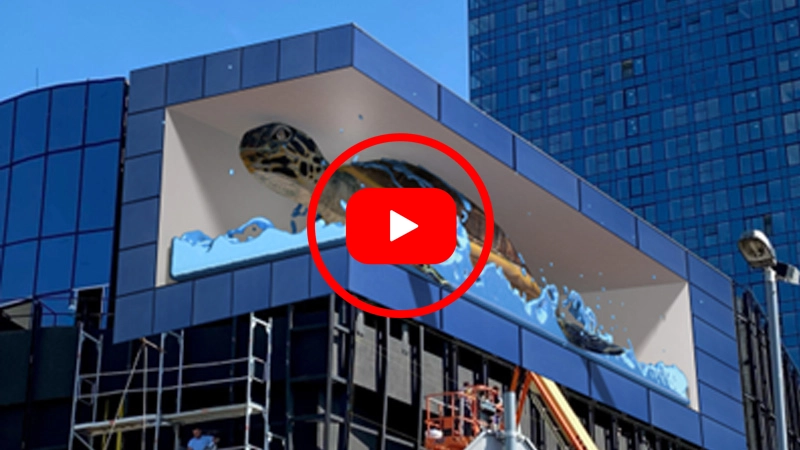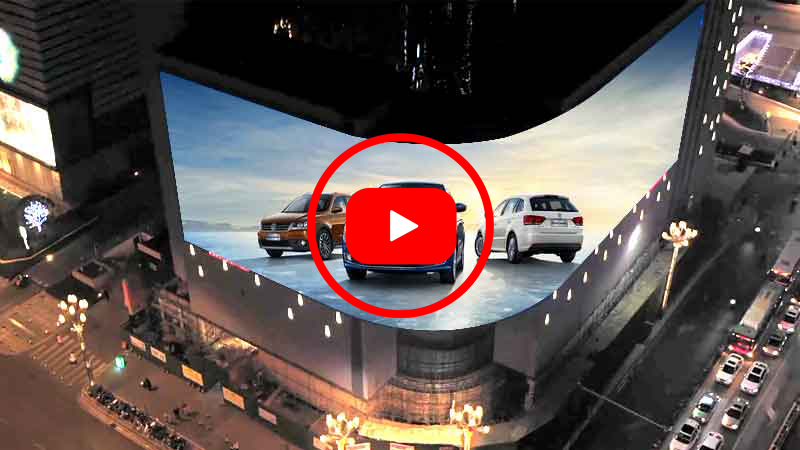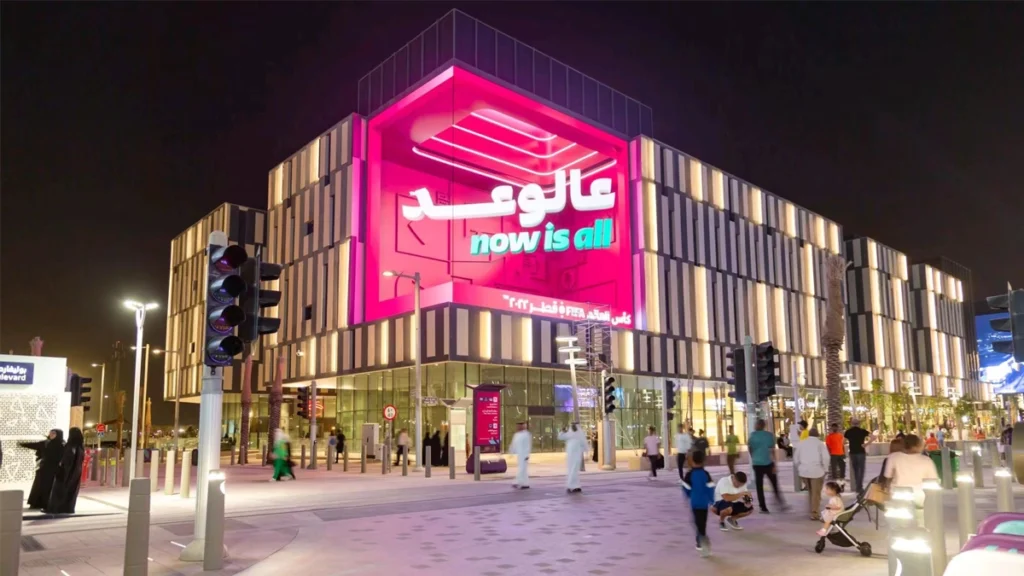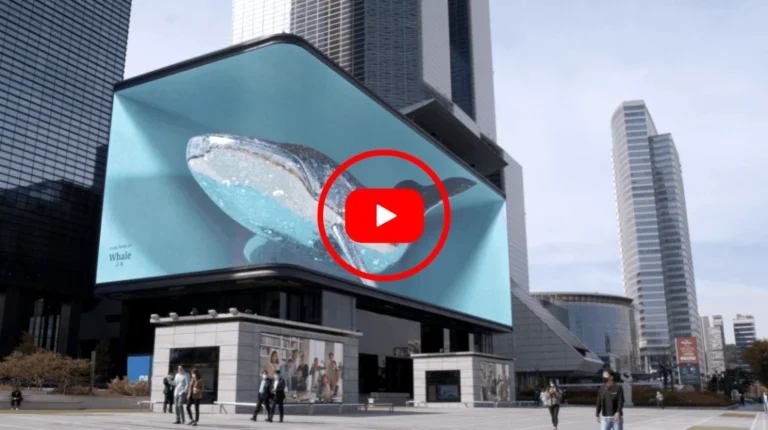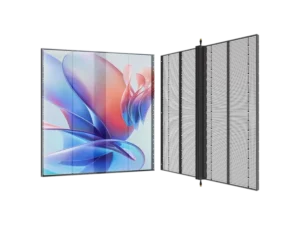
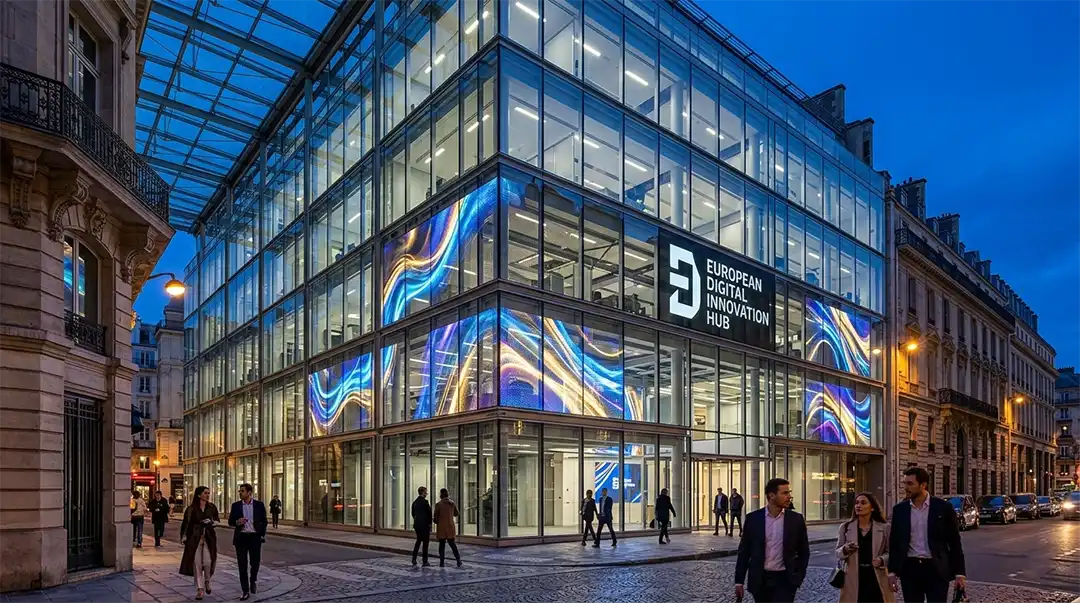
A Transparent LED Display 3D effect is not the same product as the corner-based naked-eye 3D that made Seoul’s COEX and Times Square famous, and buyers who treat them as one thing usually end up disappointed. On a retail window, a holographic LED film screen produces depth by a different route: the glass stays 80–95% see-through, so virtual content and the real merchandise behind it share one sightline. That is enough to make a product appear to float in the glass. It is not enough to make it appear to step out of the building. Knowing which of those two effects you are specifying is the difference between a window that stops pedestrians and an expensive flat video.
Key Takeaways
- A transparent LED display can deliver a layered, floating 3D effect in a retail window, but not the corner anamorphic 3D of an L-shaped outdoor billboard — those two effects use different mechanisms and one of them requires architecture, not pixels.
- The transparency is the depth engine: because 80–95% of the glass stays see-through, virtual content and the physical merchandise behind it occupy one sightline, which an opaque screen cannot imitate.
- Three numbers decide whether the effect survives daylight — pixel pitch, brightness and measured transparency — and they trade against each other. Published film modules run 2,500–5,000 nits depending on pitch and module size, with 5,000+ nits specified for sun-facing glass.
- Depth reads best inside roughly 1.5x to 3x screen height from the primary viewing position, so the window plan must start from where pedestrians actually stop, not from the glass dimensions alone.
- “Holographic” is a trade description of a sparse LED matrix, not holography. Specify measured transparency at a stated angle, brightness test conditions and pitch — not the label.
What does “naked-eye 3D” actually mean on a transparent LED display?
Two different techniques carry the same label, and only one of them can be installed on a flat window pane.
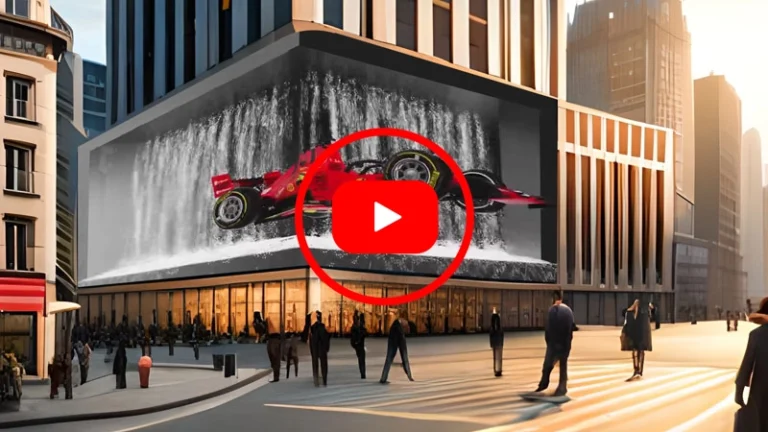
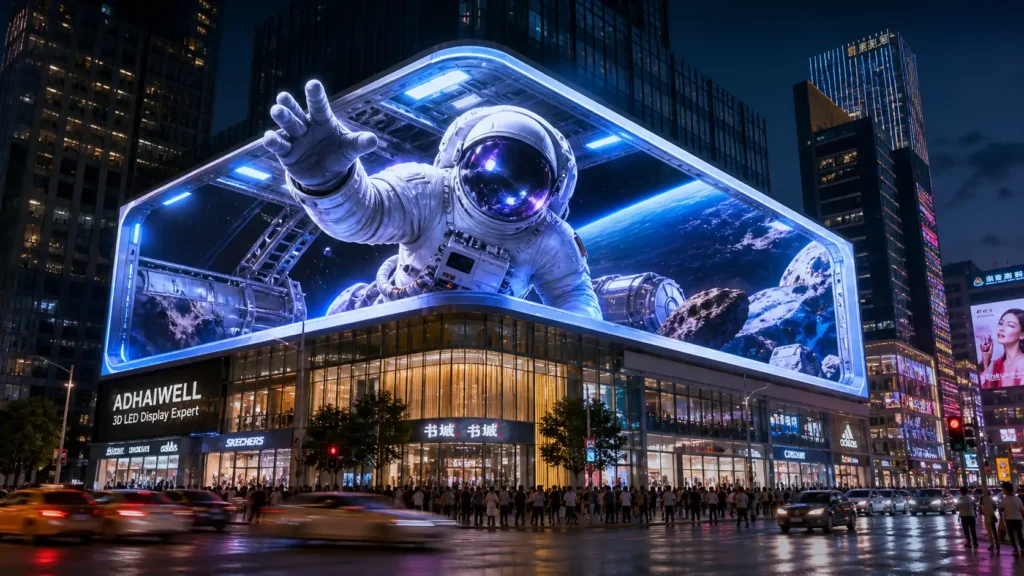
- Anamorphic corner 3D (what the landmark billboards use). Two screen planes meet at a physical right angle, and forced-perspective video is rendered camera-locked to one viewing zone. The building corner does the depth work, and content must map to the structure pixel for pixel.
- Layered transparent 3D (the floating or holographic window effect). A single flat plane with no corner. Depth comes from depth-separated content layers, from motion parallax as people walk past, and above all from real objects seen through the glass interleaving with the virtual layer.
- “Holographic” is a trade term, not holography. A true hologram reconstructs a light wavefront. These are sparse LED matrices on a transparent carrier; the word describes the effect, not the physics. Ask for measured transparency, brightness and pitch rather than accepting the label.
- What you are actually choosing between. One is a landmark media canvas built to stop traffic from across an intersection. The other is a window treatment that adds depth to the merchandise already sitting in the glass.
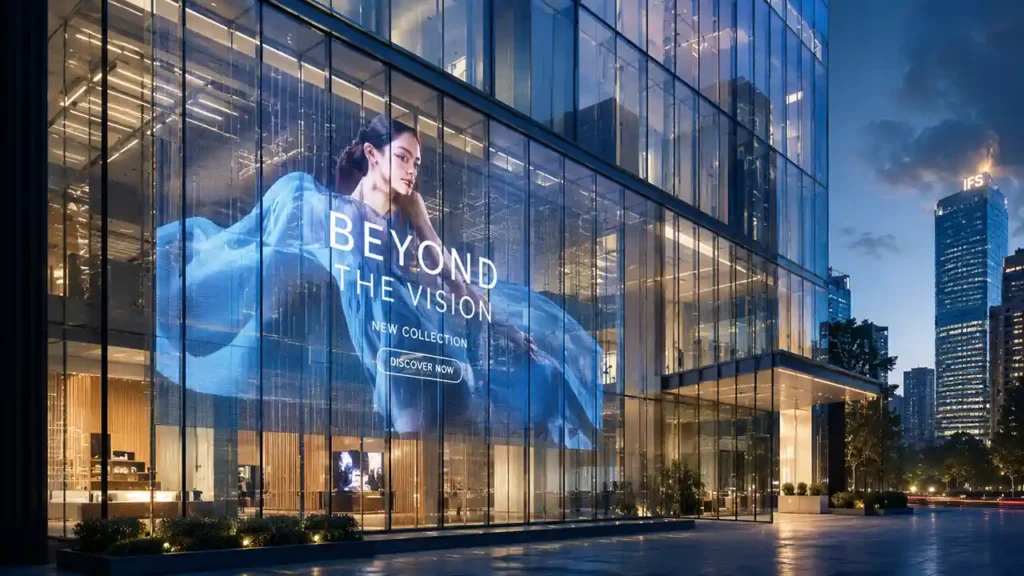
How does a holographic LED film screen create depth without a corner?
The transparency itself is the depth engine, because content is authored as additive light over a switched-off background and the emissive layer and the physical store remain visible in the same view.
- Black means transparent. On LED film an unlit pixel is see-through, so every frame has to be built with dark, sparse backgrounds. A full-frame bright scene converts the window into an opaque wall and destroys the very effect the client paid for — this is the single most common content mistake in retail window deployments.
- Depth-separated layers with offset motion. Foreground copy, mid-ground product shapes and background graphics travel at different apparent speeds, and the eye reads the difference as parallax.
- Real occlusion. A virtual object drawn behind the position of a physical product is partly hidden by that product through the glass. This mix of real and virtual depth is what an opaque screen can never fake.
- Walking parallax. A corner billboard is calibrated to one spot and weakens as you move away from it. A window film gains a second depth cue from pedestrians moving laterally across it.
- Refresh and grey processing set the floor. Published specifications for the adhesive holographic LED film screen start at 3,840 Hz refresh with 14-bit grey processing, which is a practical requirement rather than a vanity number: shoppers film windows and repost them, and low refresh produces scan lines in phone footage.
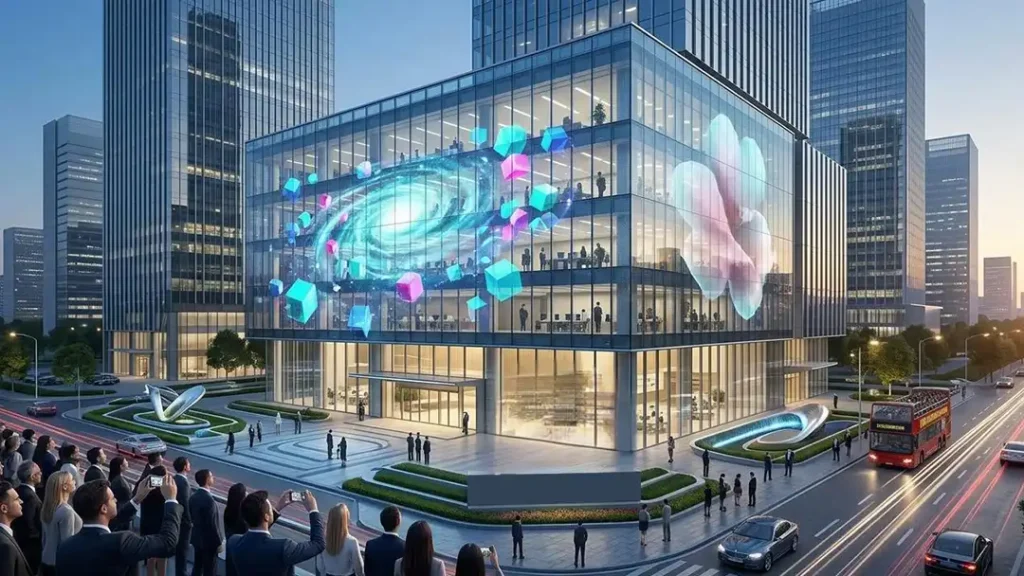
Why can’t a flat retail window reproduce the corner 3D billboard effect?
Because on those billboards the illusion is created by architecture and not by the screen, and flat glass gives the content no edge to break out of.
- The corner is the trick. At a 90° junction one face reads as the front of a recess and the other as its side, so the brain extends that volume outward from the plane. A single pane offers no equivalent read.
- Parallax is locked to one zone. An anamorphic render is only geometrically correct from the position it was built for. Adhaiwell’s engineering notes place the practical primary viewing zone at roughly 1.5x to 3x screen height from the main viewing position; beyond that, or from a steep side angle, the volume flattens back into warped 2D.
- There is a size threshold. Corner installations are normally planned at a minimum of about 4 m x 3 m per face, with landmark-scale canvases at 10 m x 10 m per face or larger. Seoul’s COEX K-pop Square canvas, roughly 80.8 m wide by 20.1 m high — about 1,600 m² at 8K — sits at the extreme end of that scale, and its signature one-minute-per-hour loop took about four months to produce, three of them for design and multi-angle on-site testing.
- The structural work is different. Corner cabinets have to be engineered for asymmetric wind and gravity loads. Window film carries almost none of that load, which is why the two project types rarely sit in the same tender. The mechanics are set out in more detail in our guide to how naked-eye 3D LED screens work.
Which retail windows suit transparent LED 3D — and which do not?
It works where shoppers can stand and look for several seconds from a known angle, and it fails where they only pass at speed or at a sharp oblique angle.
Where it works
- Luxury boutique, watch and jewellery windows. Short viewing distance, darker interiors and a brand budget that tolerates content production. A P3.91-class pitch keeps text legible from 3–4 m.
- Mall atriums and glass lifts. Longer viewing distances of 6–10 m suit P6.25-class film and give an angled walk-past approach that reinforces the parallax.
- Flagship facades at a plaza or a set-back sidewalk. Shoppers can stop, so the window can carry a layered brand narrative rather than a product loop.
- Double-sided glazing between two shopping zones. One film can serve the street-side audience and the interior audience, which changes the cost per impression materially.
Where it does not
- High-street windows on a fast road with no sidewalk dwell. There is no viewing time, so there is no depth read.
- Windows under roughly a few square metres viewed from under 2 m. Close-up clarity needs a fine pitch, and fine pitch fights directly against transparency.
- South- or west-facing glass in direct sun, unless the film is specified above the standard brightness band.
- Heritage or landlord-restricted facades where adhesive film, cable routing or light spill is not permitted. Traffic-side planning and format choice for these cases are covered in our breakdown of transparent LED displays in retail storefronts.
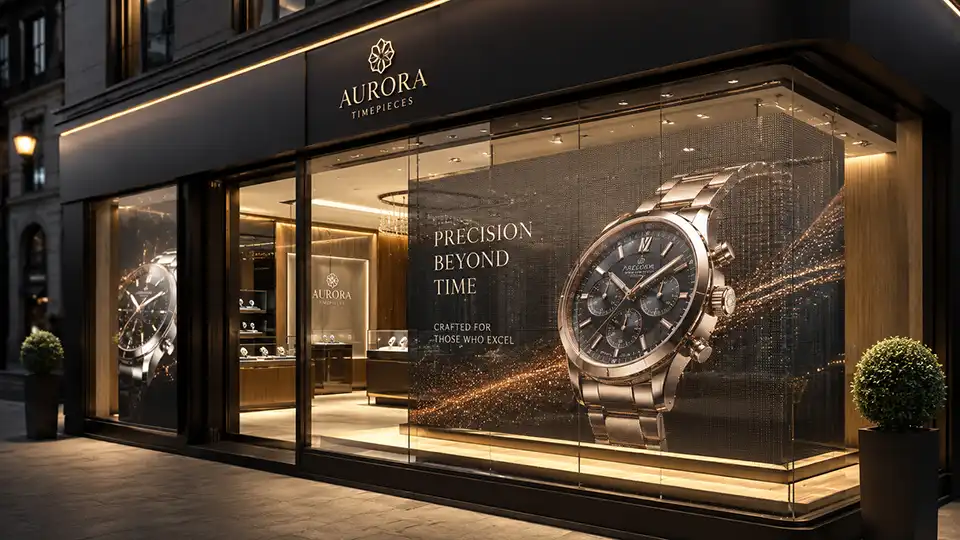
What specifications decide whether the 3D read survives in daylight?
Three numbers do most of the work — pixel pitch, brightness and measured transparency — and they trade against each other rather than improving together.
| Pixel pitch | Pixel density | Practical best viewing distance | Role in a window |
| P3.19–3.91 | 65,536 px/m² (P3.91) | ~4 m | Close-up boutique windows where text must stay legible |
| P6.25 | 25,600 px/m² | ~6 m | Mall atrium, glass lift, mid-distance glazing |
| P10.42 | lower | far | Large glass facades where see-through matters more than detail |
| P20 | lowest | very far | Landmark scale, viewed from across a plaza |
- Transparency and resolution pull in opposite directions. Published figures for this film range run at 90%+ in headline specifications and above 80% in the module spec table. The higher the transparency, the sparser the LEDs, and the coarser the readable detail — a 95% figure quoted with no measurement conditions almost always describes a low-density module.
- Brightness is the daylight gate. Module-level figures run 2,500–3,500 nits for the small-format P3.91 modules and 3,000–5,000 nits for P6.25. Glass in direct sun in Dubai, Miami or Singapore normally needs the 5,000+ nit configuration; below that the window reflects more light than it emits and the layers wash into each other.
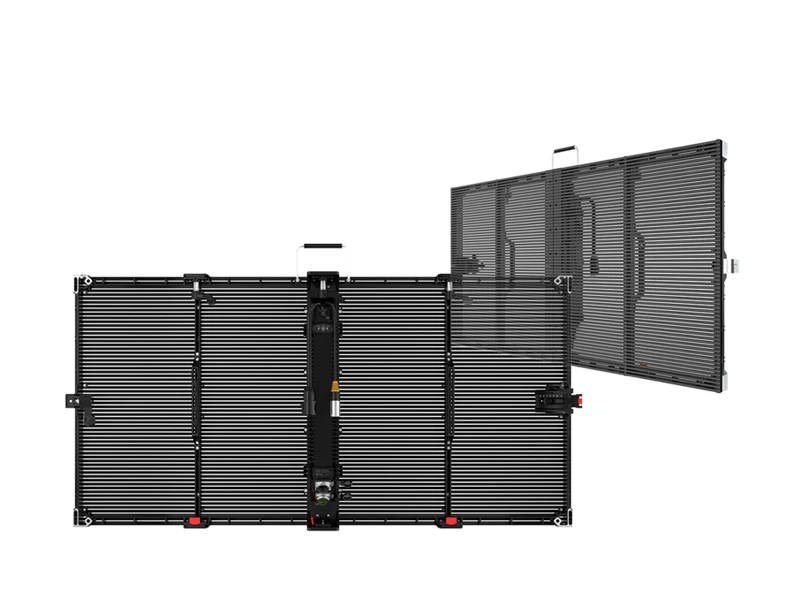
- Weight and thickness on the glazing. Film modules are quoted under 4 kg/m² and under 2 mm thick for adhesive mounting, so the added load on the glass is modest. Where the glass cannot take adhesive, or where the client wants simple maintenance access, a transparent LED display for glass curtain walls built on 50 mm aluminium cabinets is the alternative — its LED strips are designed to be swapped from the front in about two minutes.
- Refresh, grey and driving. 3,840 Hz refresh with 14-bit grey is the working baseline; single-pixel driver control is what produces the grey depth a layered 3D render needs. A 140° viewing angle is typical for film, but that is a readability figure, not a depth figure.
- Content rules worth writing into the contract. Black background as the default state, no full-frame white scenes, 60 fps delivery, render output matched to the actual module grid, and a test loop played on a factory sample of the same pitch before shipment.
- Building and compliance constraints. Adhesive film sits on the tenant’s glass, so confirm the landlord’s rules, the glass coating specification and the glazing warranty before ordering. Street-facing screens are also regulated locally — luminance limits, operating hours and restrictions on moving images near roadways differ by city, and a retail window facing a public road may need a permit. Published indoor transparent screens carry IP30 with a working range of about -20 to +60 °C, which suits a conditioned mall but should be checked for a sun-facing glass lobby.
Where are 3D glass window installations happening, and what does the market data say?
The supporting category is growing quickly while purpose-built 3D window content is still the minority of installations — the hardware is being deployed faster than the creative that justifies it.
- The category. Persistence Market Research values the global transparent display market at US
5,848.2 million in 2026 and projects US52,435.4 million by 2033, a 36.8% CAGR, with Asia-Pacific holding a 40.2% share in 2026. That is a third-party estimate drawn from a commercial research report; methodologies differ between firms, so treat it as directional context and not as a revenue forecast for any specific retail network. - Retail is the anchor application, and the uplift claims are soft. The same report attributes 25% longer dwell time and 15% higher conversion to transparent displays versus traditional signage, without publishing a measurement method. Treat that as a supplier-side figure rather than a number to underwrite a business case with.
- The money is moving into the store. WARC Media forecast global retail media ad spend at US
200.4 billion in 2026 rising to US223.4 billion in 2027, and identifies in-store screens as the least developed part of the mix — a gap between shopper location and media spend rather than a technology gap. EMARKETER projects US in-store retail media ad spending to grow 33.1% in 2026. - Digital out-of-home context. WOO put global DOOH revenue at US
25.5 billion in 2025 and about US28 billion in 2026, which is the pool a glass window competes in for media budget. - What is actually installed. Corner-format 3D clusters around Seoul, Tokyo, New York, Dubai, Bangkok and Kuala Lumpur, with newer projects in Jakarta, Ho Chi Minh City, the Gulf and Maputo. Window film and behind-glass transparent screens appear across retail, transit glass and corporate towers — on an operator-reported, not independently audited basis, Adhaiwell lists airport glass curtain walls, a luxury watch boutique window in Paris, a mall glass lift in the Middle East and a US commercial tower among its reference installations. The intersection-level logic behind site selection is analysed in our review of where naked-eye 3D LED displays are deployed.
How should buyers vet a China supplier for a 3D transparent LED window project?
Judge the supplier on engineering process and content capability, not on the transparency number in the headline.
- Whether they measure transparency or merely claim it. Ask at what angle, under what light condition and on which module size the figure was taken. A transparency number without conditions is a marketing number.
- Whether they can pre-visualise the 3D on your geometry. A supplier who can render the layered or anamorphic content camera-locked to your actual window dimensions, viewing distance and glass angle before tooling is a different class of supplier from one who ships panels and leaves content to you.
- Whether they will send a sample to put on real glass. Reflection, daylight and interior lighting cannot be judged from a factory video. Test a module on site, at the real viewing distance, with content of the same pitch.
- Pitch, brightness and module size matched to viewing distance, with the trade-off stated in writing. If the answer is “maximum transparency and maximum resolution”, the specification is not finished.
- The control and content path. Confirm the controller, media player, remote multi-store content management, and whether the CMS carries licence fees.
- Certification and documentation. CE/EMC and LVD, or UL depending on destination, plus RoHS, HS code and a QA record naming the ageing test duration before shipment.
- Service reality. Warranty term and what it covers — modules, power supply, controller — spare-part turnaround, remote troubleshooting, and whether strip-level front access is possible without dismantling the window.
- References that match the application. Retail windows and transit glass, not stadium screens. As a benchmark for comparing quotes, published terms for this film family are a 2–5 m² minimum for a single window, 15–25 working days lead time after deposit and drawing approval, and a two-year system warranty.
FAQ: Naked-Eye 3D on Transparent LED Display and Holographic LED Film
The answers below come from manufacturing and export practice rather than from marketing material. Adhaiwell is a Shenzhen-based LED and LCD display manufacturer with more than 15 years of production experience, a factory producing both adhesive transparent LED film and cabinet-based transparent screens, and installed projects across Europe, North America, the Middle East, Africa and Southeast Asia. Every transparent display unit runs a 72-hour factory ageing test before shipment.
Can a transparent LED display show 3D without glasses? Yes, but the mechanism differs from a corner billboard. A window film produces a layered floating effect where virtual content and real merchandise share one sightline. It does not produce the breaking-out-of-the-building illusion, which needs a physical 90° corner and anamorphic content mapped to it one-to-one.
Does the 3D effect still work in direct daytime sun? Only above a brightness threshold. Published film modules run 3,000–4,500 nits in standard configurations and reach 5,000+ nits in the sun-facing upgrade; a shaded or interior-facing window works in the standard band, while glass in direct sun needs the higher one.
Which pixel pitch should a retail window use? Match pitch to the closest realistic viewing distance. P3.91-class film suits a sidewalk view of 3–4 m, while P6.25-class film suits a mall atrium viewed from 6 m or more. Going finer than the viewing distance requires more sharpness and costs transparency.
How far can shoppers stand from the window and still see the depth? Plan around 1.5x to 3x screen height from the main viewing position, and check the approach angles. Beyond that distance, or from a steep side angle, the layers flatten into a 2D video — which is why the visitor stop point has to be surveyed before the screen size is fixed.
Is “holographic LED film” an actual hologram? No. It is a high-transparency LED matrix whose sparse pixels disappear when off, and “holographic” describes the floating visual result. A hologram reconstructs a light wavefront and needs no fixed viewpoint. Ask for measured transparency, brightness test conditions, and pixel pitch instead.