Taxi Headrest Advertising Screens have stopped being a curiosity and have become a working distribution channel for in-car media, but the reason is operational rather than technical. The panels, players, and mounts have been available for years. What changed is the combination of connected vehicles, ride-hailing fleets that operate at scale, and cloud content management that lets one operator control hundreds of moving screens from a browser. This post looks at what is actually changing in the market, why headrest screens differ from taxi roof displays, how cloud CMS changes operations, and what a buyer should verify before treating this as a business.
This is written as market context for buyers who are evaluating the category — including advertisers, fleet operators, system integrators, and importers considering China-sourced hardware. It is not a product pitch. Where figures are cited, they come from third-party research and should be read as direction, not as a promise of returns.
Key Takeaways
- The shift is operational, not technical. Taxi headrest advertising screens became practical because cloud CMS, 4G connectivity and fleet grouping removed the manual cost of updating distributed screens.
- Headrest screens are a different media product from roof displays. Roof screens sell seconds of roadside visibility; headrest screens sell minutes of seated passenger attention inside the vehicle.
- The hardware is largely standard; the network is what varies. Android players, 10-inch panels and remote CMS are now common, so differentiation moves to installation compliance, uptime, measurement and support.
- Market numbers are directional, not guaranteed. Third-party forecasts point to continued growth in automotive displays and in-car advertising platforms, but methodologies differ and none of them predict revenue for any single fleet project.
- Buyers should qualify the supplier, not just the price. Spec sheets, sample testing, QC process, lead time and after-sales terms matter more than the lowest quote.
What Is Changing in the In-Car Advertising Market?
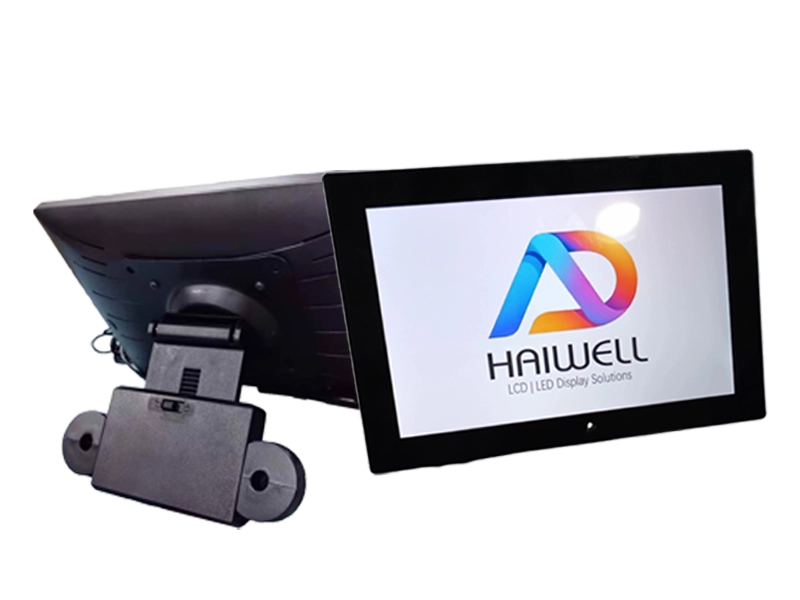
In-car advertising is moving from static vehicle surfaces to screens that can be updated remotely, and the change has happened in three visible steps.
- Step one was static inventory: taxi roof signs, interior posters and seat-back paper ads. Cheap to produce, but every change meant printing and labor.
- Step two was digital roof displays: LED signs on top of the car that could be republished remotely. They are still aimed at pedestrians and other road users, not at passengers.
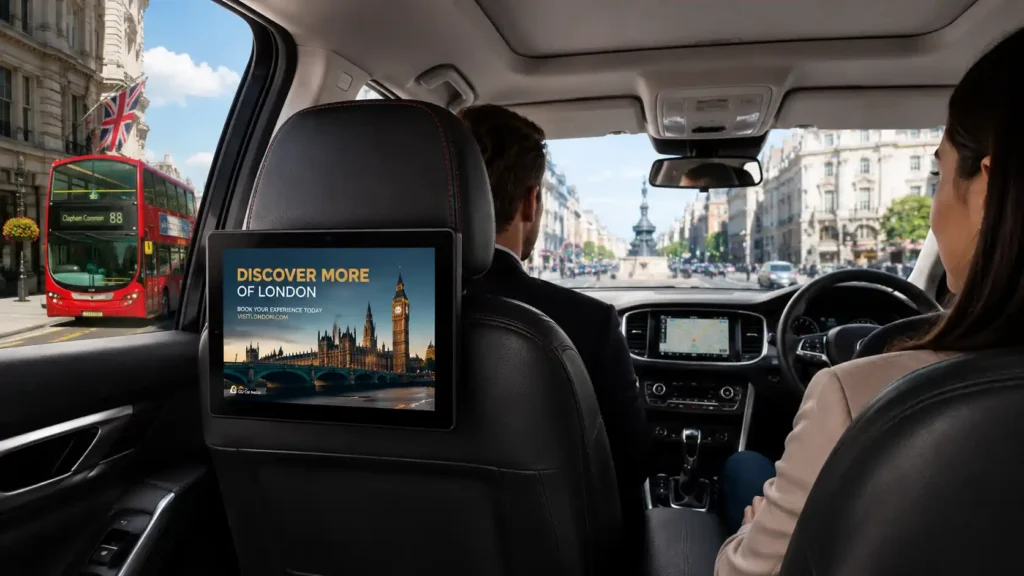
- Step three is what is happening now: passenger-facing screens inside the cabin — on headrests, seatbacks and dashboards — managed through the same kind of CMS that runs building and transit signage.
Three forces pushed that third step forward. Vehicles became connected (4G is now treated as a standard feature rather than an option), ride-hailing created fleets with predictable trips and identifiable routes, and digital content management matured enough to handle scheduling, grouping and remote publishing across hundreds of units. None of this happened at the same speed everywhere. Markets where ride-hailing platforms or ad agencies drive the model — the United States, parts of Europe, and a number of emerging markets — have moved faster than markets where taxi advertising is still sold as static posters.
The size of the opportunity is usually described with third-party numbers, and they should be treated carefully. One commercial research estimate (Persistence Market Research, April 2026) puts the global automotive display market at roughly USD 15.0 billion in 2026, growing to about USD 33.4 billion by 2033 — an implied CAGR of roughly 12.1%. Those figures cover dashboards, instrument clusters and rear-seat entertainment, not taxi advertising screens specifically, so they are a directional signal about in-vehicle displays, not a sales forecast for any fleet product. For the taxi-specific side, we have compiled the more relevant figures in our taxi advertising LCD display market analysis, which also flags how much those estimates vary between research firms.
Why Are Passenger-Facing Screens Different From Taxi Roof Displays?
They are different because the two formats answer to different audiences, which leads to different content, different installation requirements and different ways of selling ad time.
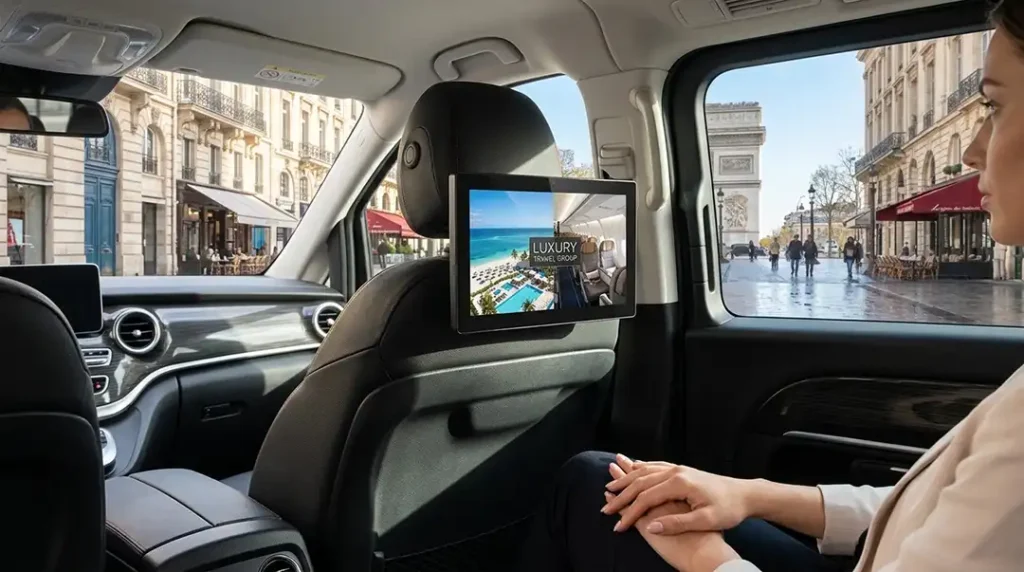
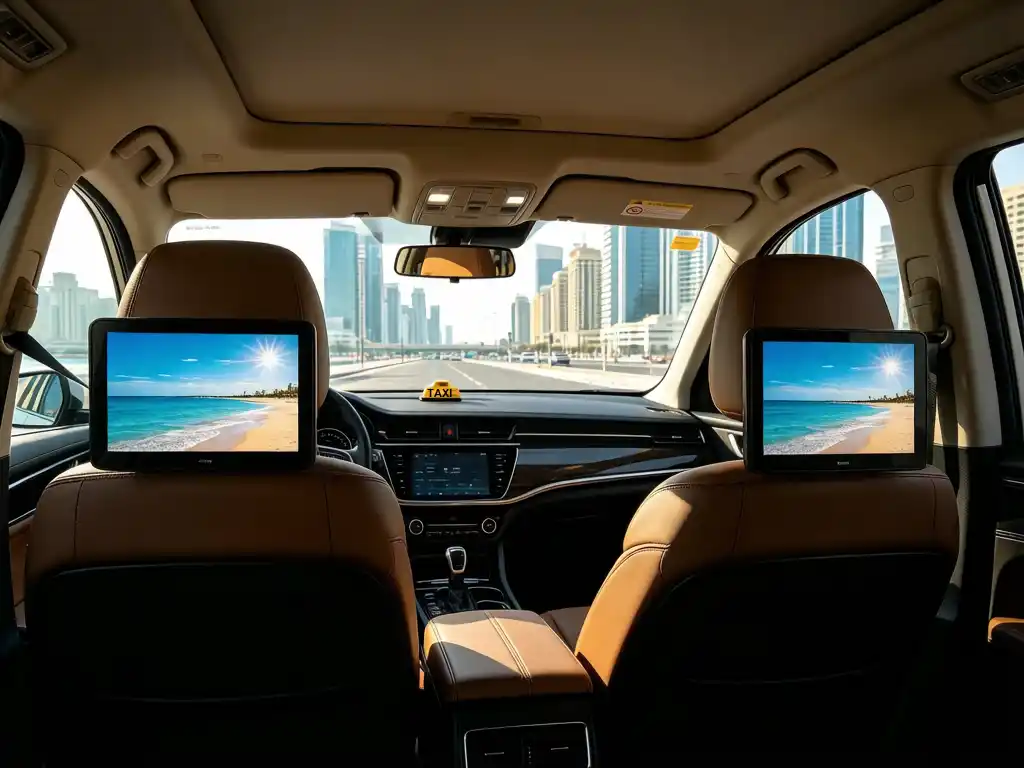
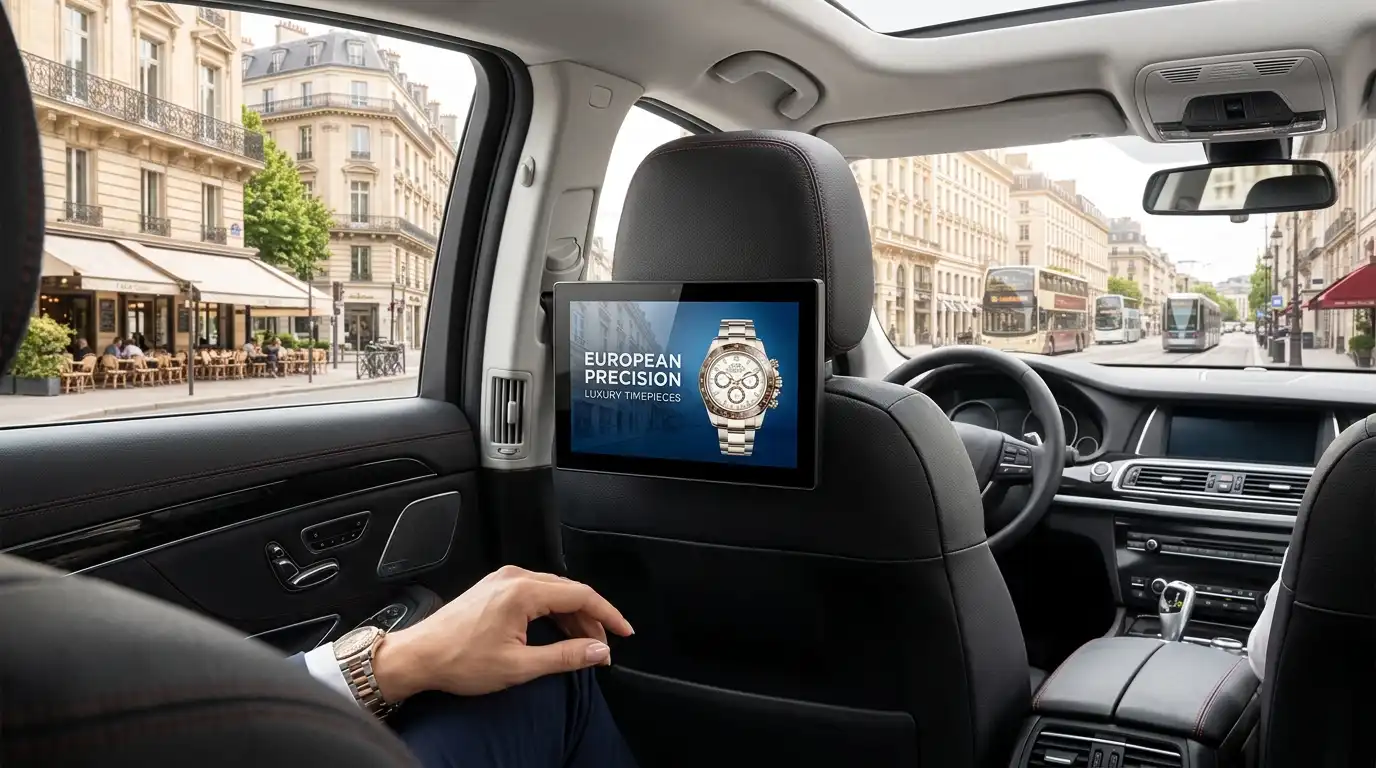
A taxi roof display is an outdoor advertising product. It competes with street-level visual noise, is judged in seconds at a distance, and is usually sold on traffic counts — how many pedestrians and drivers pass the vehicle. A headrest screen is an indoor, passenger-facing product. The passenger has already chosen to be in the vehicle and typically stays for minutes, so the screen can run a short video ad, layered service information, or an interactive offer without depending on the car passing a busy corner.
| Taxi roof display | Headrest/Seatback screen | |
| Audience | Pedestrians, other road users | Seated rear passenger |
| Viewing window | Seconds, from a distance | Minutes of trip dwell time |
| Content style | One bold message | Video loops, multi-ad rotation, service info |
| Hardware needs | Weatherproofing, high brightness | Vibration tolerance, wide voltage input, anti-theft mounting |
| Sales logic | Traffic-based exposure | Trip-based inventory, proof-of-play reporting |
The practical consequences show up in installation and rules. Roof displays change the vehicle’s exterior profile, which in many cities means additional permitting, size limits, and power draw constraints. Headrest screens are interior equipment, so the compliance question usually becomes vehicle-modification rules and whether the mount interferes with the headrest, seat adjustment, or airbag zones — a different and generally lighter regulatory path, though it still must be checked locally. The two formats can coexist on the same car. A roof screen sells the vehicle as moving outdoor media; a headrest screen sells the trip as a captive indoor audience. Treating them as one product is usually a mistake in both content planning and sales.
How Does Cloud CMS Change Taxi Advertising Operations?
A cloud CMS removes the manual labor that made distributed taxi screens uneconomical — updating content, checking playback, and controlling who is allowed to publish what.
Without a CMS, a 50-vehicle network means 50 visits to 50 cars every time a campaign changes. With one, an operator uploads a playlist once and pushes it to a group of vehicles over 4G while the cars are on the road. That difference in labor cost is the real reason the format became practical, so the CMS should be evaluated as a business tool rather than as a technology feature. For a cloud CMS taxi screen project, the practical checklist is:
- Scheduling and playlists — set content by time of day, day of week or date range (morning commuter ads versus evening entertainment content).
- Grouping — organize vehicles by city, district, route or client, and publish to one group without touching the rest.
- Remote publishing — update over 4G/WiFi while vehicles are moving, with a USB fallback for cars with poor signal coverage.
- Playback and device monitoring — see which screens are online, what is playing, and get proof-of-play logs that advertisers increasingly ask for.
- Approval workflow and permissions — multi-advertiser accounts with content review before anything goes live, plus an audit trail.
- Fault handling — remote reboot or diagnostic data so a driver does not have to be a technician.
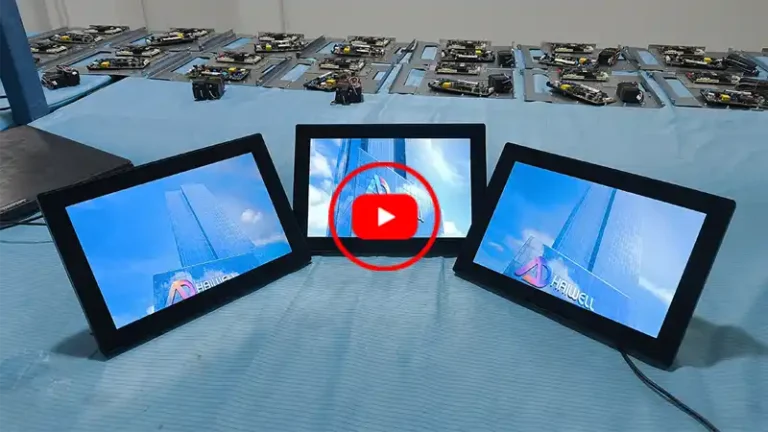
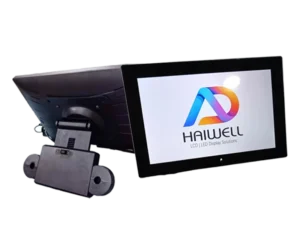
The hardware underneath this is now fairly standard. Most suppliers ship Android-based units — for example an in-car seatback LCD advertising display that runs Android, connects over 4G LTE/WiFi and includes a remote CMS — and Android matters because it accepts custom APKs and third-party signage software. What separates suppliers is less the panel than how the CMS behaves in daily operation: how fast a campaign propagates to 500 units, how reliable the reconnect logic is after a vehicle enters a tunnel, and whether the platform is stable enough that an operator does not build a second, shadow workflow with spreadsheets.
Which Trends Will Shape Taxi Headrest LCD Advertising Screens?
Six trends will shape taxi headrest LCD advertising screens over the next few years, and most of them are about operations, integration and trust rather than display technology itself.
- More fleet-level content management, fewer isolated screens. Buyers are moving from single units to networks, which pushes demand toward CMS, grouping and monitoring rather than raw hardware.
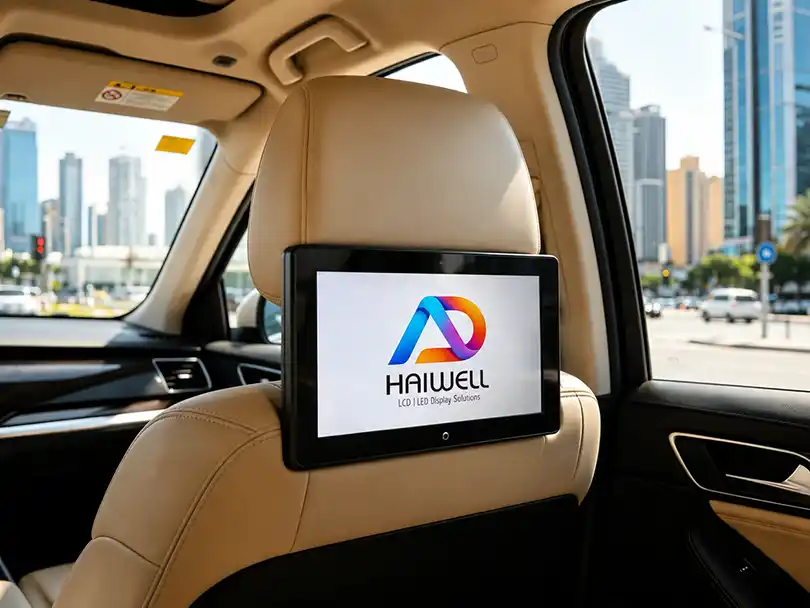
- Modular Android hardware for easier integration. Android has become the default platform for in-car digital signage because it runs custom APKs, connects to third-party CMS platforms, and lets operators add their own applications later.
- Growth of ride-hailing and private-hire media formats. Ride-hailing fleets have predictable trips and data about routes and duration, which makes them attractive to advertisers and to hardware suppliers alike. A ride-hailing media network has a cleaner story to sell than a loose group of independent taxis.
- More attention to compliant installation, passenger experience and uptime. As the channel matures, buyers care about mounts that do not affect seats, screens that do not annoy passengers, and devices that stay online — because downtime is unsold inventory.
- Greater demand for OEM branding and custom mounting solutions. Operators want their own logo on boot-up, their own bracket fit and their own packaging, which points toward OEM/ODM supply rather than off-the-shelf consumer tablets.
- A gradual move toward measurable delivery. Proof-of-play, campaign reports and delivery metrics are becoming part of the sales conversation wherever the platform and local privacy rules allow it — but measurement standards are still young, so expectations should be realistic.
The commercial context supports the direction, with the usual caveats about methodology. One third-party estimate (Dataintelo, 2025) values the global in-car advertising platform market at about USD 1.8 billion in 2025 and projects roughly USD 6.7 billion by 2034, a CAGR of about 15.8% — a figure that includes connected-car platforms well beyond taxi screens. Broader digital out-of-home numbers point the same way: the World Out of Home Organization reported global DOOH expenditure of about USD 25.5 billion in 2025 and forecast around USD 28 billion for 2026. None of these sources use identical definitions, which is exactly why they should be read as trend evidence rather than as an income projection for a specific fleet.
What Should Buyers Verify Before Following This Trend?
Buyers should verify six things before treating connected headrest screens as a safe channel — and the list starts with rules and hardware, not with price.
- Local rules on vehicle modification. Check whether installing a headrest screen is allowed for taxis and ride-hailing vehicles in the target city, and whether the vehicle class or license type changes the answer. Rules also cover what content may be shown and how passenger data may be handled — those are separate from equipment rules and often stricter.
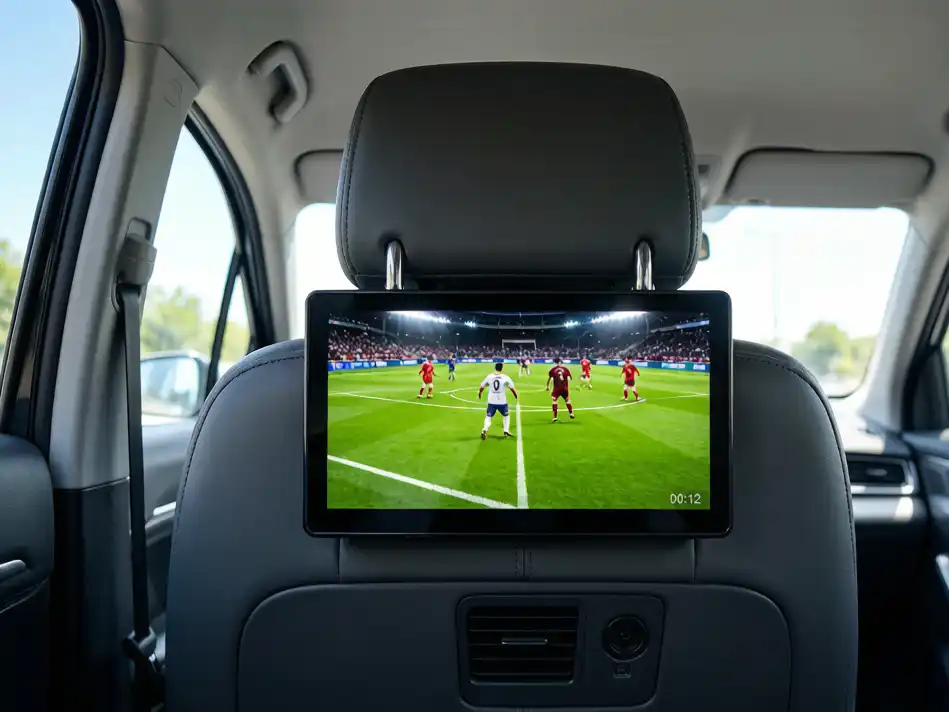
- Impact on the seat and the passenger. Confirm the mount does not interfere with headrest adjustment, seat belts or airbag zones, and that the bracket fits the actual headrest geometry of the fleet’s cars. Passenger comfort matters commercially: a screen that blocks legroom or glares constantly will be switched off by drivers.
- CMS capability for multi-fleet, multi-city, multi-advertiser operation. Test permissions, content review, audit trails and grouping with the actual workflow you intend to run — not with a demo playlist.
- Suitability for long commercial runtime. Ask for panel life (50,000+ hours is common on industrial-grade units), operating temperature range, aging tests and vibration testing. A screen built for a living room will not survive a taxi cabin.
- Sample, drawings and after-sales. A serious supplier can provide samples, mechanical drawings, installation instructions, a spare-parts plan and a written warranty. A supplier that can only send a price list is a red flag at fleet scale.
- Content and privacy compliance process. Confirm who reviews advertising content before it publishes, and how the platform handles privacy where location-based or trip-based targeting is used. If the supplier has no answer to this, that is a gap in the product, not in the paperwork.
A detailed, step-by-step version of these checks — including what to ask about specifications, connectivity and installation before ordering — is in our guide on how to choose a taxi headrest LCD advertising screen for fleet projects. The short version: order a sample, install it in the actual vehicle type, run the CMS for two weeks, and only then talk about volume pricing.
Where Does a China OEM/ODM Manufacturer Add Value?
A China OEM/ODM manufacturer adds value by shortening the path from a trial screen to a branded, serviceable fleet rollout — provided the buyer evaluates the supplier as a manufacturer, not as a price list.
The first contribution is speed. Standardized Android hardware means a buyer does not wait for a bespoke product; the sample cycle is short, and customization is applied on top of a proven base rather than designed from zero. Typical commercial terms in this product category illustrate the rhythm: samples of 1–2 units for testing, a lead time of roughly 20–30 working days for OEM/ODM orders, a common MOQ around 100 pieces, and volume discounts at higher quantities. A buyer can therefore validate the product on a few cars before committing to a fleet order.
The second contribution is branding and fit. Customization usually covers the mounting bracket, housing color, boot-up logo, packaging and software configuration — enough for an operator to present the screen as its own media device rather than a generic import. On hardware, the areas that matter for vehicle use are wide DC input (typically 9–30 V with overcurrent and surge protection, so the screen survives the electrical noise of a real car), anti-theft SIM slot design, and temperature tolerance suited to cabin conditions.
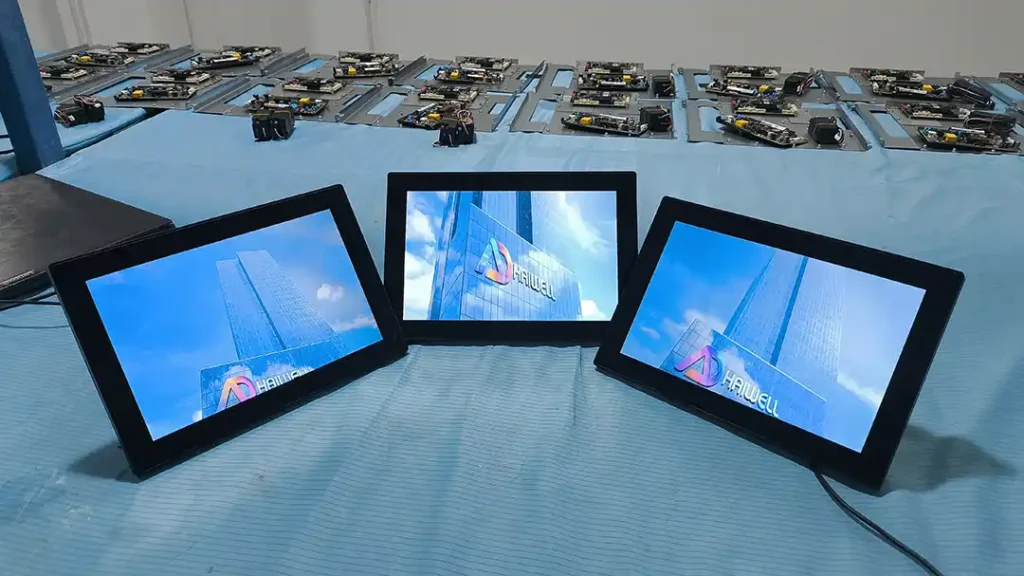
The third contribution is evidence of manufacturing discipline. Scale deployments exist — Adhaiwell reports a 1,000-unit taxi digital signage deployment in Armenia in 2026, installed across urban taxi fleets with 4G connectivity and remote CMS — and factory QC for this category normally includes continuous aging tests, vibration simulation and CMS debugging before shipment. The point is not that one factory is the only option; it is that these are the things to check in any China source. When comparing quotes, the decision should rest on the specification sheet of the Android taxi headrest screen, sample test results, production QC process, delivery terms and after-sales conditions. A low unit price that saves 5% on hardware but costs weeks of field failures is not a saving.
Frequently Asked Questions About Taxi Headrest Advertising Screens
The answers below draw on Adhaiwell’s experience as a display manufacturer supplying fleet media projects — including the reported 1,000-unit taxi deployment — and on the questions that buyers raise most often during inquiries. They are practical answers, not legal advice; local rules should always be checked separately.
Do taxi headrest advertising screens require permits?
In most cities, the question is about vehicle modification rules, not advertising permits. A headrest-mounted interior screen is usually easier to approve than an exterior roof display, but rules vary by city, vehicle class, and license type. Ask the supplier for installation drawings and confirm with the local transport authority before a fleet rollout. Content rules and privacy rules are separate from equipment rules and are often the stricter ones.
What does it cost to run a connected headrest screen network?
Budget for hardware, SIM data plans, installation, content production, maintenance, and after-sales — the screen itself is only part of the cost. At current factory pricing, a 10.1-inch Android headrest screen runs roughly USD 185–200 per unit before volume negotiation, and typical CMS platforms for this category either ship with the hardware or charge per device per month. Published operator guides estimate hardware payback in roughly 6–12 months for fleets above 100 vehicles in active ad markets. Treat that as a planning input, not a guarantee — fill rate and local CPMs decide the real number.
Can one screen work for both taxis and ride-hailing vehicles?
Yes, the same Android headrest screen fits most sedans used for taxi, ride-hailing and private-hire work. The mount adjusts to common headrest structures and the 4G-plus-CMS platform is identical. Ride-hailing operators often need data partnerships or app-level integration, so confirm that the device accepts custom APKs or third-party platforms before buying. Also check whether the target city regulates ride-hail vehicles differently from licensed taxis.
Which CMS features matter most for a smaller fleet?
For a network of roughly 50–200 vehicles, prioritize group scheduling, remote publishing over 4G, playback monitoring and simple user permissions. Multi-city operators additionally need approval workflows and separate advertiser accounts. Before choosing, confirm whether the CMS is included with the hardware or carries recurring fees, and test how content review and audit trails actually work. In practice, long-term complaints track CMS stability and support more often than screen resolution.
How long do taxi headrest screens last, and what fails first?
The LCD panel is rarely the first failure — power, connectivity, and mounting are. Industrial-grade units typically use panels rated for 50,000+ hours and tolerate roughly -20°C to 65°C, which outlasts most project cycles. Field problems usually come from voltage spikes, weak SIM signal, or a loose bracket, so look for wide DC input with surge protection, anti-theft SIM covers, and vibration-tested hardware. Insist on a spare-parts plan and written warranty terms before ordering at fleet scale.
About the author: This analysis draws on industry research reports, public data from transportation authorities, and operational experience from digital signage manufacturers serving taxi and ride-hailing fleets globally. Market data cited comes from third-party research firms and should be treated as directional estimates rather than guaranteed forecasts. For specific product specifications and customization inquiries, consult with qualified manufacturers directly.