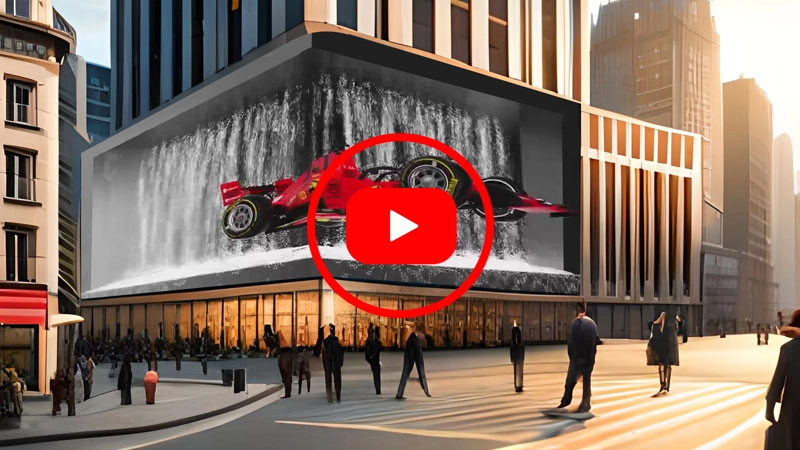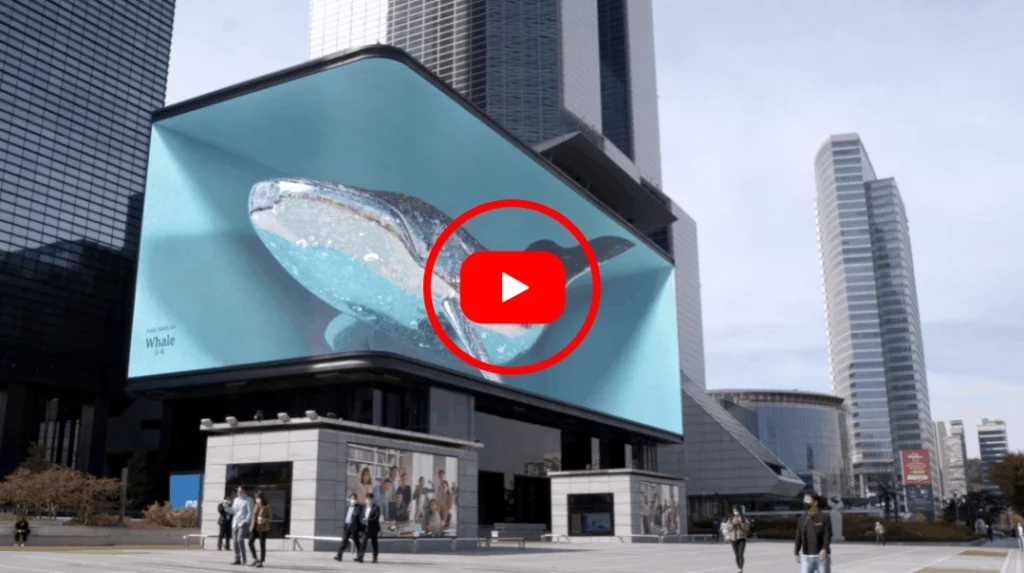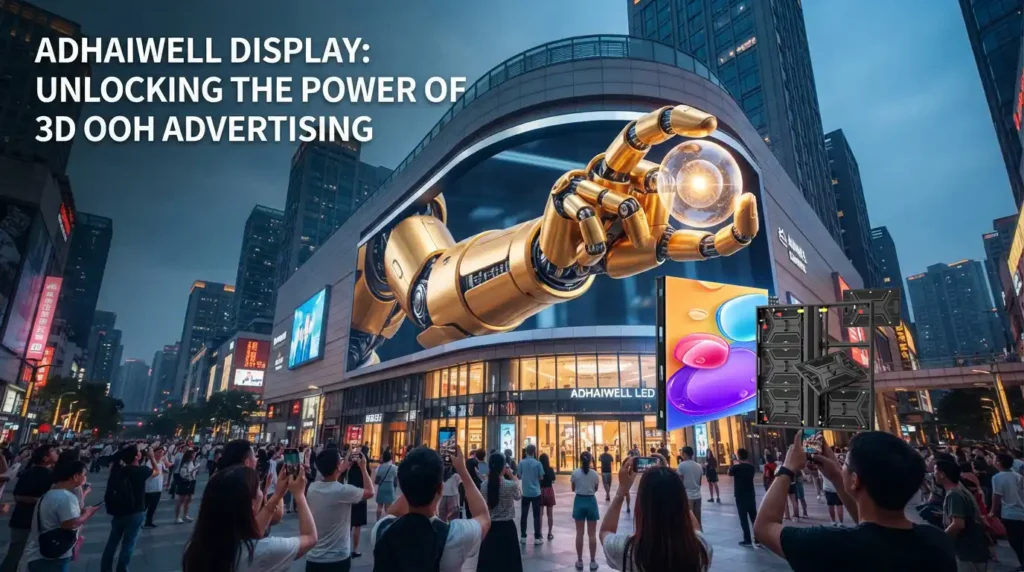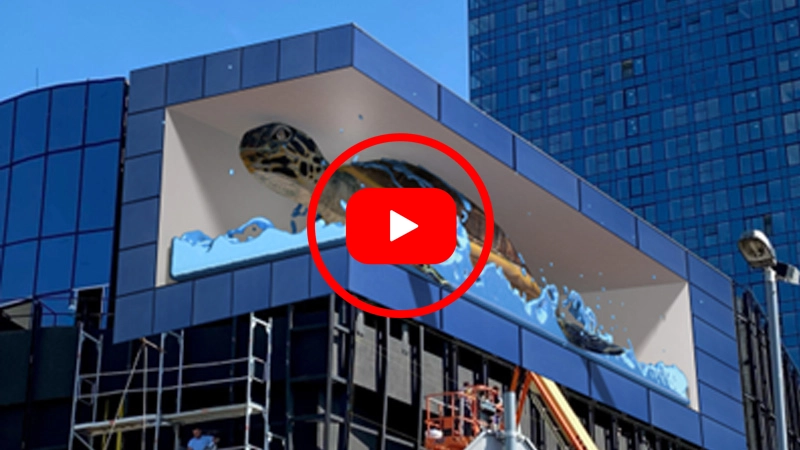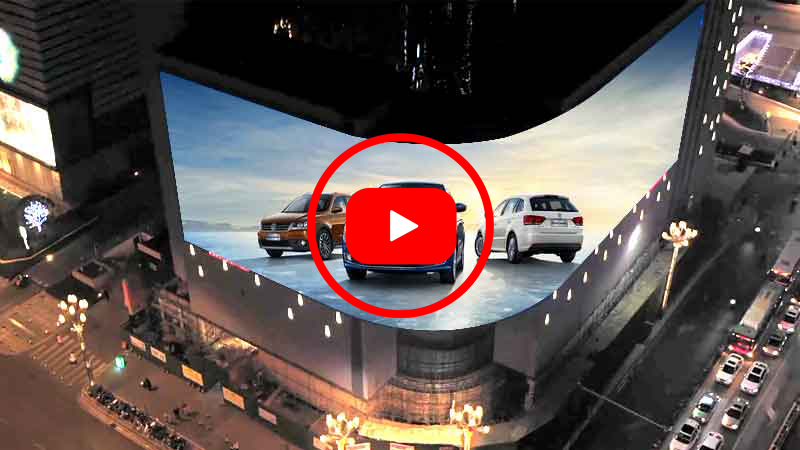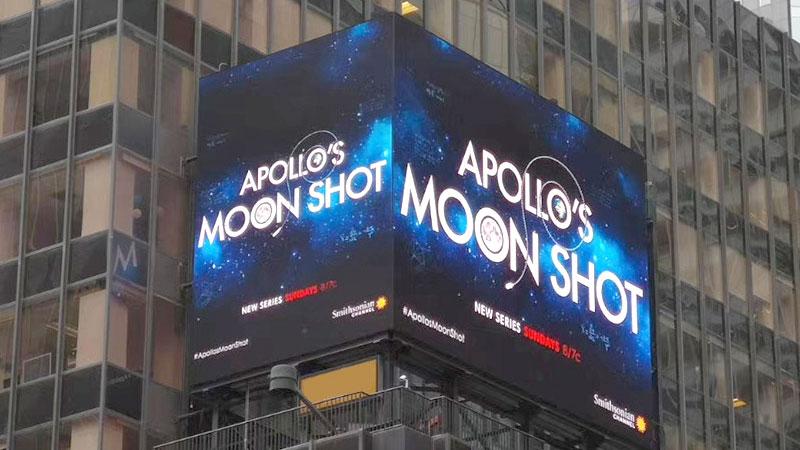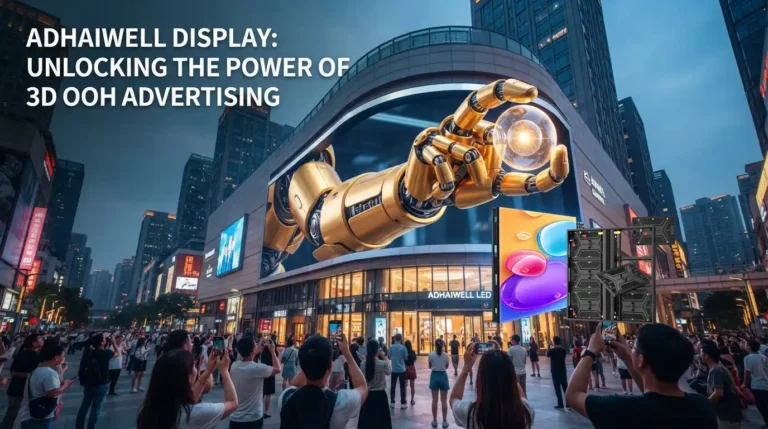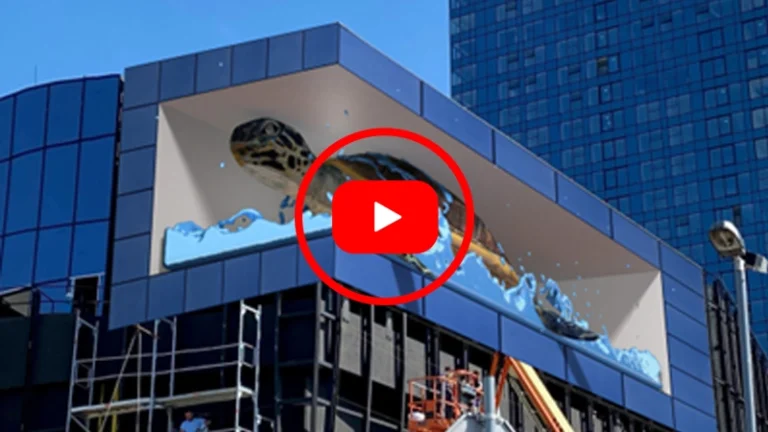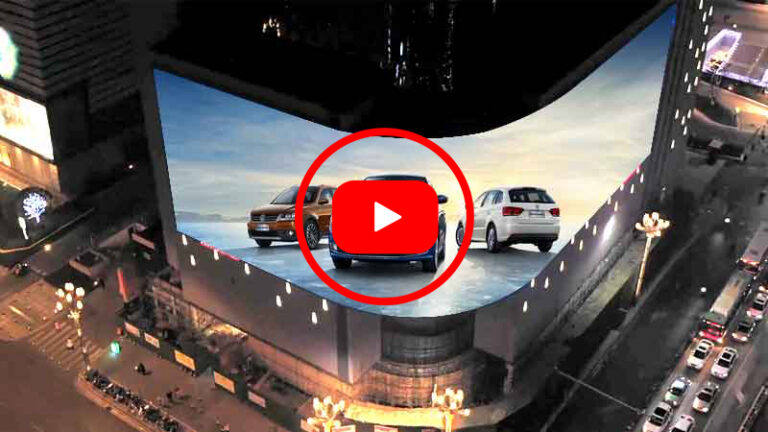
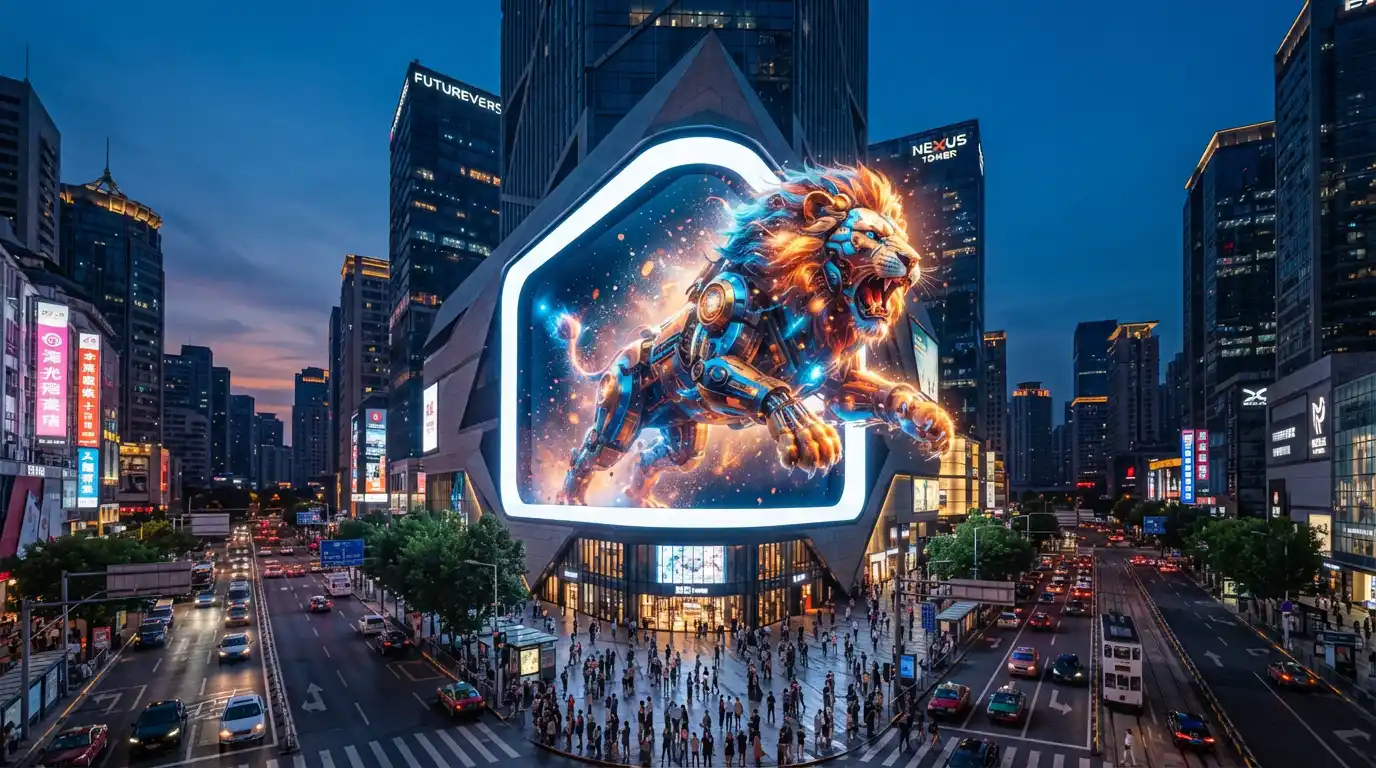
Naked-eye 3D LED Display deployment locations follow a clear pattern: dense urban districts where landmark buildings, heavy pedestrian traffic, and open sightlines overlap. From Seoul’s COEX K-pop Square and Tokyo’s Shinjuku district to Times Square in New York and a growing list of cities in Southeast Asia, the Middle East, and Africa, these screens appear where a corner facade can be turned into a piece of media architecture. This article maps where the technology is actually deployed, explains why those locations work, and gives buyers a practical checklist for judging whether their own site can support a 3D LED installation.
Key Takeaways
- Naked-eye 3D LED displays cluster in dense, high-footfall urban districts — Seoul, Tokyo, New York, Dubai, Bangkok — where landmark buildings and open sightlines overlap.
- High foot traffic alone does not make a good 3D site; screen geometry, a 90-degree corner, and viewing distance of roughly 1.5–3× screen height matter more.
- Emerging markets in Southeast Asia, the Middle East, Africa, and Latin America are adopting 3D LED screens faster than most buyers expect — including an outdoor L-shaped 3D installation in Mozambique.
- The most common failure point is not the screen; it is treating structure, hardware, and 3D content as three separate purchases.
- Before requesting a quote, prepare site photos and video, screen size, building structure, viewing distance, and your city and country.
Where Are Naked-Eye 3D LED Displays Deployed?
Naked-eye 3D LED display deployment locations follow a clear pattern: dense urban districts where landmark buildings, heavy pedestrian traffic, and open sightlines overlap. From Seoul’s COEX K-pop Square and Tokyo’s Shinjuku district to Times Square in New York and a growing list of cities in Southeast Asia, the Middle East, and Africa, these screens appear where a corner facade can be turned into a piece of media architecture. This article maps where the technology is actually deployed, explains why those locations work, and gives buyers a practical checklist for judging whether their own site can support a 3D LED installation.
1. How Did Naked-Eye 3D LED Become a Global Urban Display Trend? From Seoul’s WAVE to Global Landmarks
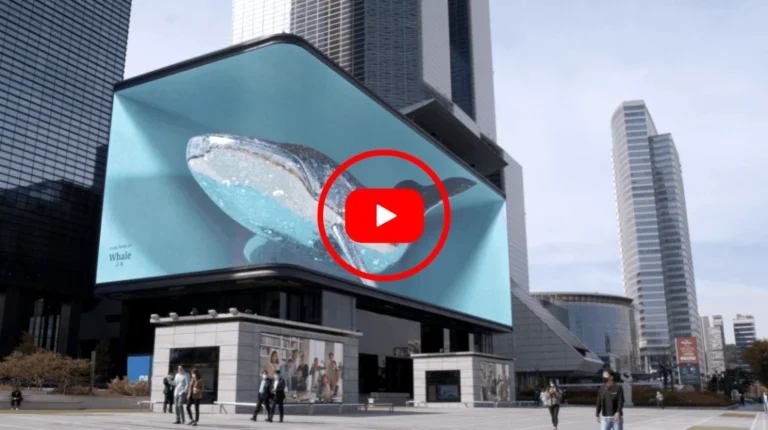
The modern wave of naked-eye 3D LED billboards traces directly to Seoul’s COEX K-pop Square in April 2020, when the Korean design studio d’strict premiered “WAVE” — an anamorphic illusion of water churning inside a glass tank on the facade of the SMTown COEX Artium. It is worth being precise about what this moment was and was not: anamorphic perspective and LED media facades both existed before 2020. What WAVE changed was the market’s perception of what a building-mounted LED screen could do for a city’s image and a media owner’s rate card.
The numbers behind the moment explain why the industry paid attention (figures per d’strict and CNN coverage, 2020):
- Scale: the COEX screen measures roughly 80.8 m wide by 20.1 m high — about 1,600 square meters of 8K-resolution LED, assembled from more than 31,000 LED panels manufactured by Samsung.
- Content discipline: the wave sequence runs for about one minute per hour, and the production took roughly four months, three of them spent on design and field-testing the illusion from multiple viewing angles.
- Regulatory groundwork: in May 2018, Seoul had designated the Samseong-dong area as its first outdoor mass-scale screen advertising zone, easing advertising rules and enabling large media facades in the first place (Korea Herald interview with d’strict CEO, 2020).
The lesson for buyers is that WAVE was not a hardware story alone. It was the alignment of a landmark building, permissive regulation, a purpose-engineered screen, and content rendered for that exact geometry — the same alignment every successful 3D LED deployment since has required.
2. Which Cities Have Become Hotspots for Naked-Eye 3D LED Displays — and Why?
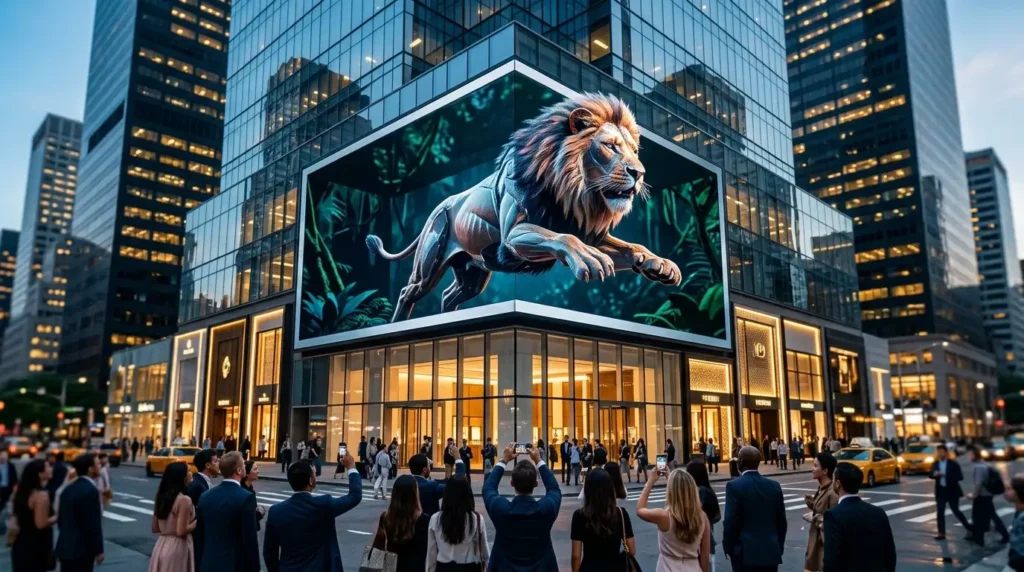
The recognized hotspots are Seoul, Tokyo, New York, Dubai, and Bangkok, with Kuala Lumpur and several Chinese cities close behind. Precise global installation counts are not independently published, so rather than ranking cities by quantity, it is more useful to understand what these markets share. Each one combines conditions that make a 3D LED billboard commercially viable:
- Pedestrian and vehicle density at scale: Seoul’s Gangnam district, Tokyo’s Shinjuku, and New York’s Times Square put hundreds of thousands of daily passers-by in front of large facades with natural stopping points.
- Commercial density and premium tenants: luxury retail, flagship stores, and entertainment venues can absorb premium DOOH rates, which is what funds the hardware and content.
- Landmark buildings with corner geometry: the strongest 3D sites are L-shaped or curved facades at prominent intersections — the corner is the canvas that creates the depth illusion.
- Open sightlines and adequate viewing distance: plazas, wide intersections, and pedestrian crossings give viewers the angled vantage point anamorphic content needs.
- Night-time economy: evening foot traffic extends daily commercial hours and gives high-brightness screens a dark backdrop where the 3D effect reads strongest.
- A mature DOOH ecosystem: established media owners, agencies, and programmatic platforms make it possible to monetize the screen after launch.
Adhaiwell’s own industry coverage, for example, reports that a 3D installation at a major intersection in Kuala Lumpur’s Golden Triangle passes roughly 500,000 pedestrians per day (operator-reported figure). Where those six conditions coexist, 3D LED screens tend to follow.
3. Where Are Naked-Eye 3D LED Displays Expanding in Emerging Markets?
Emerging-market expansion is concentrated in Southeast Asia, the Middle East, Africa, and Latin America, driven by tourism recovery, commercial real estate development, shopping-mall upgrades, and urban renewal programs. The DOOH backdrop supports this shift: the World Out of Home Organization (WOO) estimates global digital out-of-home revenue at US25.5 billion in 2025, rising to about US28 billion in 2026 — a third-party estimate from commercial research whose methodologies differ by market, so treat it as directional context rather than a forecast for any single screen (WOO, 2025–2026).
Deployment in these markets typically starts where footfall is proven and controllable:
- Shopping malls and retail facades in Bangkok, Kuala Lumpur, Jakarta, and Ho Chi Minh City, where mall operators control the facade and the audience.
- Tourism and transit corridors in Dubai and across the Gulf, where municipal media zones and airport-adjacent districts concentrate international audiences.
- Urban renewal districts in African and Latin American cities, where a single landmark screen is often the first step in repositioning a commercial street.
A verifiable example from the African continent: Adhaiwell delivered an outdoor L-shaped naked-eye 3D LED billboard in Mozambique (operator-reported), described by the company as the first installation of its kind in Africa. The project used an 8 mm pixel pitch across roughly 78 square meters, with a 3,840 Hz refresh rate and 8,000-nit brightness for full sunlight visibility, IP65-rated cabinets built from anti-corrosion die-cast aluminum outdoor LED displays to withstand the coastal salt-fog environment, and 3D particle-logo content that can be swapped per advertiser. It is a useful template because it shows what an emerging-market 3D site actually needs: not a bigger budget, but correct engineering for local climate and honest viewing geometry.
4. What Makes an Urban Location Suitable for a 3D LED Installation?
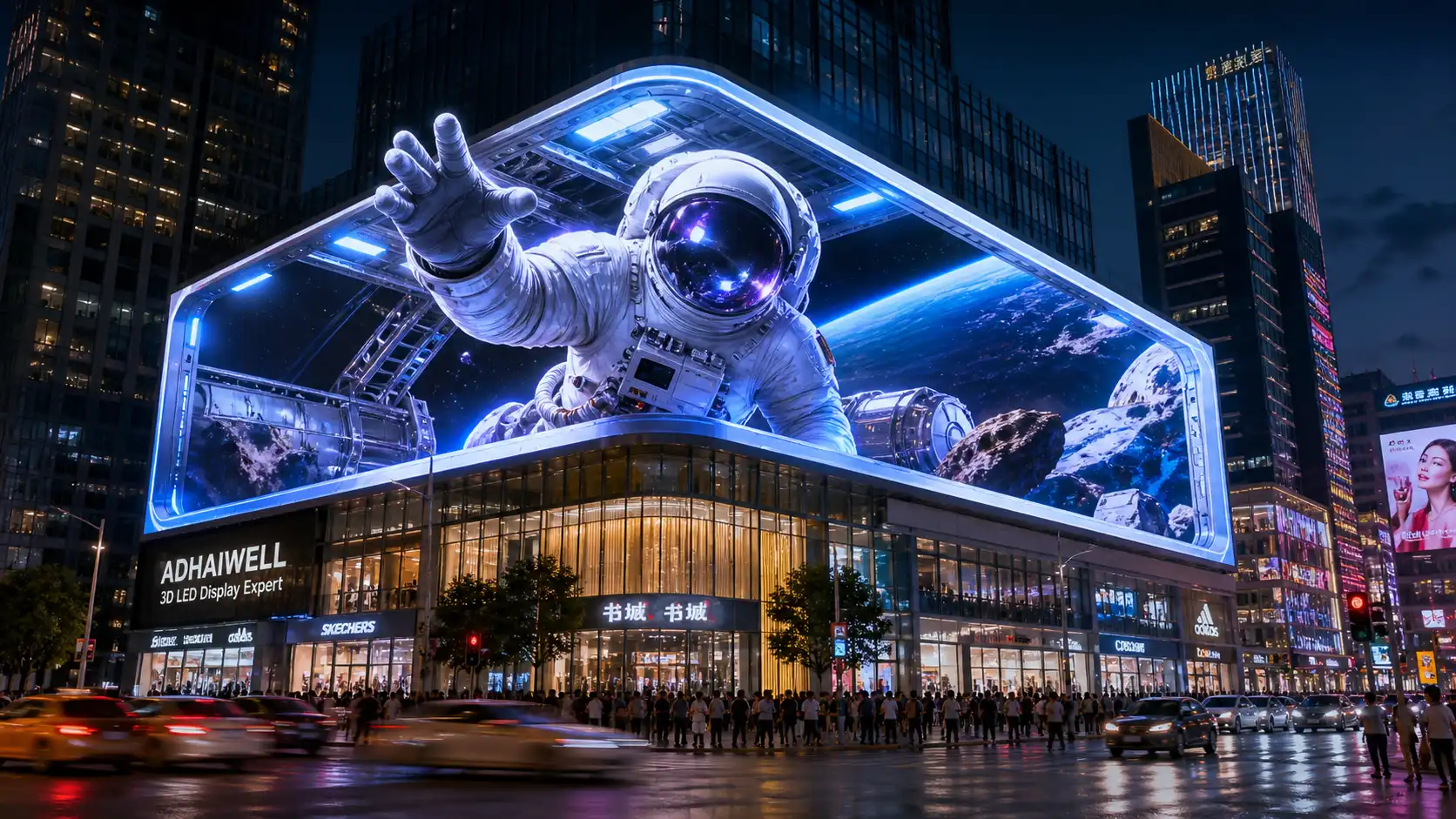
A location is suitable when its geometry, viewing conditions, structure, and regulatory environment all pass a site assessment — foot traffic alone is not enough. Before committing to a screen, evaluate the site against this checklist:
- Screen geometry and corner availability: a true 90-degree corner (or a designed curve) with enough facade area on both faces; minimum effective size per manufacturer guidance is roughly 4 m × 3 m per face, with 10 m × 10 m or larger delivering landmark impact.
- Primary viewing angle: identify where most viewers will first see the screen — the anamorphic sweet spot must align with that real-world vantage point, not with a render.
- Viewing distance: as a working rule, the main viewing position should sit roughly 1.5× to 3× the screen height away (manufacturer guidance), which sets your pixel pitch.
- Traffic and dwell time: distinguish between passing traffic and lingering audiences; crosswalks, plazas, and taxi ranks create dwell time that traffic alone does not.
- Sunlight and brightness: measure direct-sun exposure hours; outdoor screens typically need 6,500+ nits for daylight legibility.
- Wind load and structural capacity: an L-shaped screen applies asymmetric wind and gravity loads that a standard billboard frame was never designed to carry — the structure must be engineered for the screen, and steel-cabinet outdoor LED displays or engineered steel frames must match the mounting environment.
- Power and connectivity: confirm available electrical capacity, backup options, and 4G/fiber access for content distribution.
- Maintenance access: catwalk, lift, or front-service access for module replacement without lane closures.
- Municipal approvals: outdoor advertising permits, brightness curfews, aviation or heritage restrictions — these vary by country and city, so verify locally rather than assuming.
For a deeper procurement framework on the hardware side, see our guide to choosing the right outdoor LED display for DOOH advertising.
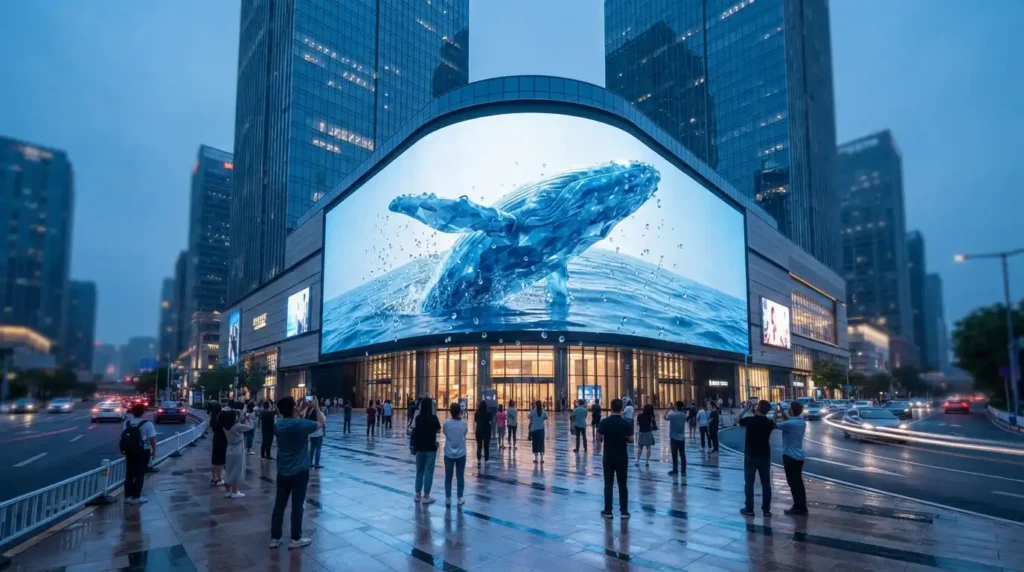
5. What Makes a 3D LED Screen Valuable as a DOOH Media Asset?
A 3D LED screen is valuable because it converts passing traffic into a compounding media chain: traffic becomes visibility, visibility becomes engagement, and engagement becomes earned media that ordinary billboards cannot generate. The value logic works in stages:
- Traffic: the site’s daily passers-by set the raw audience floor.
- Visibility: size, brightness, and corner geometry determine what share of that traffic actually sees the content.
- Engagement: the 3D illusion makes people stop, watch the full loop, and film it — behavior flat billboards rarely trigger.
- Social sharing: filmed content travels to millions of viewers who never walked past the screen, extending reach at no media cost.
- Earned media: installations like Seoul’s WAVE were covered by global outlets including CNN, generating brand value for the location itself.
- Premium inventory: because 3D-capable screens are scarce and produce outsized attention, their advertising slots can command premium pricing in strong markets — though the size of that premium varies widely by city and is not governed by any universal industry multiple, so validate rates against local DOOH benchmarks rather than headlines.
The practical implication for a buyer is that you are not buying a screen; you are buying the top of a value chain. If the site fails at the visibility or engagement stage, no amount of traffic downstream rescues the asset.
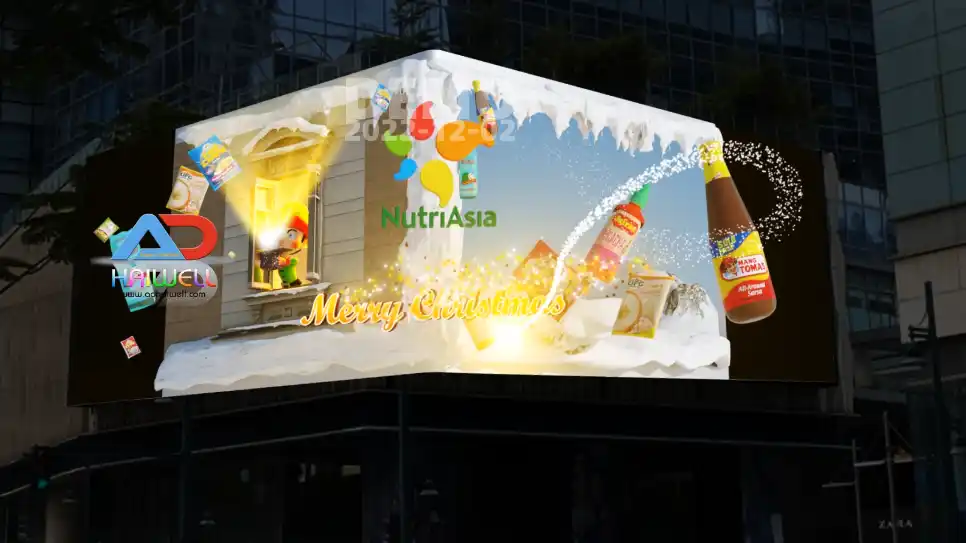
6. Why Screen Geometry and Viewing Distance Matter More Than Traffic Alone
Screen geometry and viewing distance matter more than raw traffic because the naked-eye 3D illusion only works from specific physical vantage points — and no volume of pedestrians compensates for a site where the illusion never resolves. Two sites with identical traffic can produce opposite commercial results:
- High traffic, poor geometry: a straight, flat facade facing a busy road forces content to be read almost edge-on or from too far away. The 3D effect collapses into a flat video, and the screen competes as an ordinary billboard at 3D-grade cost.
- Moderate traffic, strong geometry: a corner screen at an intersection with a pedestrian crossing gives viewers a clear frontal-angled sightline within the illusion’s sweet spot. Even a smaller audience experiences the full effect — and films it.
Three physical factors decide the outcome:
- Corner angle: most anamorphic content is authored for a 90-degree junction; deviations require content re-rendering for the actual angle.
- Viewing distance: the illusion’s depth is calibrated to a viewing band — commonly cited manufacturer guidance places the sweet spot at roughly 1.5× to 3× the screen height. Pitch selection follows: coarser pitches such as P8 suit long-distance views, while P4-class pitches serve viewers 10–25 m away.
- Sightline duration: viewers need several seconds inside the sweet spot for the illusion to register, which is why crossings and plazas outperform fast-moving road frontage.
When you compare candidate sites, score the geometry first and the traffic second. A site that scores well on both is rare — and that scarcity, not the LED modules, is what makes the finished asset valuable.
7. What Can Buyers Learn from Global Naked-Eye 3D LED Deployments?
The consistent lesson across successful deployments in Seoul, Dubai, Kuala Lumpur, and Maputo is that 3D LED projects fail on integration, not on components. Four practices separate working installations from expensive lessons:
- Survey the site before selecting the screen. Every serious deployment starts with photos, video, sun-path data, and measured viewing positions — not with a price list. The screen specification is an output of the survey, not an input.
- Design the structure and the 3D content together. The steel frame, the corner angle, and the anamorphic render must describe the same geometry. When content is produced after the structure is fixed by a studio that has never seen the site, perspective mismatches are almost guaranteed.
- Choose a supplier with all three capabilities in-house. This is where a China-based OEM/ODM manufacturer adds the most value: the difference between a screen vendor and a project partner is whether steel-structure engineering, anamorphic content production, and LED hardware sit under one technical owner. Adhaiwell’s one-stop 3D LED billboard model — free custom steel-structure design, in-house 3D content production, and industrial-grade screens for buyers in 60+ countries — exists precisely because coordinating three separate vendors is the most common failure path.
- Plan the full project lifecycle, not the purchase. Permits, shipping, installation supervision, remote support, content rotation, and after-sales response times should be scheduled before the first cabinet ships.
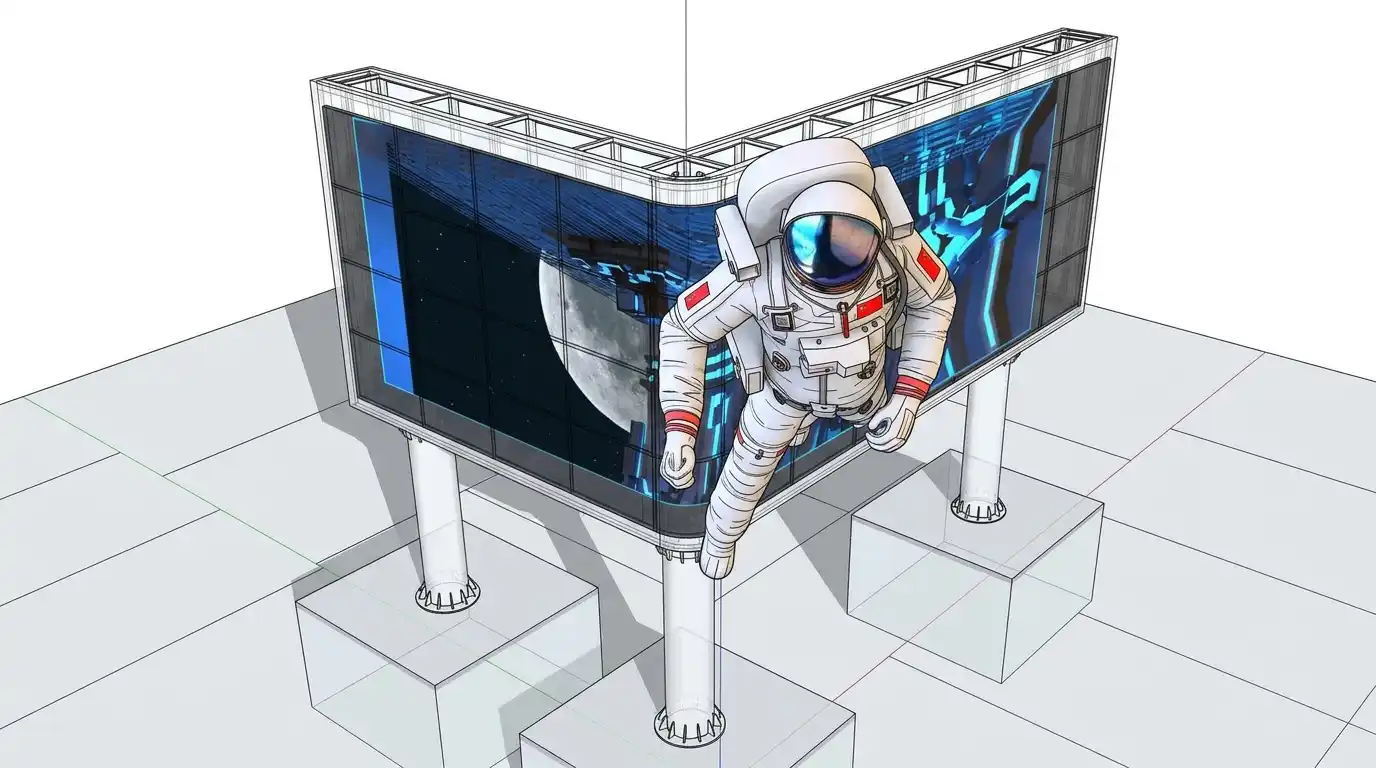
Use these criteria when evaluating any supplier: Can they produce structural drawings for your specific facade? Can they render 3D content matched to your measured viewing angle? Do they document wind-load and climate engineering for your country? Can they support the installation remotely after delivery? A “no” to any of these transfers risk back to you.
8. Planning a Naked-Eye 3D LED Installation? What to Prepare Before Requesting a Quote
Before requesting a quotation, prepare eight items: your city and country, site photos and video, target screen size, building structure details, viewing distance, application scenario, indoor or outdoor placement, and your expected installation window. Manufacturers use this package to calculate pixel pitch, wind load, steel design, freight, and content feasibility — and incomplete information is the main cause of slow or inaccurate quotes.
- City and country: determines wind-load standards, climate engineering, and shipping terms.
- Site photos and video: a slow pan across the facade plus footage from the main viewing position lets engineers verify the corner angle and sightlines.
- Screen size (or a request to propose one): overall dimensions per face, or the available facade area.
- Building structure: wall type, frame availability, and any load restrictions from the building owner.
- Nearest viewer distance: measured from the planned screen position to the main vantage point.
- Application scenario: advertising, brand media, public art, or mixed programming.
- Indoor or outdoor: sets brightness, protection rating, and pitch class.
- Target installation date: aligns production (typically 25–35 working days per manufacturer guidance) and freight with your timeline.
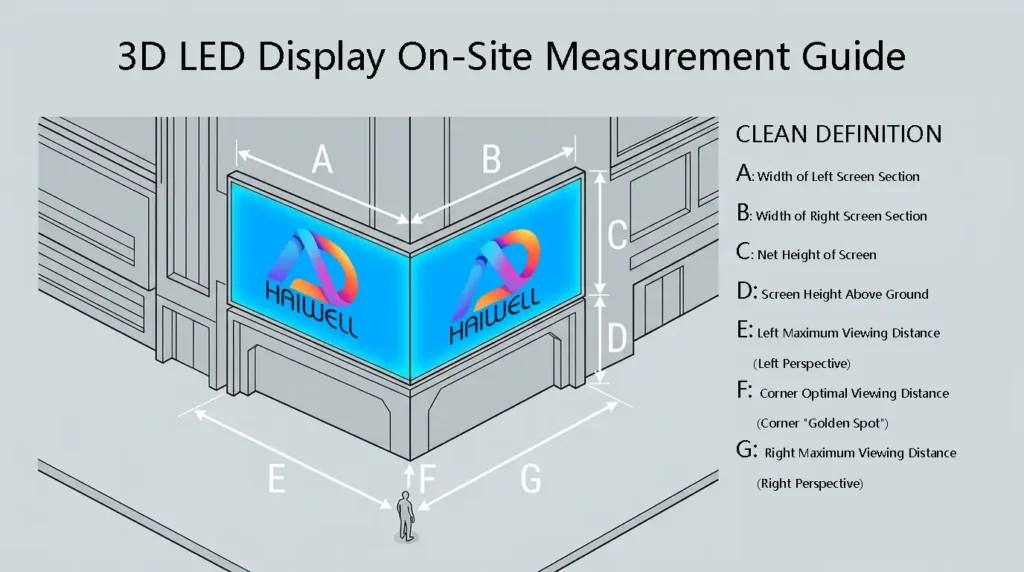
Send this package through the inquiry form and a qualified manufacturer should return an itemized proposal — recommended size and pitch, preliminary structure concept, content direction, and pricing — within one to two business days. If a vendor quotes a screen without asking about your viewing distance or corner geometry, treat that as the first warning sign of the three-vendor problem described above.
FAQ: Naked-Eye 3D LED Display Deployment
As a Shenzhen-based LED display manufacturer with 16+ years of production experience and 3D LED projects delivered across Africa, the Caribbean, and Asia, Adhaiwell answers the deployment questions buyers ask most often:
What cities are known for naked-eye 3D LED displays? Seoul, Tokyo, New York, Dubai, Bangkok, and Kuala Lumpur are the most recognized clusters, anchored by sites such as Seoul’s COEX K-pop Square and Tokyo’s Shinjuku district. Adoption is also growing across Southeast Asia, the Middle East, Africa, and Latin America. No verified global installation census exists, so treat any “ranking” cautiously.
Where are 3D LED billboards typically installed? On landmark building facades at major intersections, shopping-mall exteriors, transit-adjacent commercial walls, and entertainment districts. The common denominator is a corner or curved facade with open sightlines and pedestrian dwell time. Flat roadside facades are technically possible but rarely produce a convincing 3D effect.
Does a naked-eye 3D LED billboard need a 90-degree corner? A 90-degree corner is the standard and most economical geometry because most anamorphic content is authored for it. Curved screens also work, but the content must be re-rendered for the actual curve and viewing positions. A flat screen can show “3D-style” video, yet it cannot deliver true corner depth.
What type of building is suitable for a naked-eye 3D LED display? Buildings with a substantial, structurally sound facade at a prominent corner, owned or controlled by an entity that can grant long-term advertising rights. The structure must tolerate the asymmetric loads of an L-shaped screen, so an engineering review precedes any commitment. Landmark commercial buildings, malls, and mixed-use towers are the typical candidates.
What viewing distance is required for a 3D LED billboard? The main viewing position should sit roughly 1.5× to 3× the screen height away, per manufacturer guidance, which then drives pixel pitch selection. P4-class pitches suit viewers about 10–25 m out, while P8–P10 serves 40 m and beyond. Measure the real vantage point on site rather than estimating from a map.
Are naked-eye 3D LED displays suitable for emerging markets? Yes — the Mozambique L-shaped outdoor 3D project (operator-reported) demonstrates that coastal African conditions, salt fog, and intense sunlight are engineering constraints, not barriers. Emerging-market demand is supported by growing DOOH spend, with global digital out-of-home estimated by WOO at US$25.5 billion in 2025. Success depends on correct brightness, protection rating, and structure design for the local climate.
How much does a naked-eye 3D LED billboard cost? Total cost depends on screen size, pixel pitch, structure engineering, brightness requirements, and whether custom 3D content is included — there is no single market price, and credible suppliers quote per project. The structural steel and content are real budget lines, not accessories. Request an itemized quote rather than a per-square-meter headline number.
What information does an LED manufacturer need for a quotation? City and country, site photos and video, approximate screen size, building structure details, nearest viewing distance, application scenario, indoor or outdoor placement, and the target installation date. With this package, Adhaiwell typically returns an itemized proposal within 24–48 hours (operator-reported). The more precise the site data, the more accurate the engineering and pricing.
Not sure if your site is suitable? Send us your location photo for a free engineering evaluation.