You have seen them a thousand times: the chalkboard easel on the sidewalk, handwritten specials fading in the afternoon sun, a static poster that cannot change until someone prints a new one. That is the classic sandwich board—also known as the A‑frame sign.
Now imagine that same sign, but with a bright, sunlight‑readable LED screen that can play video, rotate through dozens of promotions, and be updated remotely from your phone.
That is a Digital A‑frame sign.
In this guide, we will walk you through exactly what a digital A‑frame sign is, where it works best, how it compares to traditional signs, what technical specifications actually matter, and how to buy the right one for your business—whether you are a retailer, a restaurant owner, or an event organiser.
Key Takeaways
- Dynamic Messaging Wins: Digital A‑frame signs allow unlimited content changes via CMS—no reprinting costs.
- Foot Traffic Multiplier: Digital signage captures 400% more views than static signs and can increase sales up to 32%.
- Weather‑Ready: Look for IP56/IP65 ratings, 1,500+ nits for outdoor use, and operating temperature range.
- Total Cost of Ownership: While upfront cost (2k–8k) exceeds traditional boards (50–300), eliminated printing and manual updates yield long‑term savings.
- Flexible Power Options: Models run on mains, rechargeable batteries (10–20 hours), or solar hybrid solutions.
What Exactly Is a Digital A‑Frame Sign?
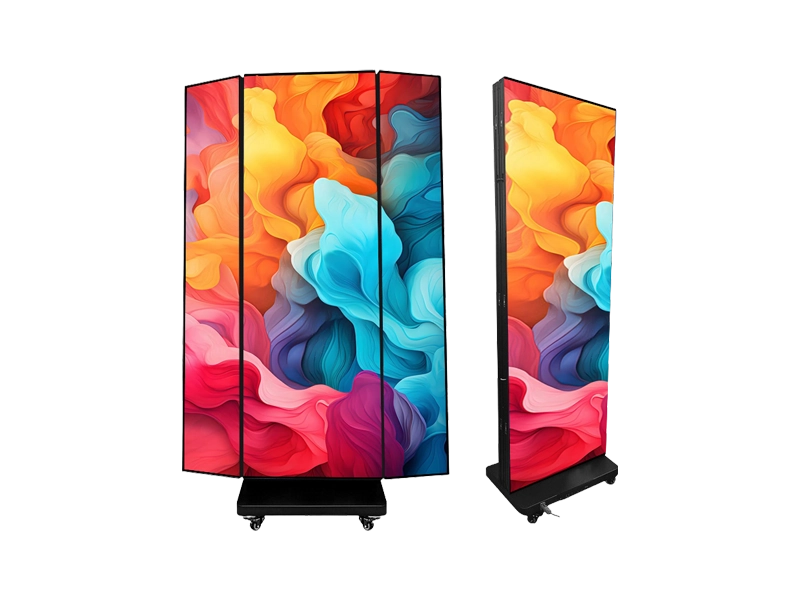
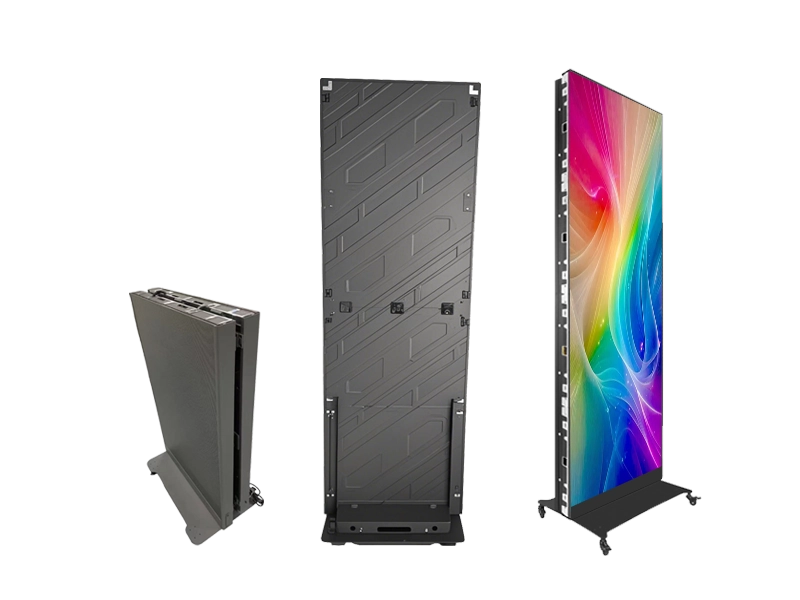
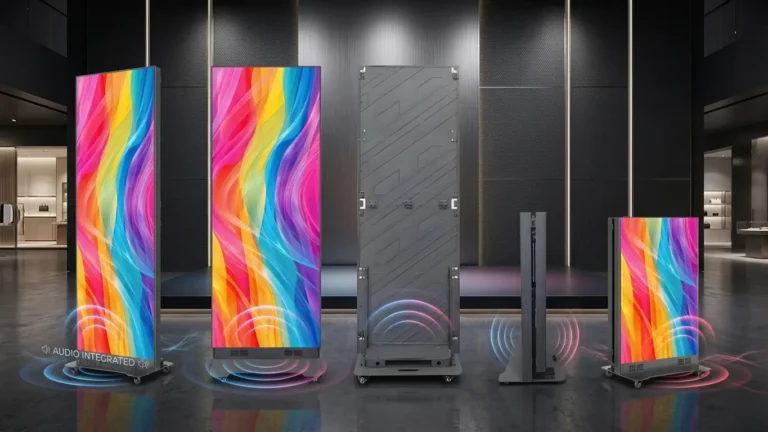
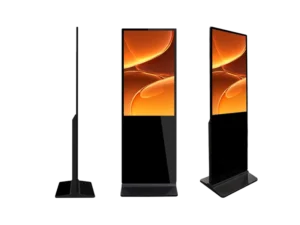
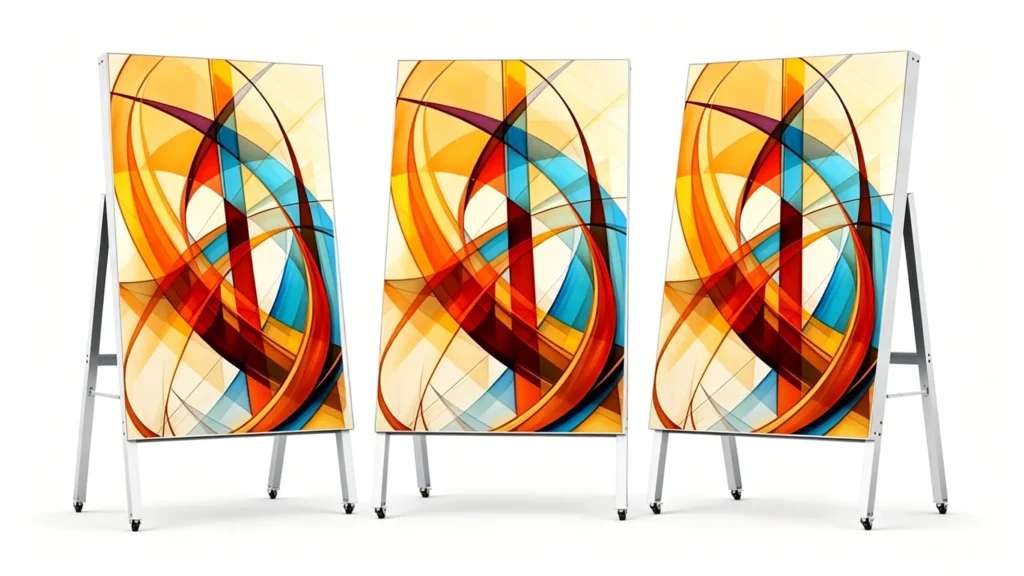
A digital A‑frame sign is a modern, electronic version of the traditional A‑frame or sandwich board. Instead of static chalkboard or printed insert panels, it uses commercial‑grade LED screens built into a foldable, portable structure shaped like the letter “A”.
Like its traditional counterpart, it stands freely on sidewalks, near entrances, or inside venues. But unlike a static board that shows the same message for weeks, a digital A‑frame sign can display:
- Rotating video and animations
- Real‑time menu updates and pricing changes
- QR codes linking to online ordering or event registration
- Dynamic countdown timers for flash sales
- Automated dayparting (breakfast at 7 AM, lunch at noon, happy hour at 4 PM)
Outdoor models are built to withstand weather, dust, and physical impact, with IP56 or IP65 ratings, high‑brightness displays (1,500–2,500+ nits) for direct sunlight visibility, and battery‑powered or mains‑connected options. Indoor versions may be lighter, lower brightness, and designed for semi‑outdoor or indoor use.
In short, a digital A‑frame sign replaces “set it and forget it” signage with a content channel you can manage in real time.
Where Are Digital A‑Frame Signs Used?
Digital A‑frame signs are highly versatile. Here are the most common use cases across retail and events.
Retail Storefronts and Pop‑Up Shops
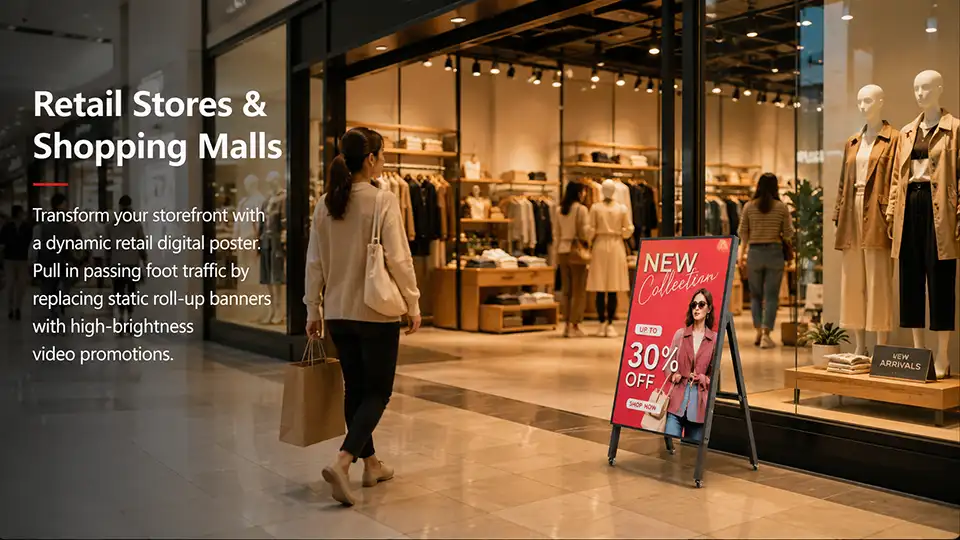
Retailers use them to announce sales, new arrivals, and seasonal promotions right at the point where foot traffic passes the door. For pop‑up shops and temporary retail locations, the portability of digital A‑frame signs is essential—they pack flat for transport, require no permanent installation permits, and can be set up in seconds.
Restaurants, Cafés, and Quick‑Service Locations
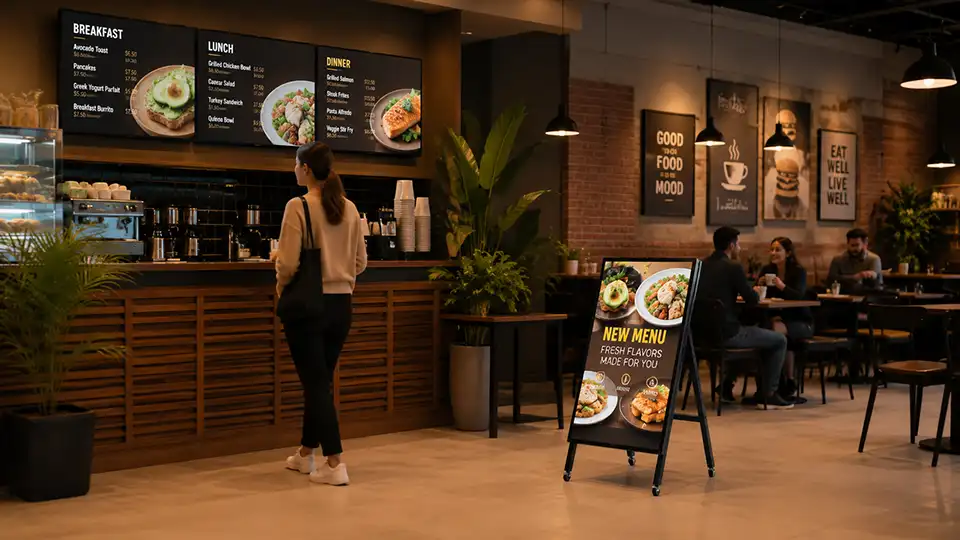
Food and beverage businesses see some of the strongest returns from digital sandwich boards. A well‑placed A‑frame on a busy sidewalk directly converts foot traffic into seated customers. Digital versions amplify this by showing high‑resolution food photography, real‑time menu availability, and rotating daily specials that keep regulars curious about what is new. Restaurants using digital signage can schedule breakfast, lunch, and happy hour promotions automatically throughout the day.
Events, Trade Shows, and Exhibitions
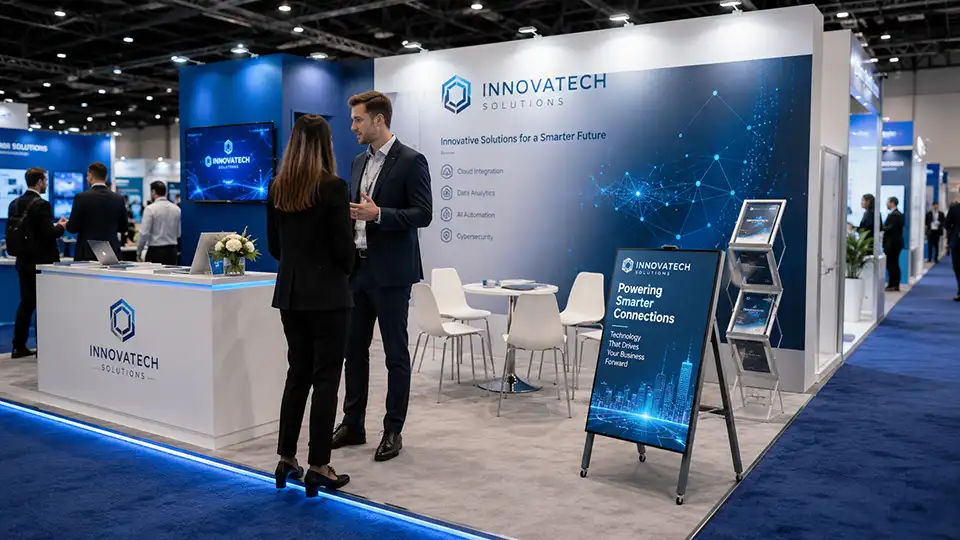
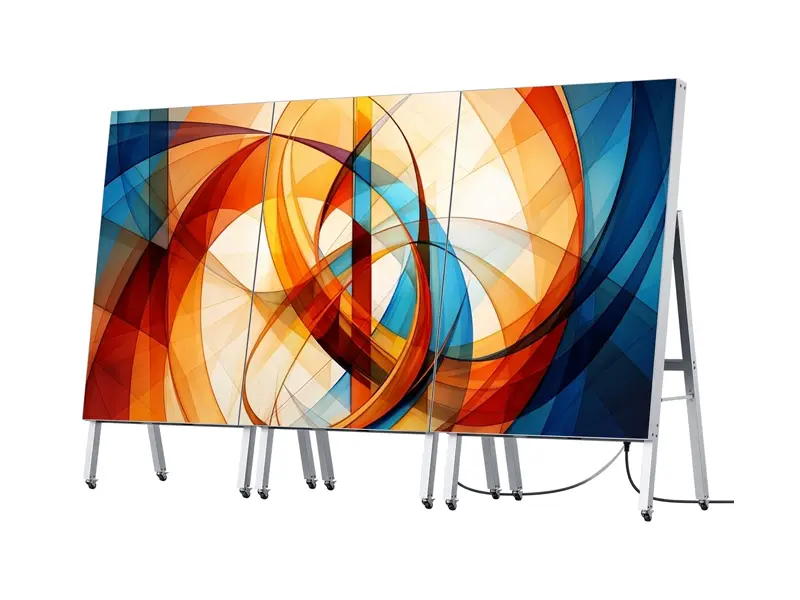
Event organisers and trade show exhibitors deploy digital A‑frame signs for wayfinding, session schedules, speaker announcements, and last‑minute changes. Instead of reprinting directional signs when a session room changes, you update a few screens from a central CMS. The foldable, wheeled design makes them easy to reposition between booths or entrance points.
Hotels, Conference Centres, and Hospitality
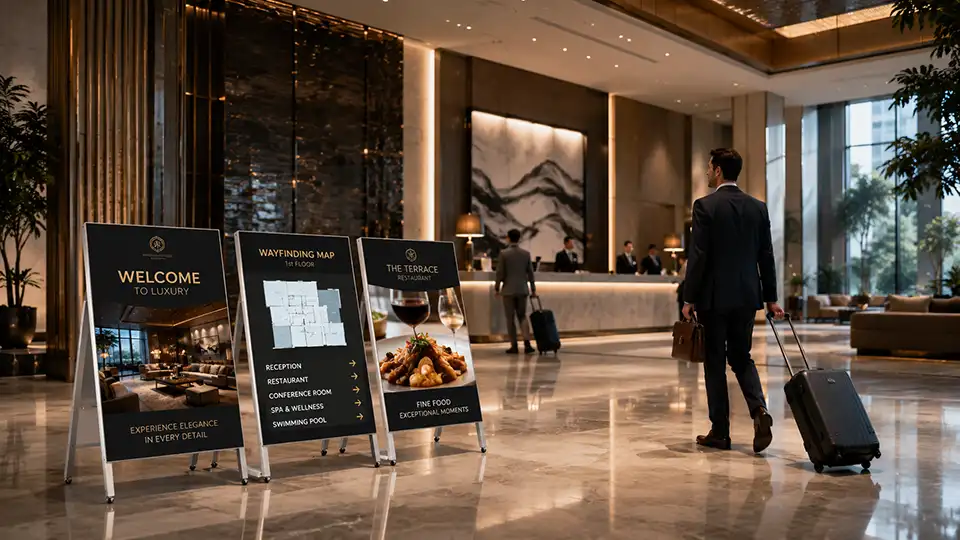
Hotels and venues use digital A‑frames for daily event schedules, wedding signage, conference wayfinding, and promotional messaging for on‑site restaurants or spa services. The ability to update content daily without reprinting makes them a clear upgrade over static hotel signage.
Corporate Campuses and Educational Institutions
University campuses and corporate lobbies deploy digital A‑frame signs to announce guest lectures, building closures, cafeteria menus, or internal communications. Their portability allows them to be placed at different entrances on different days.
Benefits of Digital A‑Frame Signs (Why Upgrade?)
1. Dynamic, Engaging Content
Static signs capture attention. Motion and video capture more attention. According to industry data, digital displays capture 400% more views than static signage, and retailers using digital signage report sales increases of up to 32%. Video and animated content can stop foot traffic four times more effectively than static signs. A digital A‑frame sign puts motion—enticing food videos, animated sale banners, moving logos—right at the customer’s eye level.
2. Real‑Time Remote Updates
One of the single biggest advantages: you can change your messaging without touching the sign. Most digital A‑frame signs include cloud‑based content management software (CMS) that lets you update any unit—or hundreds of units—from a single dashboard. A restaurant can correct a menu typo before lunch service starts. A retail chain can push a flash sale to all storefronts in ten seconds.
3. Eliminate Printing Costs
A traditional sandwich board with printed inserts requires a new print job every time your message changes. Each print run costs money and takes time. A digital A‑frame sign has zero recurring printing costs. Once the hardware is in place, every content update is free.
4. Portability and Flexibility
Like their traditional cousins, digital A‑frame signs fold flat, roll on wheels, and can be moved from the sidewalk to inside the store to an off‑site pop‑up event. This is not a permanent installation—it is a go‑anywhere marketing tool.
5. Measurable ROI
Unlike a chalkboard, a digital signage system can be measured. Built‑in analytics and impression tracking tools can provide data on dwell time and engagement, allowing you to calculate actual return on investment.
6. Dayparting and Automation
Manually changing a static board three times a day is impractical. A digital CMS does it automatically. A café can show coffee specials at 7 AM, lunch combos at 11:30 AM, and happy hour drinks at 4 PM—all on a pre‑set schedule.
Digital A‑Frame vs. Traditional A‑Frame: A Head‑to‑Head Comparison
| Feature | Traditional A‑Frame | Digital A‑Frame |
|---|---|---|
| Typical Cost | 50–300 | 1,000–2,000 |
| Content | Static text / printed panels | Video, animations, rotating content |
| Updates | Manual (chalk or reprint) | Remote, real‑time via CMS |
| Power Required | None | Mains, battery, or solar |
| Weather Rating | Weather‑resistant materials | IP34 – IP65 rated enclosures |
| Viewing Attention | Baseline | 400% more views than static |
| Recurring Costs | Printing / replacement inserts | None (software‑based) |
| Best For | Simple, unchanging messages | Multiple promotions, motion, data‑driven content |
If your message never changes (“OPEN”), a traditional board is fine. If you run seasonal specials, have daily menu changes, or want to capture attention with motion, a digital A‑frame sign pays for itself over time through eliminated printing costs and increased conversion rates.
Key Buying Factors: What to Look For
Before you purchase a digital A‑frame sign, assess these technical and practical specifications.
Brightness (Nits)
This is the most important spec for outdoor use. A standard indoor display (500–1,000 nits) becomes completely invisible in direct sunlight. For outdoor daytime visibility, you need at least 1,500 nits; many commercial outdoor digital sandwich boards offer 2,500+ nits or even 5,000–7,000 nits. For shaded or semi‑outdoor locations, 1,000–1,500 nits may be adequate.
Weather Protection (IP Rating)
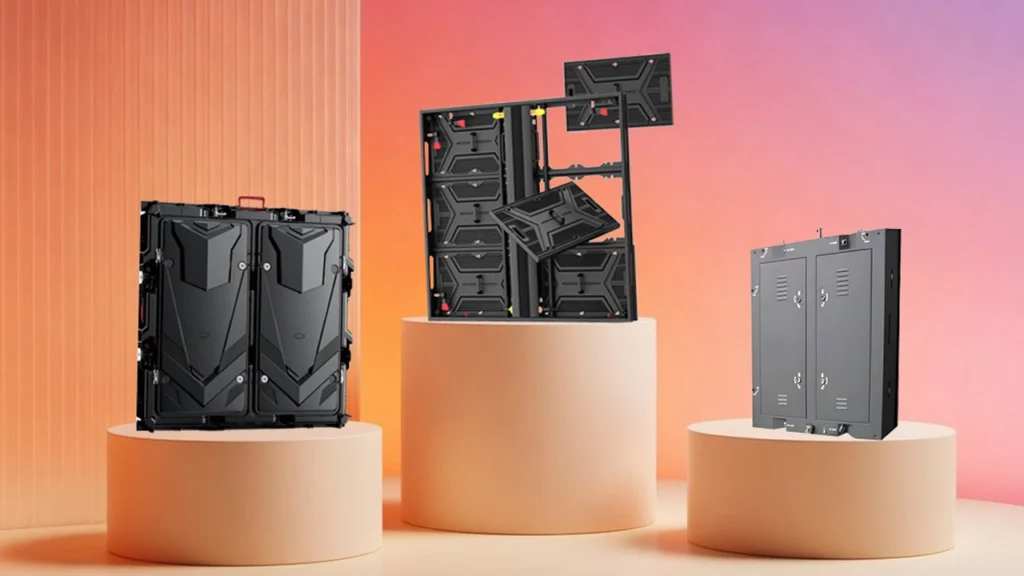
IP ratings define dust and water resistance. For outdoor use, look for IP56 (protected against powerful water jets) or IP65 (dust‑tight and protected against water jets). IP56 units like Armagard’s are tested for rain, dust, and dirt ingress, and include steel bodies for physical protection. IP65‑rated enclosures provide similar outdoor durability.
Power Source
Digital A‑frame signs run on three types of power:
- Mains‑connected: Unlimited runtime but requires nearby outlet.
- Battery‑powered: Offers cord‑free placement. Battery life ranges from 10 hours (typical for dual‑screen units) to 16–20 hours (for single‑screen models).
- Solar hybrid: Some models recharge during the day for evening operation.
Portability and Mobility
Most digital A‑frame signs include:
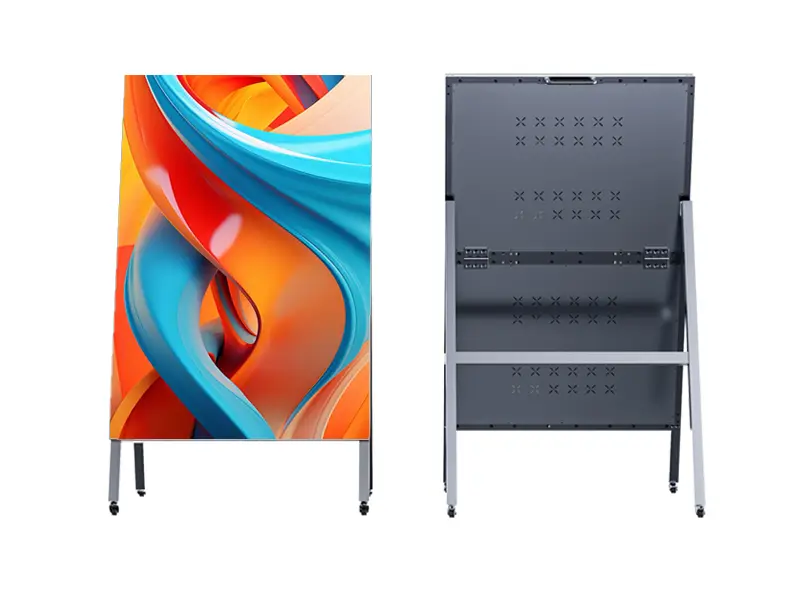
- Foldable frame for flat storage and transport
- Lockable castor wheels (often with brakes) for positioning
- Hard travel case (included by some manufacturers)
If you are moving your sign between locations daily—tradeshow booth to dinner event—lightweight construction and wheels are non‑negotiable.
Content Management System (CMS)
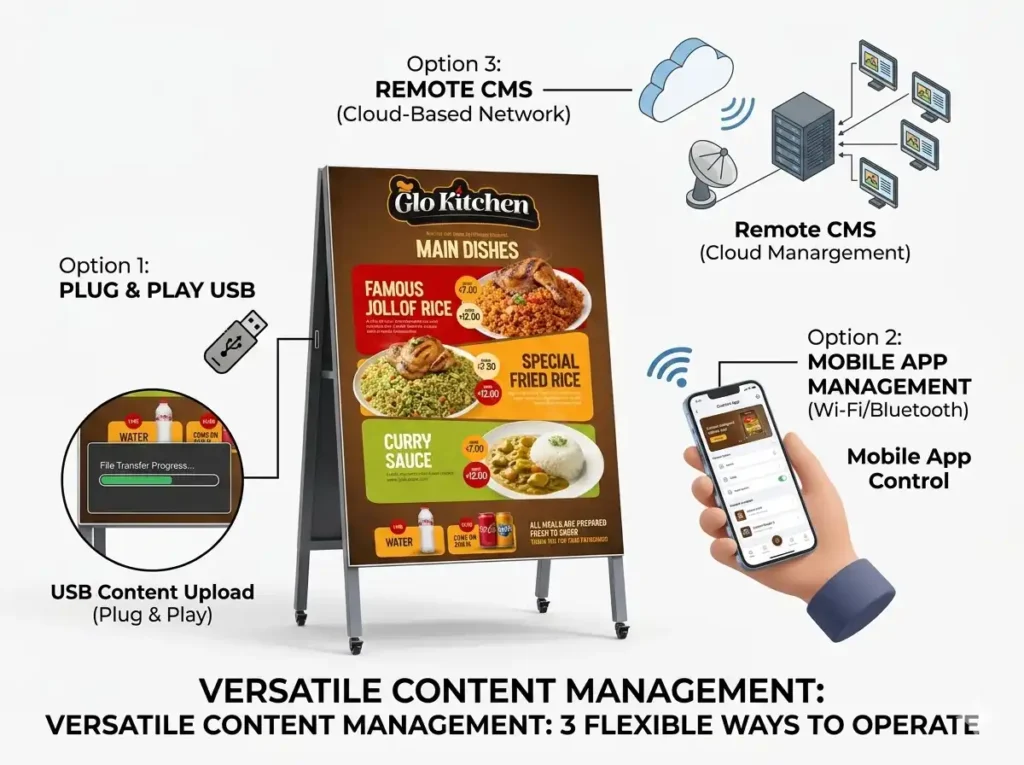
A CMS is the software that lets you upload, schedule, and manage content remotely. Most modern digital A‑frame signs run on Android or Windows operating systems with built‑in Wi‑Fi, USB ports, and cloud‑based CMS access. Look for systems that support:
- Dayparting (time‑based scheduling)
- Multi‑user access (so your marketing team can upload content without IT involvement)
- Offline playback (important for venues with unreliable internet)
Screen Size and Orientation
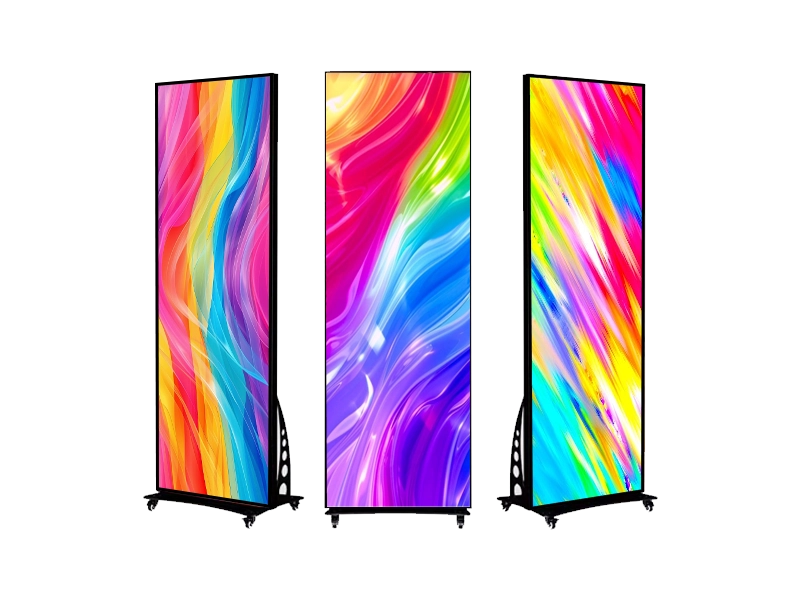
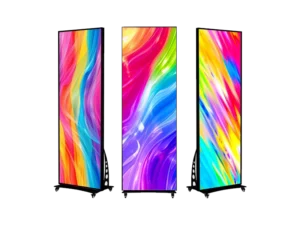
Adhaiwell’s Digital A-Board Sign sizes with 640 mm x 960 mm. Most units display in portrait (vertical) orientation, which matches the natural A‑frame shape and is ideal for menus, announcements, and promotions. Dual‑screen models (front and back) engage pedestrians walking in both directions—especially useful on busy corners or at trade show aisles.
Operating Temperature Range
Outdoor units need to handle local climate extremes. Check the specified temperature range. One common range is 2°C to 43°C; more rugged units operate from –30°C to +50°C. Many units include environmental controller boards that manage internal temperature and airflow automatically.
Security Features
If you are leaving the sign unattended on a sidewalk, look for:
- Key‑operated locks
- Braked lockable castor wheels
- Steel body construction (resists physical tampering)
Costs, Budget, and Total Cost of Ownership
Upfront Hardware Cost
| Type | Typical Price Range |
|---|---|
| Basic traditional A‑frame (chalkboard) | 50–150 |
| Premium static sandwich board (printed panels) | 150–300 |
| Entry‑level digital A‑frame (indoor / semi‑outdoor) | 1,500–2,500 |
| Commercial outdoor digital A‑frame | 2,500–8,000 |
| High‑end dual‑screen weatherproof model | 5,000–8,000+ |
Long‑Term Ownership Costs
The higher upfront cost of digital signage is offset by:
- Zero printing costs for content updates (traditional boards require new printed panels or chalk rewriting for each campaign)
- Reduced labour (no manual sign changes across multiple locations)
- Higher conversion rates (digital captures more attention and drives more walk‑ins)
A restaurant using digital menu boards typically sees ROI within 8–12 months. For a retail storefront, the eliminated printing costs alone can cover the hardware within two years.
Adhaiwell Display’s Digital A‑Frame Sign Solutions
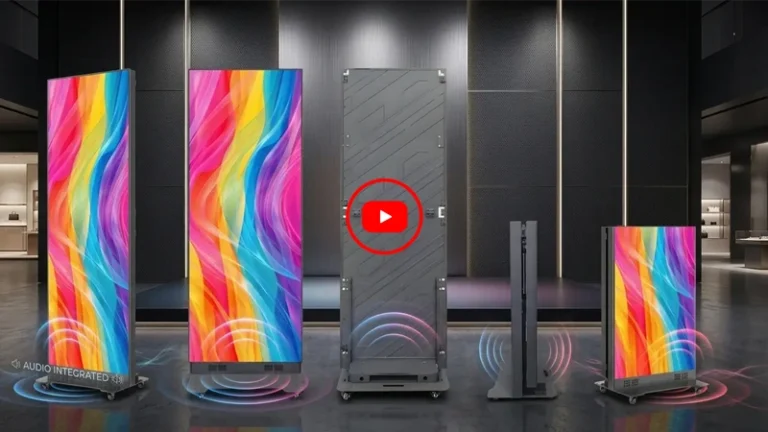
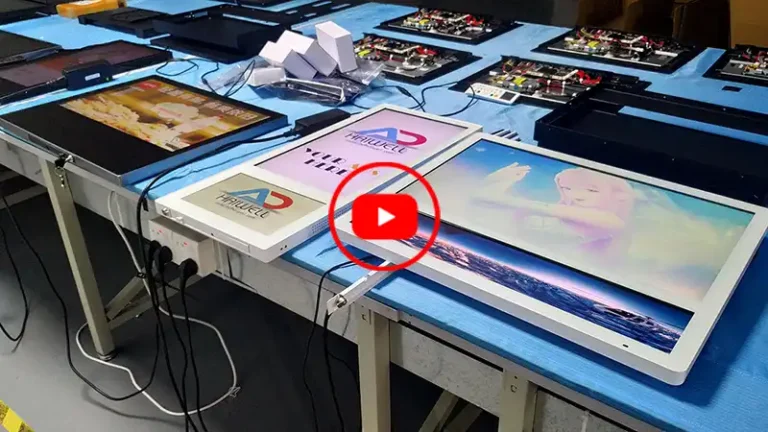
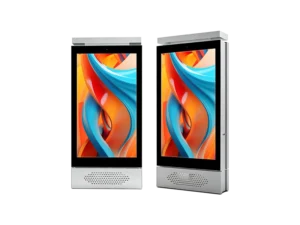
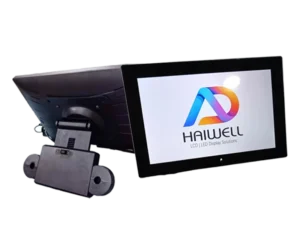
As a professional manufacturer of portable LED digital signage, Adhaiwell Display provides digital A‑frame signs designed specifically for overseas buyers, engineering integrators, and B2B procurement managers.
Our product range includes:
- Outdoor weatherproof digital A‑frame signs with IP65 ratings and 2,500+ nit high‑brightness panels for direct sunlight visibility
- Battery‑powered portable units with up to 16 hours of continuous operation—ideal for events, markets, and locations without power access
- Foldable, wheeled designs for instant setup and repositioning across multiple venues
- Cloud‑based CMS support for remote content updates across entire sign networks
Whether you are a restaurant owner looking to upgrade your sidewalk presence, an event organiser needing wayfinding signage that can move between halls, or a retail brand deploying digital signage across multiple storefronts, Adhaiwell Display offers custom OEM/ODM options tailored to your specifications.
Frequently Asked Questions (FAQ)
What is a digital A‑frame sign called?
A digital A‑frame sign is also known as a digital sandwich board, portable LED digital signage, electronic A‑frame, LED A‑frame sign, digital sidewalk sign, or digital A‑board. These terms all refer to the same product: a foldable, freestanding digital display in the classic A‑frame shape.
Are digital A‑frame signs weatherproof?
Yes—outdoor models are built to withstand rain, dust, and temperature extremes. Look for IP56 or IP65 ratings and a stated operating temperature range that matches your local climate.
How much does a digital sandwich board cost?
Commercial digital A‑frame signs typically cost between 2,000and8,000 depending on screen size, brightness, battery capacity, and weather rating. Entry‑level indoor models may start around $1,500.
How long does the battery last on a portable digital A‑frame?
Battery life varies by model and usage. Single‑screen units often last 16–20 hours on a full charge. Dual‑screen outdoor units typically run 7–10 hours.
Can I update the content remotely?
Yes. Most digital A‑frame signs include cloud‑based content management software that lets you update any sign—or hundreds of signs—from any internet‑connected device. You can schedule content days or weeks in advance.
Are digital A‑frame signs worth it for a small business?
If you change your messaging frequently (daily specials, weekly promotions, seasonal offers) and rely on foot traffic, yes. The eliminated printing costs and increased customer engagement typically create a positive ROI within 12–18 months for small businesses.
What brightness do I need for outdoor use?
For direct sunlight, look for at least 1,500 nits; 2,500+ nits is better for full sun locations. Indoor or shaded locations can work with 350–700 nits.
Can I use a digital A‑frame sign indoors?
Absolutely. Many businesses use them indoors for wayfinding, event schedules, lobby announcements, or point‑of‑sale promotions. Indoor models are typically lighter, lower brightness, and less expensive than outdoor‑rated units.
Ready to Upgrade Your Sidewalk Presence?
A digital A‑frame sign transforms a centuries‑old advertising format into a dynamic, measurable, and remote‑controllable marketing channel. Whether you are attracting foot traffic to a restaurant, guiding attendees through a trade show, or promoting daily specials from a retail storefront, portable LED digital signage delivers higher engagement, lower long‑term costs, and unlimited creative flexibility.
Adhaiwell Display manufactures high‑quality digital A‑frame signs for B2B buyers worldwide. Our products are built for outdoor durability, easy portability, and seamless remote management.