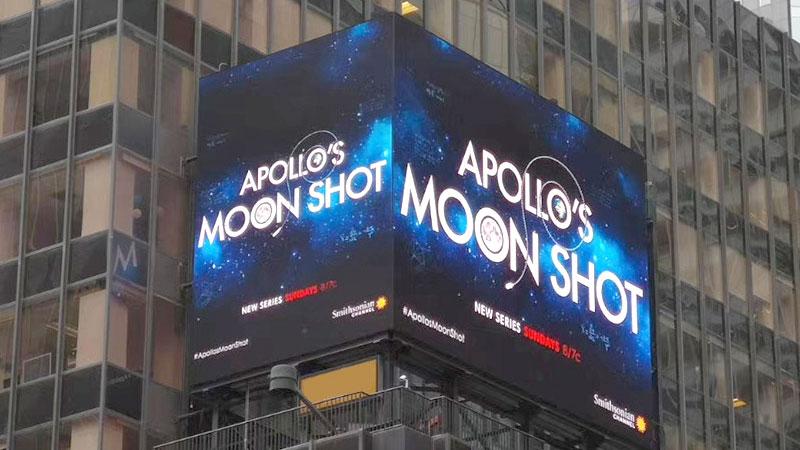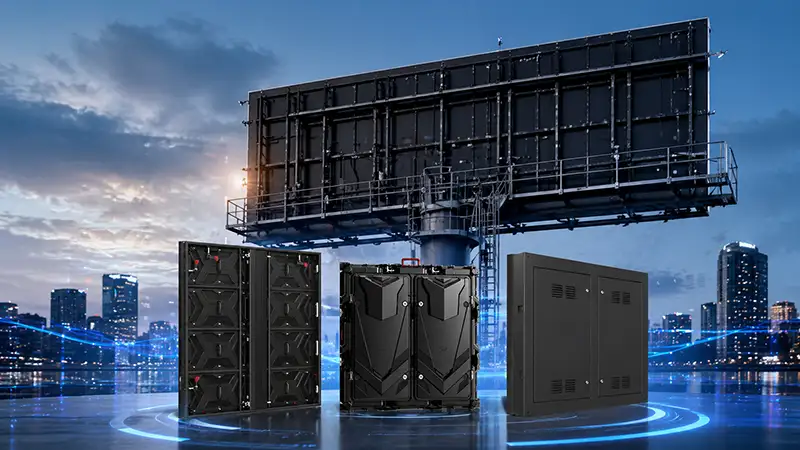
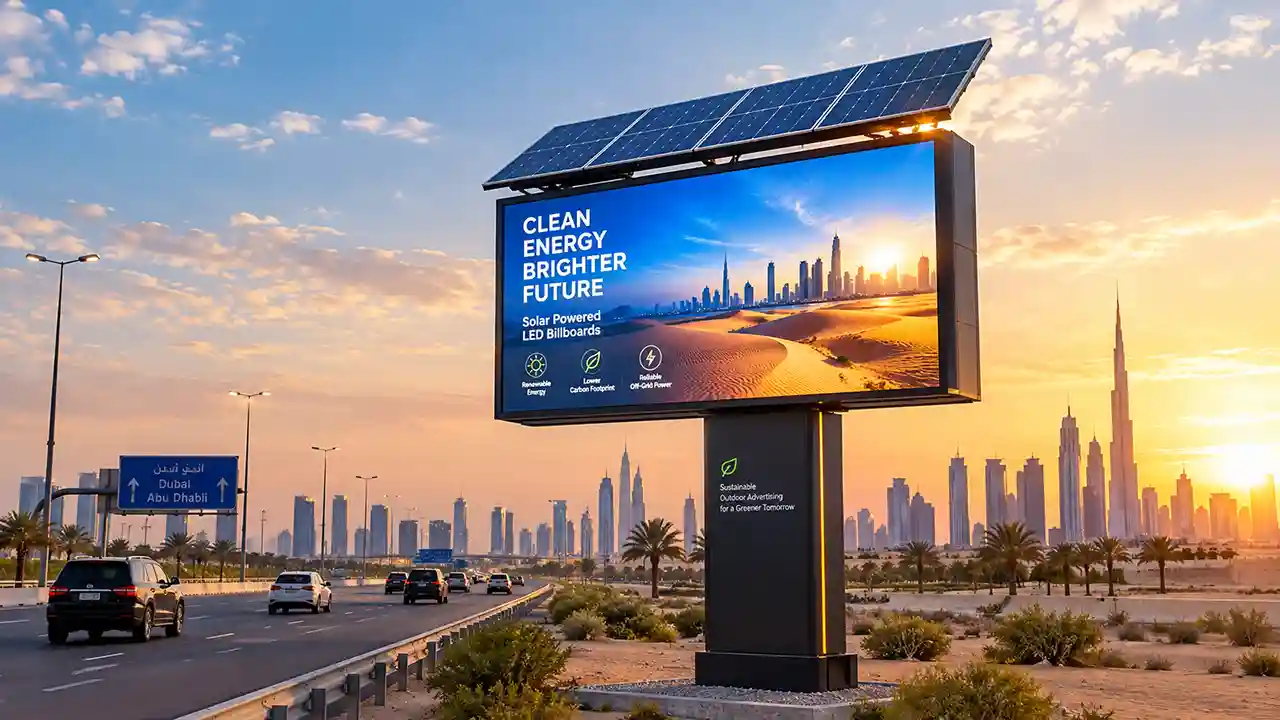
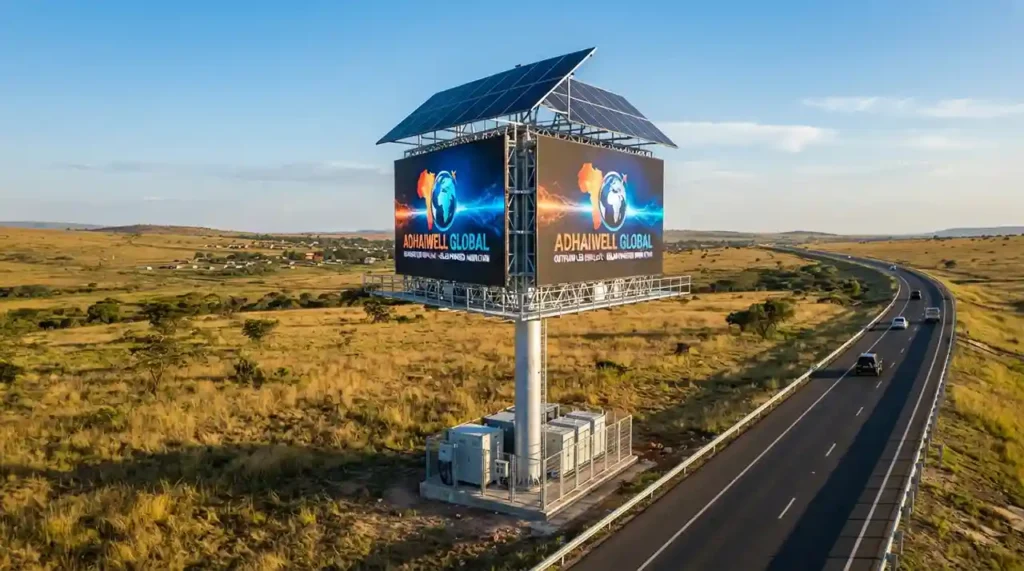
A Solar-powered Digital LED Billboard is an outdoor digital advertising display that takes its energy from photovoltaic panels and a battery bank instead of a utility connection. The idea is attractive wherever grid power is missing, expensive, or slow to reach, and it is now appearing in tender documents and procurement briefs from West Africa to the Gulf. The engineering, however, rarely matches the sales pitch. What follows is a working assessment of the numbers, the regional picture, the technical limits, and what a buyer should verify before signing a specification.
Key Takeaways
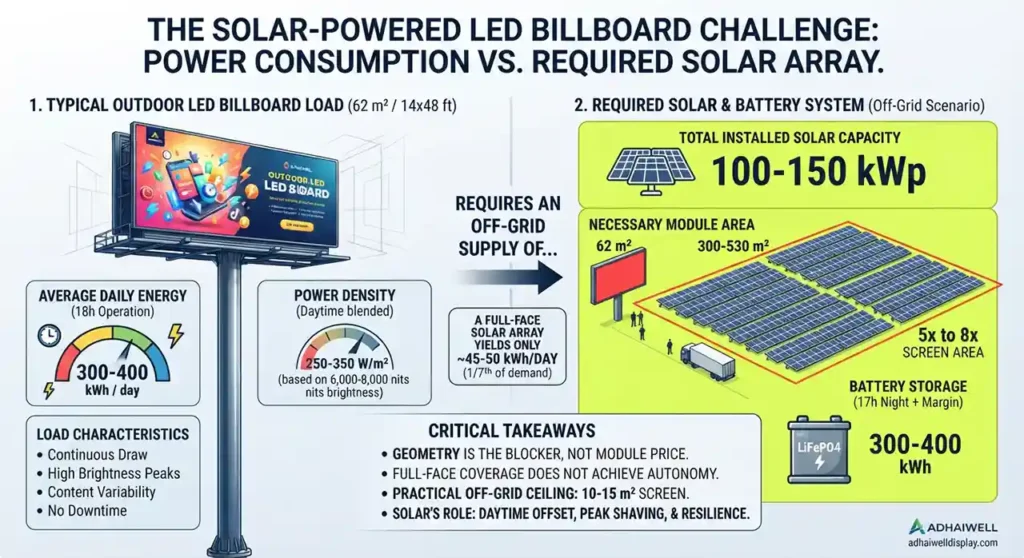
- A 14 × 48 ft LED face is a 15–22 kW load, not a sign. At 6,000–8,000 nits it consumes roughly 300–400 kWh per day, and a fully off-grid supply takes about 100–150 kWp of panels plus 300–400 kWh of battery — an array five to eight times the area of the screen itself.
- Geometry, not module price, is the blocker. Module prices fell below US$0.2 per watt by 2025 (IRENA), yet 300–530 m² of panels and 300–400 kWh of battery still have to be mounted, anchored and serviced around a pole-mounted structure.
- Full-face coverage does not solve it. Covering the whole billboard face with modules yields roughly 45–50 kWh per day, about one seventh to one eighth of the demand of the screen behind it.
- The practical ceiling for off-grid solar sits near 2–3 kW of average display load, about 10–15 m² of outdoor screen, before the power system becomes the dominant part of the project.
- Solar’s honest role on a billboard is resilience, not autonomy — daytime offset, peak shaving and outage ride-through on top of a grid connection.
Why Is Solar Power for an Outdoor LED Display Harder Than It Looks?
Because an outdoor LED screen is a continuous, high-draw load that happens to be shaped like a billboard, while a solar array is an intermittent, low-density generator that needs clear sky and open ground. The two are matched in marketing copy far more often than they are matched in physics.
Three characteristics of the load drive the mismatch:
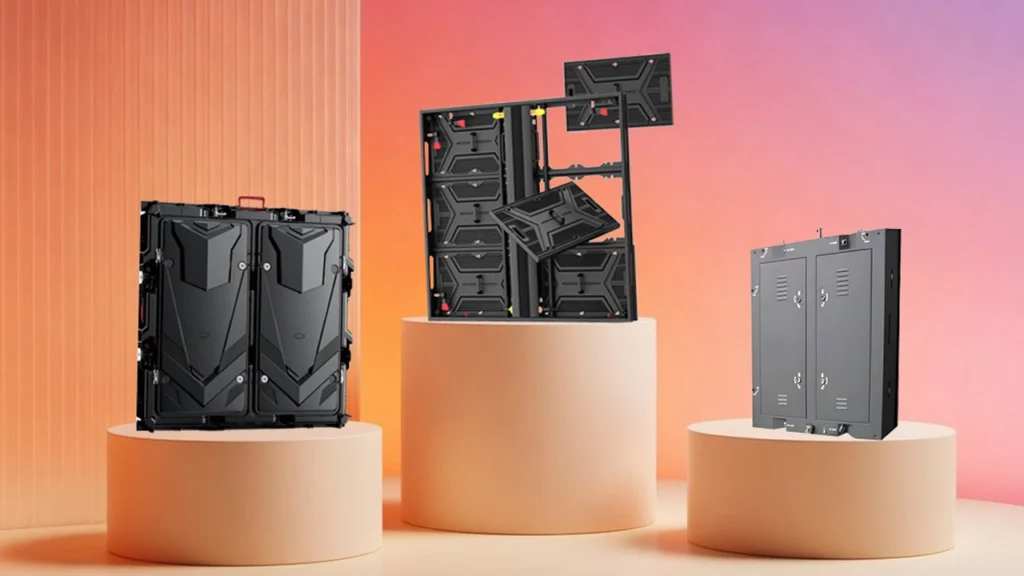
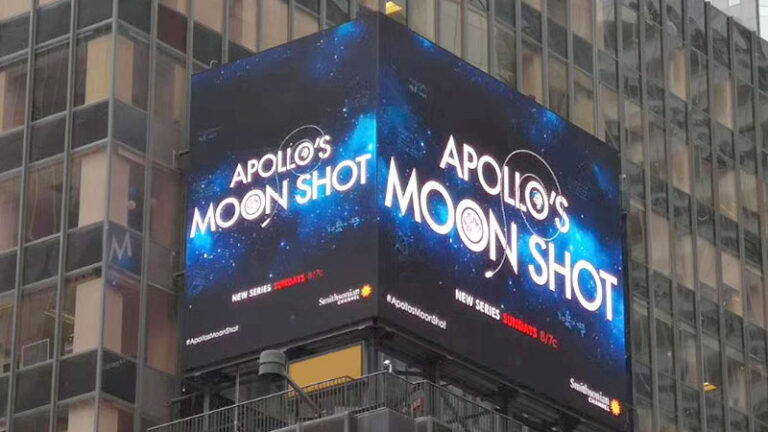
- Power density. A modern outdoor cabinet such as the aluminum profile alloy outdoor LED displays built by Adhaiwell is rated at 200 W/m² average and 650 W/m² maximum, at 6,000–10,000 nits depending on pixel pitch. For a 14 × 48 ft face — 4.27 × 14.63 m, or about 62 m² — that is 12.5 kW continuous at the rated average and roughly 40 kW at full brightness.
- Duty cycle. Advertising screens run 16 to 24 hours a day, every day. There is no partial-load season and no natural downtime to recharge in, except the hours the screen is switched off.
- Load variability. Screen current swings with brightness setting and with the content itself. A white-background spot can draw several times the current of a dark scene, and daytime operation at 6,000–8,000 nits sits far closer to maximum than to the rated average. A solar and battery system has to be sized against that peak, not the average, which is why simple “watts per square metre” arithmetic understates the array.
The consequence is procedural rather than dramatic. Solar does not fail on a billboard because panels are inefficient; it fails because the array required to feed the screen grows several times larger than the screen it serves.
How Much Solar and Battery Capacity Does a 14 × 48 ft LED Billboard Need?
Roughly 100–150 kWp of panels and 300–400 kWh of battery per face — about 300–530 m² of module area, or five to eight times the area of the screen. The figures below are arithmetic from published component ratings, not a quotation; they show the shape of the problem.
| Step | Basis | Result (one 62 m² face) |
|---|---|---|
| Rated average load | 200 W/m² (manufacturer spec, standard mixed content) | ≈ 12.5 kW |
| Rated maximum load | 650 W/m² | ≈ 40 kW |
| Realistic daytime-blended load | 250–350 W/m² at 6,000–8,000 nits | 16–22 kW |
| Daily energy, 18 h operation | Blended load × 18 h | ≈ 300–400 kWh/day |
| Daily energy, 24 h operation | Blended load × 24 h | ≈ 380–520 kWh/day |
| Array, West Africa | 3.2–4.0 kWh/kWp/day (rainy-season design month) | 85–115 kWp |
| Array, Gulf | 4.5–5.0 kWh/kWp/day | 65–85 kWp |
| Module area | ≈ 4.6 m² per kWp at 21% module efficiency | 300–530 m² |
| Night battery | 17 h × blended load, plus margin | 300–400 kWh LiFePO4 |
Two numbers make the geometry concrete:
- Full-face coverage is not enough. Laying modules across the entire 62 m² billboard face, at 4.4 kWh/m²/day and a 0.8 performance ratio, yields roughly 45–50 kWh per day. The screen behind it needs 300–400 kWh. The array would have to be seven to eight times the screen area, which means ground-mounted structures beside the site — not panels on the billboard.
- The added mass is structural, not cosmetic. 300–530 m² of modules plus racking adds several tonnes, and a 300–400 kWh lithium iron phosphate bank adds several tonnes more. On a pole-mounted structure originally designed to carry a screen and its frames, that changes the foundation, the pole section and the wind-load calculation.
For context on cost direction: IRENA’s Renewable Power Generation Costs 2025 records solar PV module prices below US$0.2 per watt by 2025, down from over US$2 per watt in 2010, and four-hour utility-scale battery storage at about US$140/kWh — a fall of roughly 30% in a single year. Panels and cells are no longer the expensive part of a solar project. The expensive part at billboard scale is the land, the structure, the battery bank and the site work. Commercial research houses estimate markets differently and their methodologies vary, so treat all market figures in this article as directional rather than site-specific forecasts.
Which Regions Make Solar-Assisted DOOH Realistic — Africa, South America, Europe or the Middle East?
No region makes a large off-grid solar billboard fully realistic, but the reasons differ sharply, and the regional picture decides whether the answer is solar, grid extension or a hybrid. Solar resource is only one of four variables; the others are grid availability, electricity price and regulation.
Africa — the strongest need, the weakest economics for large loads. The IEA’s World Energy Outlook 2025 counts about 730 million people without electricity access, with roughly 80% of them in sub-Saharan Africa, and notes that the continent holds around 40% of the world’s solar resource but only about 1% of installed global solar PV capacity. Financing costs in African markets run more than twice those in advanced economies, and sub-Saharan Africa receives around 2% of global clean energy investment. The practical read for a media owner is blunt: where there is no grid at all, a 15–22 kW display is an unusually heavy first electrical load for a country whose newest connections are mostly solar home systems of 10 Wp or less. Where a highway corridor, a substation or a mini-grid exists within a reasonable distance, extending or upgrading that connection is usually the cheaper engineering answer. Solar earns its place in Africa as a grid-assist and outage-ride-through layer, and for genuinely small screens in towns with no service at all.
South America — mostly connected, with a narrow remote window. Latin America sits close to universal electricity access, but the last percentage points are the hard ones: Andean highland and Amazon communities remain poorly served and, at current rates, could take well over a decade to close. Digital out-of-home screen demand in the region is nonetheless expanding — Verified Market Reports puts the Latin American DOOH screen market at about US$1.0 billion in 2025 heading to US$2.4 billion by 2033, with Brazil, Mexico and Argentina in the lead, and Brazil’s utility-scale solar cost among the lowest globally at US$37/MWh in 2025 (IRENA). The realistic solar application is again small format: transit shelters, rural community information displays and roadside signs in areas the grid has not reached.
Europe — a regulation story, not a solar-resource story. Northern European yield is modest, and grid power is available almost everywhere, so off-grid solar is rarely the answer. What is changing is the compliance environment. Market Research Future, in its 2026–2035 digital OOH outlook, reports that the EU Energy Efficiency Directive requires member states to cut non-essential business lighting energy by 15% by 2030, that French municipalities have already imposed overnight screen blackouts between 01:00 and 06:00, and that operators converting older panels to energy-efficient modules face capital expenditure of roughly US$12,000–18,000 per face. Mordor Intelligence likewise lists EU eco-design rules displacing print media and energy audits tied to the Energy Performance of Buildings Directive as active drivers of LED replacement in Europe. The European path is efficiency, dimming schedules and renewable electricity contracts — not an off-grid array in a cloudy market.
Middle East — the best solar resource and the strongest commercial pull, but rarely the best economics. The Gulf is the fastest-growing DOOH region: MarkNtel Advisors values GCC digital out-of-home at US$572 million in 2025, rising to US$612 million in 2026 and US$952 million by 2032, with digital billboards and LED screens taking about 48% of that spend and Saudi Arabia about 43%. Mordor Intelligence records the UAE moving more than 70% of its outdoor faces to digital by the end of 2025, and lists an “ESG push for renewable-powered LED displays” as a measurable growth driver across the UAE, Saudi Arabia and Qatar. Utility power is cheap and reliable there, so solar is not bought to cut energy bills. It is bought for permitting, sustainability reporting and tender scoring. Two site realities still bite: airborne dust cuts module yield without a cleaning regime, and sustained ambient temperatures near or above 45 °C derate both modules and battery life.
What Are the Real Technical Limits of Solar-Powered LED Billboards?
The limits sit in load profile, storage life, structure and maintenance rather than in panel efficiency. Each of the following has ended real projects, and each is worth putting to a supplier in writing.
- Peak-versus-average sizing. With 200 W/m² average and 650 W/m² maximum, the power electronics and battery must cover a peak more than three times the average. A system sized on average consumption will trip on a bright-content daytime playlist.
- Battery life shorter than screen life. A quality outdoor screen is rated for 100,000 hours — around 11 years of 24/7 operation. Lithium iron phosphate storage in tropical or desert ambient typically needs replacement at five to seven years. The project therefore carries a mid-life capital event that the screen itself does not.
- Design month, not annual average. In West Africa the June–August rainy season drops daily solar energy to roughly 3.2–3.4 kWh/m²/day against 5.0 kWh/m²/day in the dry season. An array sized on the annual average will be short of power for a quarter of the year. The array must be sized on the worst month, which is what inflates it to five to eight times the screen area.
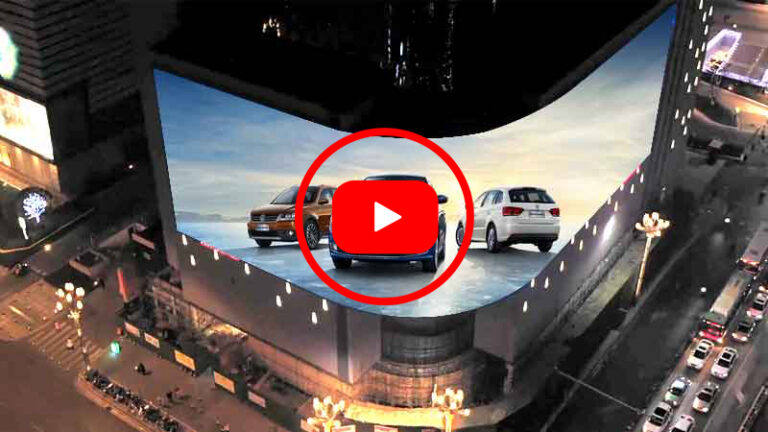
- Wind load and foundation. An array several times the screen’s area presents several times the sail area. Coastal and tropical storm zones require hurricane-level wind calculations and corrosion protection — the same engineering standard already applied to outdoor structures in exposed locations, as in the turnkey 3D LED billboard project delivered in Fiji, where galvanized steel and corrosion-resistant aluminium alloy were specified for salt-laden air.
- Soiling and cleaning at height. Dust and coastal salt reduce module output continuously until cleaned. Cleaning 300–530 m² of panels at height is a recurring safety and labour cost that rarely appears in the feasibility spreadsheet.
- Loss chain. Temperature derating, soiling, module mismatch, cabling and inverter losses compound. A realistic performance ratio for a small, hot-climate off-grid system is 0.72–0.80, meaning every figure in a vendor’s generation estimate should be discounted accordingly.
- Site selection conflict. Billboards are sited for sightlines: roadside, urban, often shaded by structures and trees. Solar arrays need unobstructed sun and ground area. The best advertising position and the best generating position are frequently not the same position.
- Security. Panels, batteries and copper are movable assets. In markets with weak site security, an unattended off-grid power plant beside a roadside screen is a recurring loss risk.
Why Is Green Energy Turning Into a Commercial Requirement for DOOH Operators?
Because advertisers and regulators are now both asking for it, and the answer changes what operators can charge. Renewable energy on an outdoor display has stopped being a sustainability footnote and started being a commercial instrument.
- Regulation is cutting available inventory. The EU Energy Efficiency Directive’s 15% reduction target for non-essential business lighting by 2030 and municipal overnight blackout rules in France are already removing late-night airtime; Market Research Future estimates overnight blackouts reduced daily programmatic impressions by around 25% in affected French markets.
- Advertisers are buying carbon-audited placements. The same 2026 analysis reports that operators running solar-powered LED panels and carbon-offset programmatic DOOH campaigns can command CPM premiums in the order of 10–15% from ESG-conscious advertisers.
- The market itself is large enough to matter. The World Out of Home Organization puts DOOH at US$25.5 billion in 2025 rising to US$28 billion in 2026. Decarbonising even a fraction of that estate is now a board-level topic for network owners.
- Cheap renewables make partial solutions viable. With solar-plus-storage firm electricity now quoted at US$54–82/MWh in strong-resource regions (IRENA, 2025), a daytime solar offset or a battery-backed outage ride-through can be justified on operating cost alone in markets with unreliable supply or high commercial tariffs.
The nuance worth holding onto: a carbon-audited placement does not require an off-grid billboard. A grid-connected screen on a renewable tariff, with documented energy metering and a dimming schedule, delivers most of the commercial benefit at a fraction of the engineering risk.
Where Does Solar Work Today — and Where Does Grid Power Still Win?
Solar works where the load is small and the alternative is nothing; grid power wins wherever a connection is reachable and the screen is large. In practice there are four viable models, and only one of them is full autonomy.
- Small off-grid solar LED displays (works). Transit shelters, street furniture, rural information boards and parking signage in the 1–3 kW average load class — roughly 10–15 m² of screen — where a 10–15 kWp array and a 30–50 kWh battery remain proportionate to the structure. This is the format where solar delivers on its promise.
- Grid-connected outdoor LED displays (the default). For a 14 × 48 ft face or any billboard-scale screen, a utility connection remains the lowest-risk and lowest-cost route where one is available.
- Hybrid grid plus solar (the strongest compromise). Grid as the primary supply, with photovoltaics offsetting daytime load and a battery covering outages, brownouts and peak tariff windows. In markets with unstable supply this pays back on reduced generator hours and protected airtime rather than on fuel alone.
- Generator replacement on remote sites (situational). Where a diesel generator currently runs a screen, a solar-battery hybrid can cut fuel consumption substantially — IRENA reports diesel reductions of up to 80% for solar-battery mini-grids in remote settings — provided the site has the land and the security for an array.
The honest summary for a media owner planning a large screen: budget for a grid connection first, then treat solar as an addition that improves resilience and marketability. A specification that promises a 62 m² screen running 18 hours a day on panels alone is a specification that will not survive its first rainy season.
What Should Buyers Verify Before Ordering a Solar-Assisted Outdoor LED Display?
Verify the energy model before the screen specification, and have the power system sized by a solar engineer rather than by the display supplier. Most failed projects were ordered the other way round: the screen was chosen first, then a power system was fitted around an already-fixed load.
A workable sequence for any outdoor LED project with a solar element:
- Get measured load figures, not marketing figures. Ask for average and maximum power in W/m² at the brightness you will actually run, and for the same figure under a bright-content playlist. The 200 W/m² average is meaningless for sizing unless the test condition is stated.
- Require a 24-hour energy model. Hourly kWh demand against hourly generation, for the worst month, with the dimming schedule applied.
- Insist on a stated performance ratio. Anything above 0.82 for a small hot-climate system should be challenged, and the assumption behind it documented.
- Have an independent solar EPC size the array, battery and inverter, with the display’s peak load as an input. Ambition to sell a screen is a conflict of interest in this calculation.
- Ask for the structural calculation including array wind load, not just the screen load. This is where pole-mounted projects most often become unsafe or over-budget.
- Confirm battery chemistry, cycle life at your site ambient temperature, and the replacement schedule, then put the mid-life replacement cost into the operating budget.
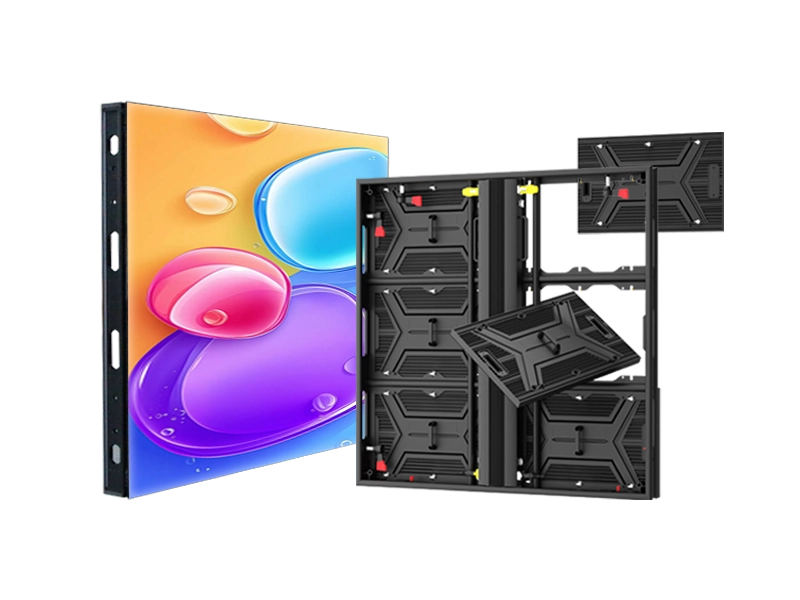
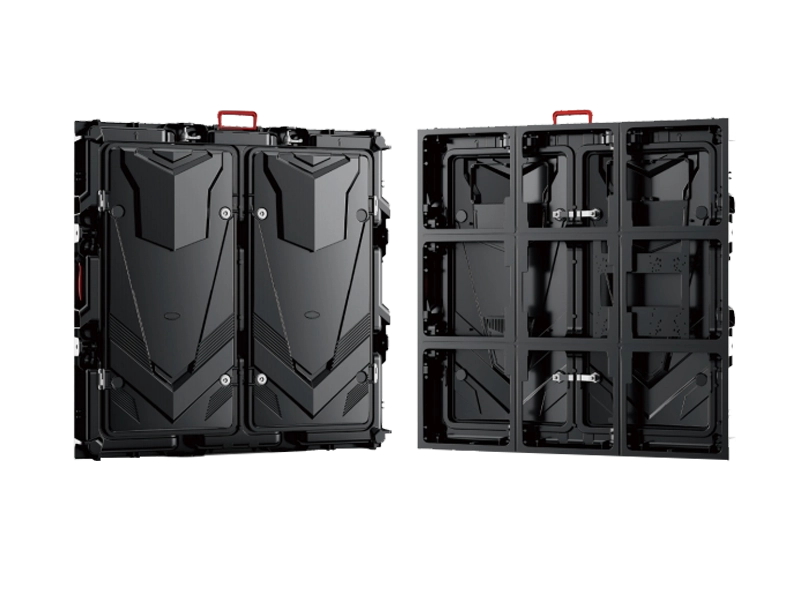
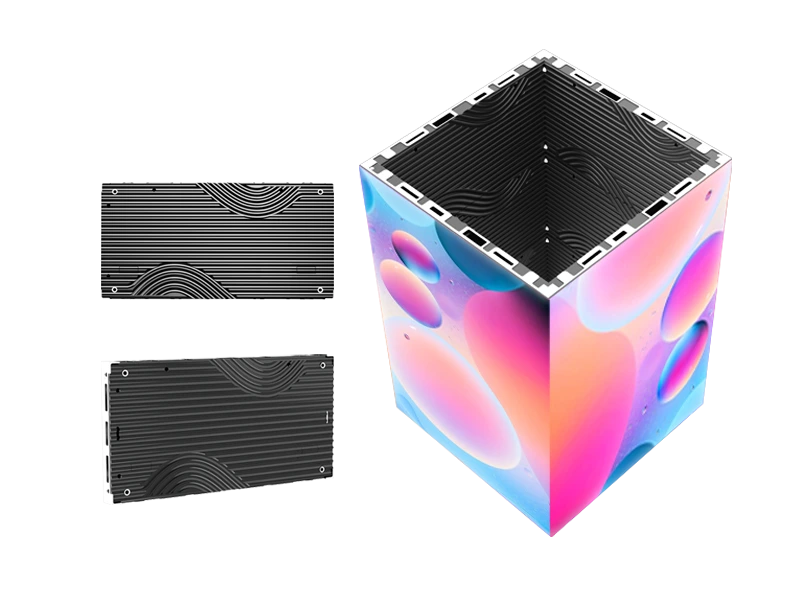
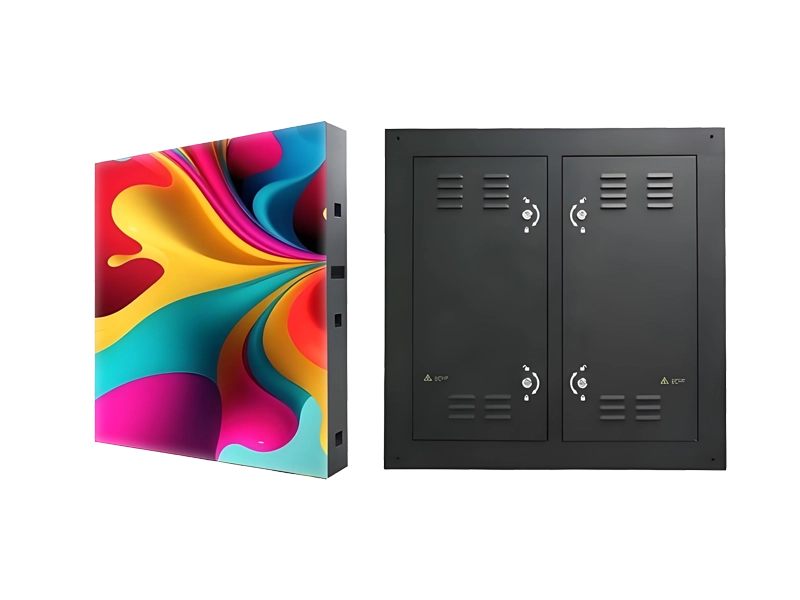
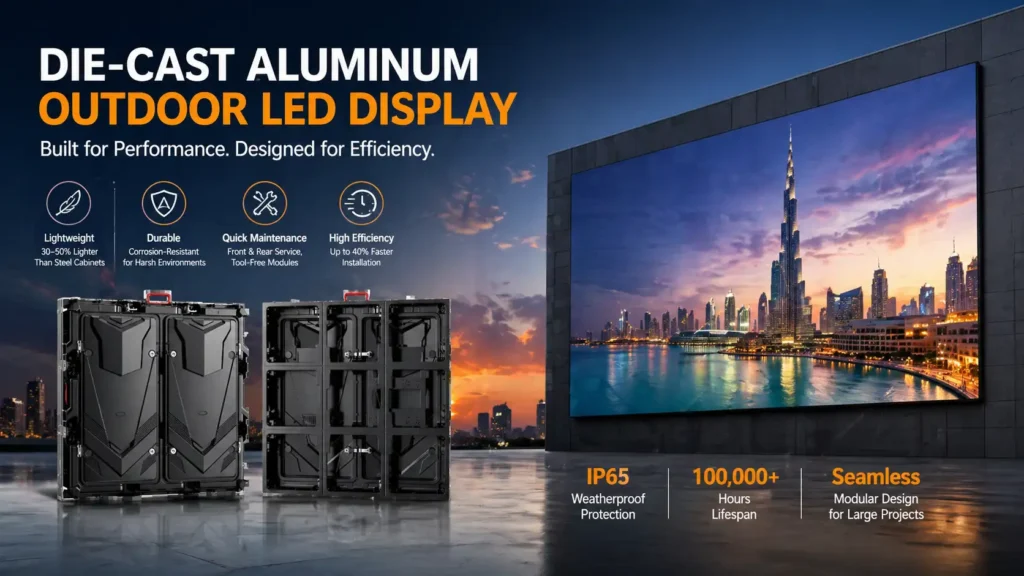
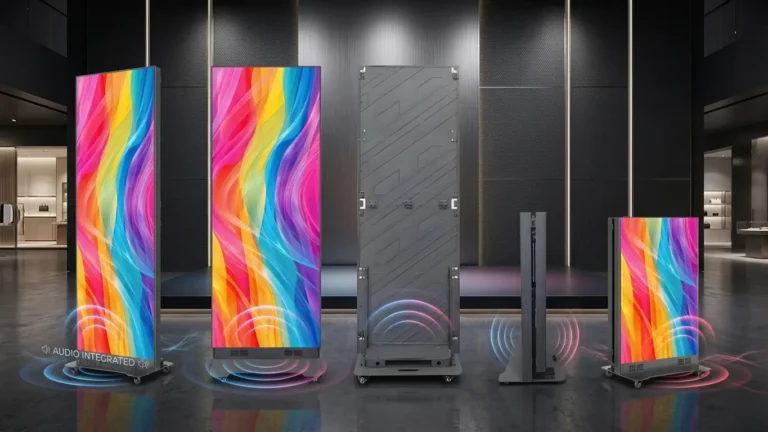
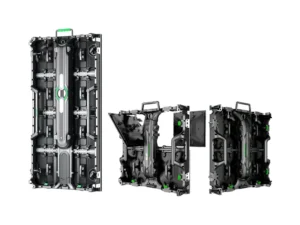
- Match the cabinet material to the climate. For tropical and desert sites, aluminium extrusion cabinets run cooler and last longer than painted steel; a lightweight die-cast aluminum outdoor LED display is the usual choice for pole and column mounting where weight and flatness both matter, while steel remains the economical option for large fixed structures with rear access.
- Confirm the display specification independently. For outdoor advertising, IP65 as a minimum, 6,000–8,000 nits for direct-sun positions, 3,840 Hz refresh, front and rear maintenance access where the site allows, and an operating range that covers your local extremes.
- Define the fallback mode in writing. Dimming steps, playlist priority and load-shedding behaviour on low battery tell you more about a supplier’s experience than any specification sheet.
- Ask for references on comparable off-grid deployments, not on small solar-powered signs. A 2 m² solar bus shelter and a 62 m² solar billboard are different engineering disciplines.
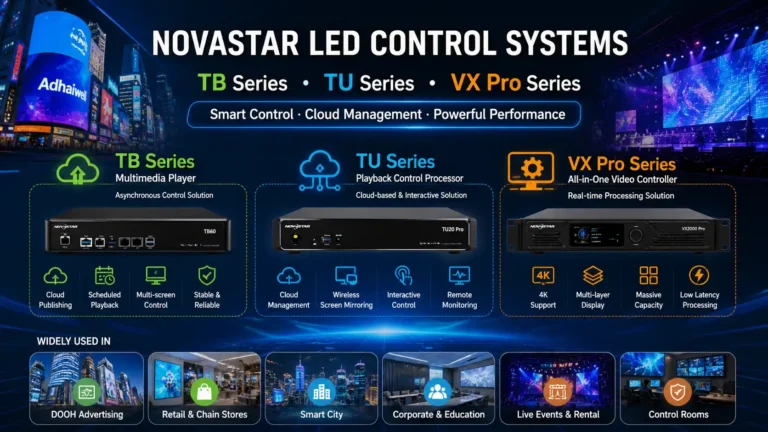
- Check the remote management path. Cloud CMS over 4G, with scheduling and brightness control, is what allows you to cut consumption at the point of a supply shortage rather than at the point of failure. The guiding questions are set out in Adhaiwell’s outdoor LED display selection guide for DOOH advertising, which covers brightness, pixel pitch, weather protection and energy efficiency in the order they affect total project cost.
Adhaiwell manufactures outdoor LED displays in Shenzhen for more than 80 export markets, covering steel, die-cast aluminium and aluminium profile cabinets, with structure engineering and load calculations provided at tender stage, CE and RoHS documentation, a 72-hour factory burn-in test, and a standard production cycle of 25–35 days. We supply the display and the engineering support around it. For solar feasibility we will tell a buyer what the array size will actually be, because a project that fails in its first rainy season costs more than a project that was scoped correctly.
Frequently Asked Questions About Solar-Powered LED Billboards
These answers come from Adhaiwell’s engineering and export work on outdoor LED display projects, including turnkey billboard installations in island and coastal environments where wind load, corrosion and power supply all had to be engineered rather than assumed.
Can a solar powered LED billboard run 24 hours a day off-grid?
Not at billboard scale. A 62 m² face consuming 380–520 kWh per day would need an array and battery bank several times its own footprint, which pole-mounted structures cannot carry. Off-grid 24-hour operation is realistic only for small displays in the 1–3 kW load class.
How many solar panels does a 14 × 48 ft LED billboard need?
About 100–150 kWp in West African conditions and 65–85 kWp in the Gulf, which is roughly 300–530 m² of module area. Covering the entire billboard face with panels would supply only about 45–50 kWh per day against a demand of 300–400 kWh.
Is a solar billboard cheaper than connecting to the grid?
For small screens in genuinely remote locations, often yes, because the array is small and the grid extension is not. For billboard-scale screens, usually no: the power system dwarfs the screen cost, while a grid connection, where reachable, is a one-off payment with predictable tariffs.
What is the largest LED display that can realistically run on solar alone?
Roughly 10–15 m² at 200 W/m² average load, which is about 2–3 kW. Beyond that the array, battery, and mounting structure become the dominant part of the project rather than an accessory to it.
Do solar-powered LED billboards need battery replacement?
Yes. Lithium iron phosphate banks in tropical or desert ambient conditions typically need replacement every five to seven years, against a screen life of around 11 years at 100,000 hours. That replacement should be planned and budgeted from the start of the project.
Planning an outdoor LED project where the power supply is the open question? Send us the site location, the screen size you are considering, and the brightness you need, and we will come back with the load figures, the cabinet recommendation, and the questions to put to your solar contractor. Browse the outdoor display range at LED Display.