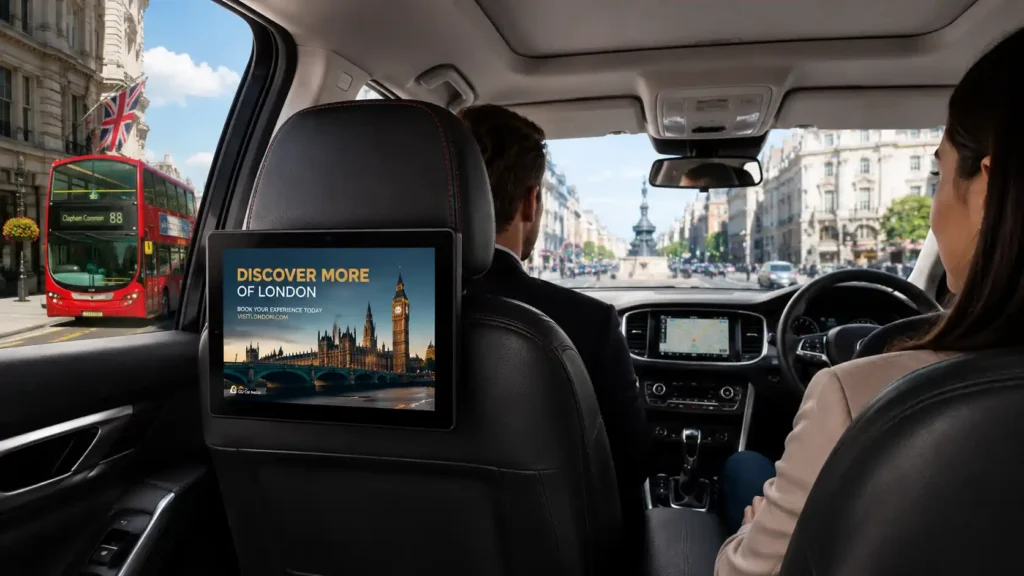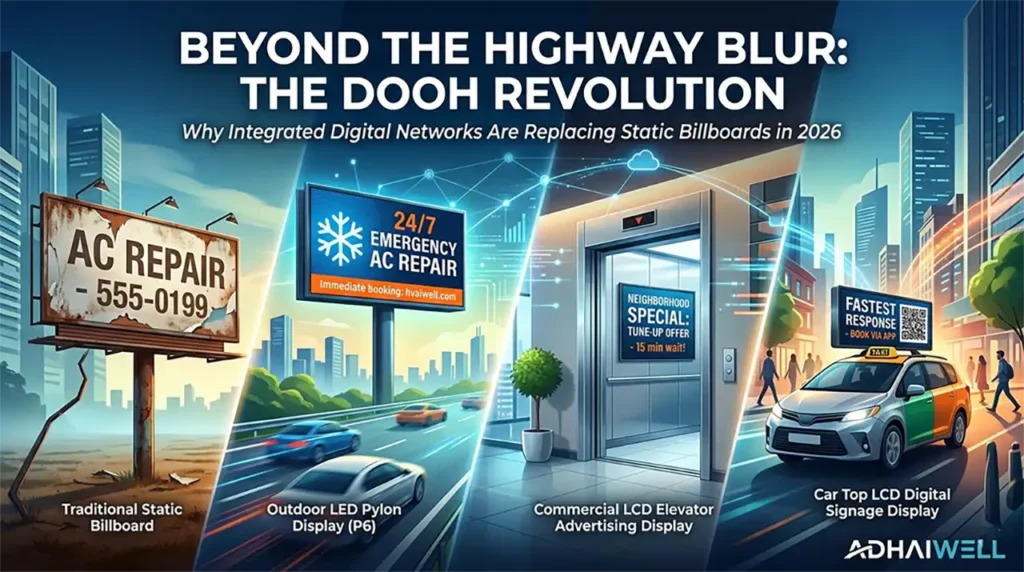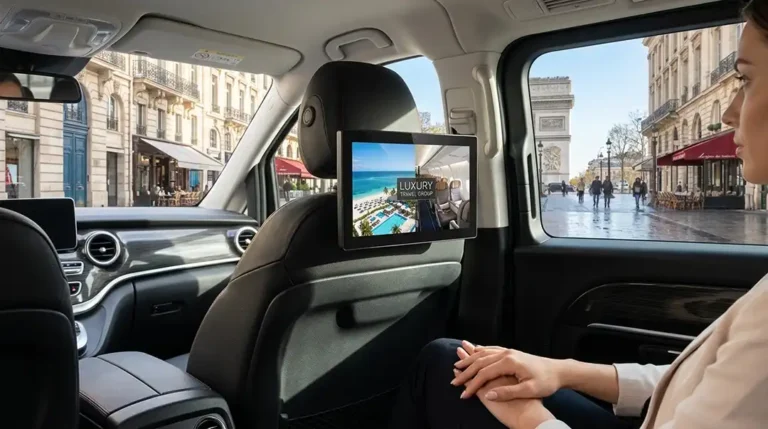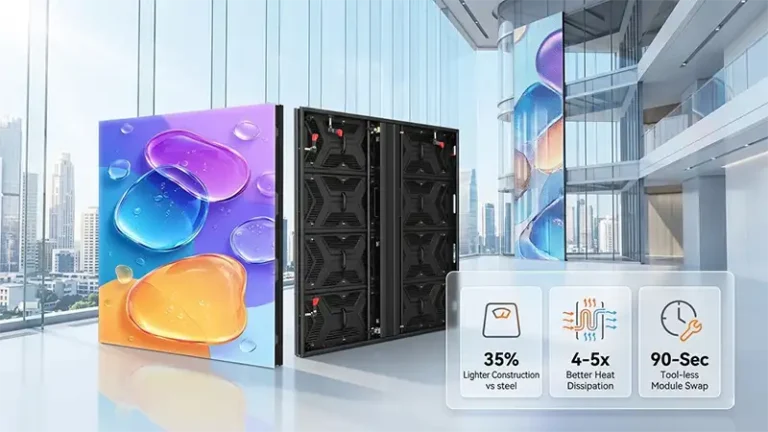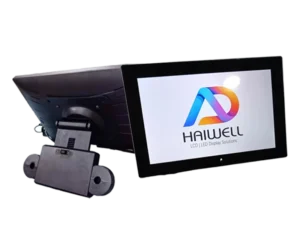
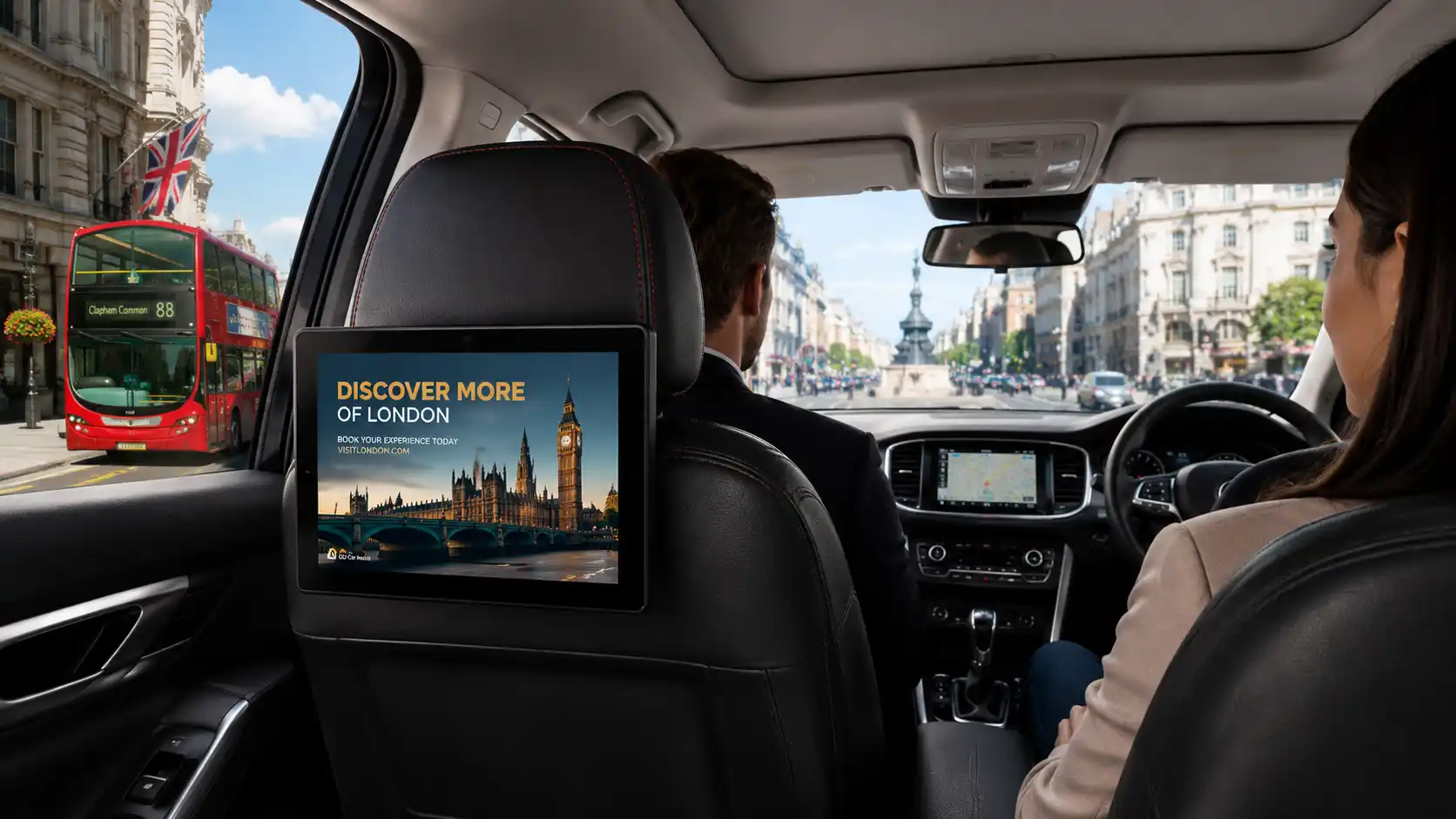
Taxi advertising LCD display is evolving from a simple vehicle advertising format into a connected digital media channel, linking in-car screens, fleet operations and the wider DOOH ecosystem.
For advertisers, the attraction is flexible digital inventory inside a passenger environment. For fleet operators, the opportunity is to create an additional revenue stream from existing vehicles. For overseas buyers and system integrators sourcing from China, the more important question is no longer simply “Which LCD screen should we buy?” but “Can the hardware, connectivity and CMS support a commercially scalable taxi media network?”
Key Takeaways
- Taxi advertising LCD displays are turning vehicles into connected digital media assets, combining passenger-facing screens with 4G/5G, GPS and cloud-based CMS platforms.
- The opportunity sits within the broader growth of DOOH. Global DOOH expenditure reached $25.5 billion in 2025 and is forecast by the World Out of Home Organization to reach $28 billion in 2026.
- Programmatic DOOH is becoming more important. WOO reported $2.1 billion in global programmatic DOOH spend in 2025, equivalent to 8.4% of total DOOH revenue.
- Taxi screens create a different advertising environment from roadside billboards: passengers are inside the vehicle, campaigns can be updated remotely, and content can potentially be organized by location, time and fleet.
- A 1,000-unit taxi digital signage deployment in Armenia provides a real-world example of fleet-scale implementation, using 4G connectivity and centralized CMS management. The fleet operator reported good investment returns, although specific ROI figures are not publicly disclosed.
- For buyers, the screen itself is only one part of the solution. Hardware reliability, remote management, connectivity, installation, after-sales service and fleet-level scalability should all be evaluated before procurement.
What Is In-Taxi Digital Signage, and Why Is It a Distinct DOOH Channel?
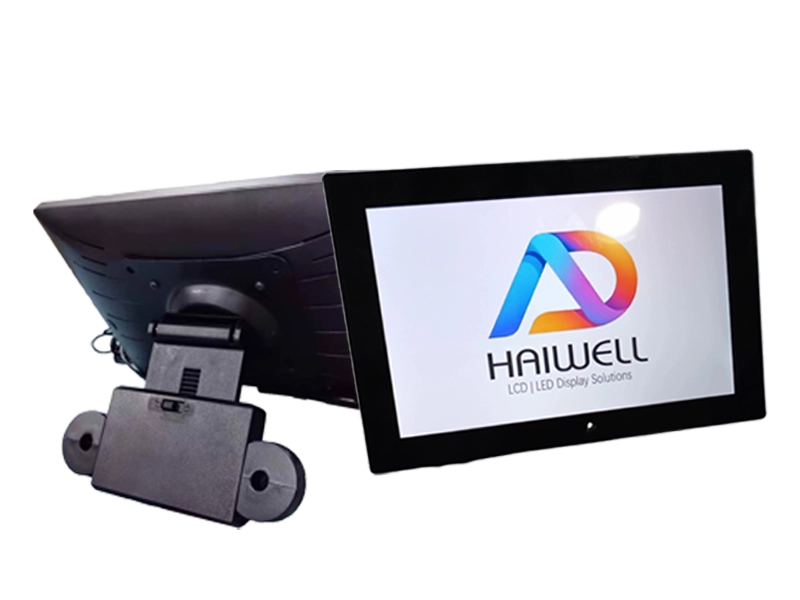
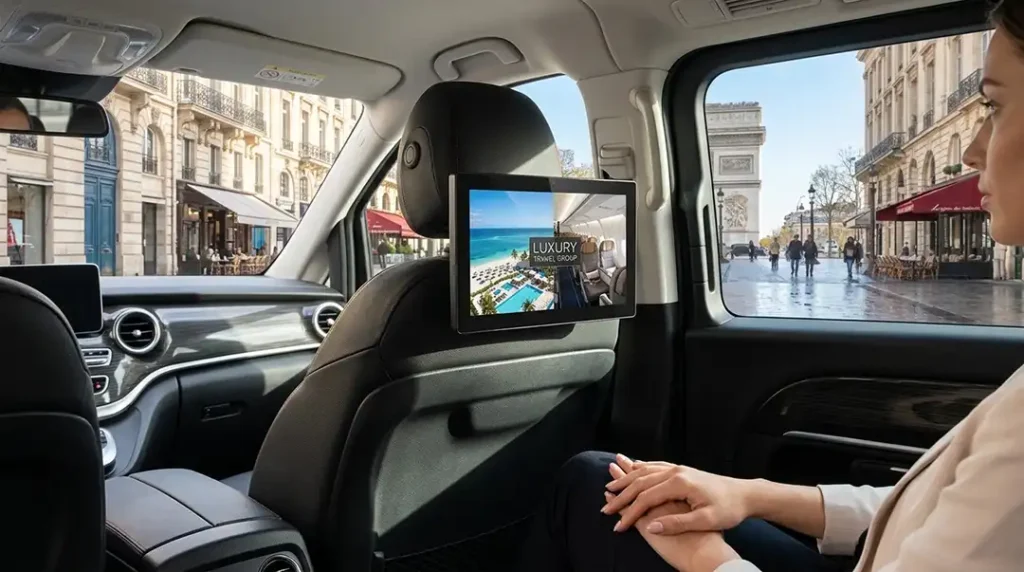
Taxi advertising LCD displays are passenger-facing screens mounted inside taxis, rideshare vehicles, buses, and private fleets that deliver dynamic advertising, public service messaging, travel information, and interactive content. What makes in-taxi digital signage distinct from traditional outdoor advertising is the captive audience environment—passengers have limited distractions and extended dwell time, creating one of the most attention-rich settings in the DOOH ecosystem
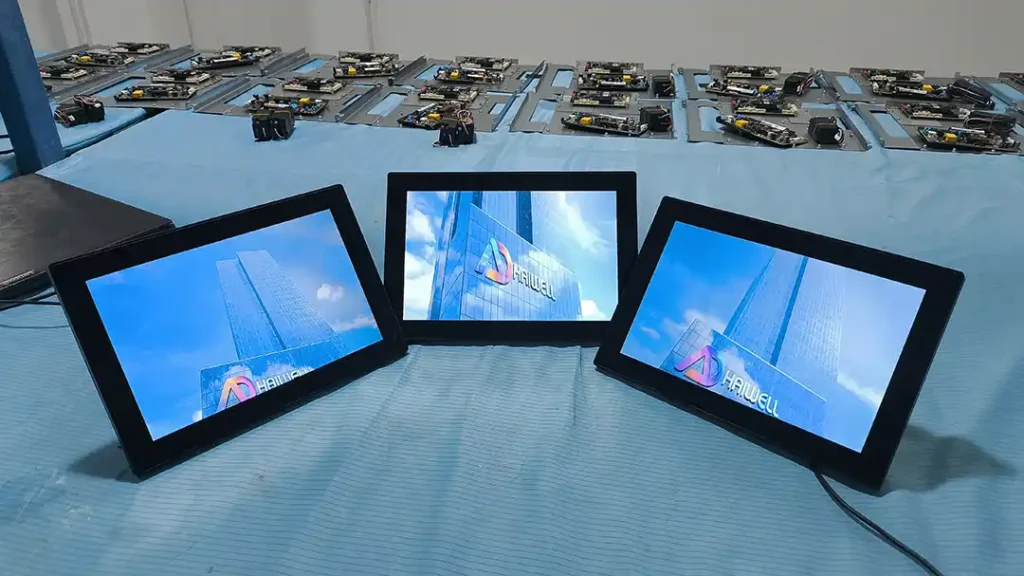
Unlike a traditional billboard, a taxi advertising LCD display operates within a moving, passenger-facing environment.
The basic system typically includes:
- Passenger-facing LCD display for content playback
- Media player or embedded Android system for local content management
- 4G/5G connectivity for remote updates
- GPS hardware where location information is required
- Cloud CMS for fleet-wide content and device management
- Power management designed for vehicle operation
- Optional touch, QR-code or interactive functions
The distinction from conventional outdoor advertising is not simply that the screen is smaller. It is the combination of mobility, passenger dwell time and digital content management.
Why does the passenger environment matter?
A roadside billboard generally competes with traffic, buildings and other visual information. A passenger inside a taxi is already spending time within the vehicle, creating a different viewing context.
That can make an in-car display suitable for:
- Brand campaigns
- Retail promotions
- Restaurant offers
- Hotel and tourism information
- Local services
- Financial and telecom advertising
- Events and entertainment
- Public information
This does not mean every passenger watches every advertisement. A professional media network still needs a credible methodology for estimating exposure, campaign delivery and audience reach.
That measurement issue is increasingly important across the wider DOOH industry. The IAB’s 2025 DOOH Measurement Guide specifically highlights the need for clearer definitions and more consistent approaches to data collection, impressions, attribution and campaign measurement.
For buyers, the practical takeaway is simple: a taxi LCD display should be evaluated as part of a media system, not as a standalone commercial monitor.
How Big Is the Taxi Advertising LCD Display Market, and What’s Driving Its Growth?
The global in-taxi digital signage market was valued at approximately USD 756.43 million in 2025 and is forecast to reach USD 963.22 million by 2031, growing at a CAGR of 4.11%. Other industry estimates place the 2025 market at USD 559.9 million, with a projected reach of USD 729.2 million by 2032 at a 3.8% CAGR. The car LCD advertising machine segment, a narrower category within this market, was valued at USD 97.36 million in 2025 and is expected to grow at a faster CAGR of 9.05%, reaching USD 178.63 million by 2032.
Several verified industry drivers are fueling this growth:
- Increased urbanization and smartphone-enabled mobility usage – More people in cities means more taxi and rideshare trips, creating larger daily audiences for in-car screens.
- Broader adoption of digital out-of-home networks – Advertisers are shifting budgets from static to digital formats. The Out of Home Advertising Association of America (OAAA) reported DOOH revenue grew 10.5% year-over-year in 2025.
- Advertiser demand for privacy-conscious audience targeting – In-taxi screens can deliver contextually relevant ads without relying on personal data, using GPS location and trip context instead.
- Advances in vehicle connectivity – 4G/5G and cloud-based content management systems make real-time campaign updates and remote diagnostics possible at scale.
The broader DOOH market provides important context. Global digital out-of-home advertising spending reached USD 21.62 billion in 2025 and is projected to grow to USD 24.24 billion in 2026, a CAGR of 12.1%. Total out-of-home advertising revenue hit USD 9.46 billion in 2025, with the transit sector—including in-taxi systems—experiencing a 9.2% annual growth rate.
Why Are Ride-Hailing Vehicles Specifically Attractive to Advertisers?
Ride-hailing vehicles offer superior data completeness, higher trip frequency, and stronger platform integration compared to traditional street-hail taxis. Platforms like Uber, Lyft, Bolt, and Didi generate millions of rides daily worldwide, creating a consistent, trackable audience for in-car advertising.
Key advantages of rideshare vehicles for advertisers include:
- Predictable trip data – Rideshare platforms know origin, destination, route, and duration, enabling precise contextual ad targeting.
- Higher utilization rates – Rideshare vehicles spend more hours on the road with paying passengers than traditional taxis, maximizing screen inventory.
- Platform partnerships – Rideshare companies are increasingly open to in-car media partnerships. Lyft’s full-year 2025 Gross Bookings hit USD 18.5 billion, a 15% increase year-over-year, reflecting the scale of the rideshare economy.
- Younger, tech-savvy demographics – Rideshare passengers tend to be digital-native consumers who are more receptive to interactive and QR-code-enabled advertising.
For taxi LCD digital signage manufacturers, the rideshare boom represents a significant opportunity to supply screens for fleets that are already technology-enabled and data-rich.
How Are 4G, CMS, and GPS Technology Changing In-Car Advertising?
4G connectivity, cloud-based content management systems (CMS), and GPS hardware are transforming in-car advertising from static print placements into dynamic, data-driven media networks.
Here’s how each technology contributes:
- 4G/5G Connectivity – Enables real-time content updates, remote diagnostics, screen uptime monitoring, and campaign performance tracking across entire fleets. Content can be swapped instantly based on campaign needs without physical intervention.
- Cloud CMS – Centralized platforms allow fleet operators to schedule campaigns, manage multiple advertisers, monitor device health, and generate proof-of-play reports from a single dashboard.
- GPS – Hardware outputs location data that can trigger contextually relevant ads based on neighborhood, proximity to commercial districts, or route patterns. (Note: geofencing and定向 logic require additional software development beyond the raw GPS output.)
Artificial intelligence is further enhancing these capabilities. AI-enabled content management can select ads based on contextual signals such as time of day, traffic conditions, weather, and proximity to points of interest. Predictive diagnostics can identify screen outages, connectivity issues, and playback failures before they affect campaign delivery.
The result is a channel that combines the reach of outdoor advertising with the targeting precision of digital media—a combination that is driving increased advertiser interest and investment.

What Can Taxi Headrest Screens Be Used For Besides Advertising?
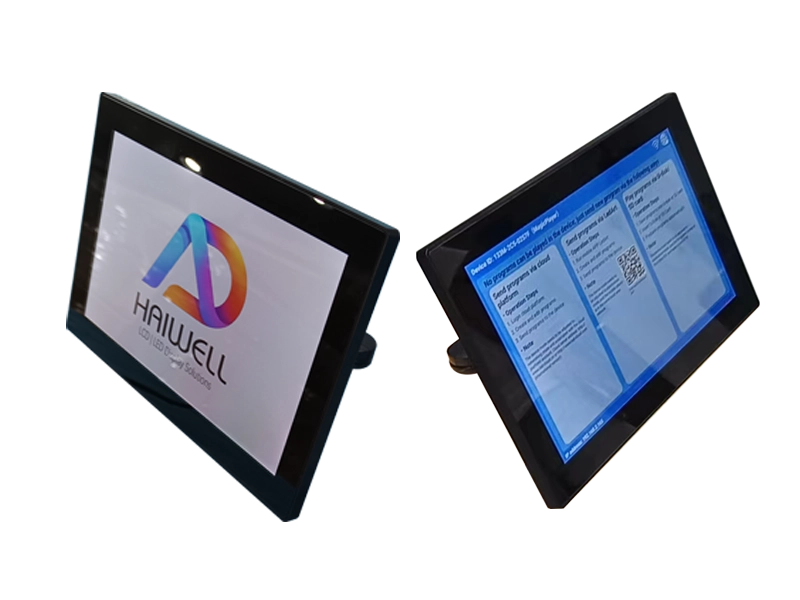
Taxi headrest screens are versatile platforms that deliver advertising, passenger information, entertainment, and interactive services—all from a single in-vehicle display.
Beyond traditional brand advertising, common use cases include:
- Local business promotions – Restaurants, retail stores, and service providers can target passengers based on destination or route.
- Tourism and city guides – Hotel recommendations, cultural highlights, and attraction information enhance the travel experience for tourists.
- Public service announcements – Emergency alerts, localized news, and public health messaging can be delivered through the same screen network.
- Interactive touchscreen capabilities – Passengers can scan QR codes for exclusive offers, access e-commerce transactions, or request ride information.
- Multilingual content – Screens can support multiple languages to serve diverse urban populations.
- Real-time ride updates – Passengers can track route progress, estimated arrival time, and alternative travel options.
This multi-functionality makes in-taxi screens attractive to a broader range of stakeholders—not just advertisers, but also tourism boards, government agencies, and rideshare platforms themselves.
Which Regions Offer the Best Opportunities for Taxi Media Networks?
North America, Europe, and emerging markets like Armenia are leading the adoption of taxi digital signage networks, each with distinct growth drivers.
- North America – The U.S. market benefits from high rideshare penetration, advertiser familiarity with DOOH, and established programmatic infrastructure. The OAAA reported U.S. out-of-home revenue reached USD 19.8 billion in Q1 2025, with digital formats accounting for over 34% of total spend. Major operators like SOMO and Firefly are scaling digital taxi displays in New York, Las Vegas, and other metropolitan areas.
- Europe – The UK and Germany are key markets, with programmatic DOOH adoption accelerating. UK marketers forecast a 41% increase in pDOOH investment over the next 18 months.
- Latin America – Mexico City’s GPO Vallas and other regional players are expanding digital OOH networks, creating opportunities for in-vehicle displays.
- Emerging Markets – Armenia recently validated the taxi digital signage model with a 1,000-unit deployment that demonstrated strong ROI (see case study below).
The common thread across all regions is urbanization. As more people live and work in cities, taxi and rideshare trips increase, creating larger daily audiences for in-car screens. Smart city initiatives and investments in digital infrastructure are further driving deployment.
Case in Point: A 1,000-Unit Taxi Digital Signage Deployment in Armenia
In 2026, Adhaiwell completed a 1,000-unit taxi digital signage deployment in Armenia, transforming the country’s taxi fleet into a connected media network and validating the fleet monetization model in an emerging market.
The deployment details:
- Scale: 1,000 headrest LCD screens installed across taxi fleets in Yerevan and other urban centers
- Technology: 4G-connected displays with remote CMS for centralized content management
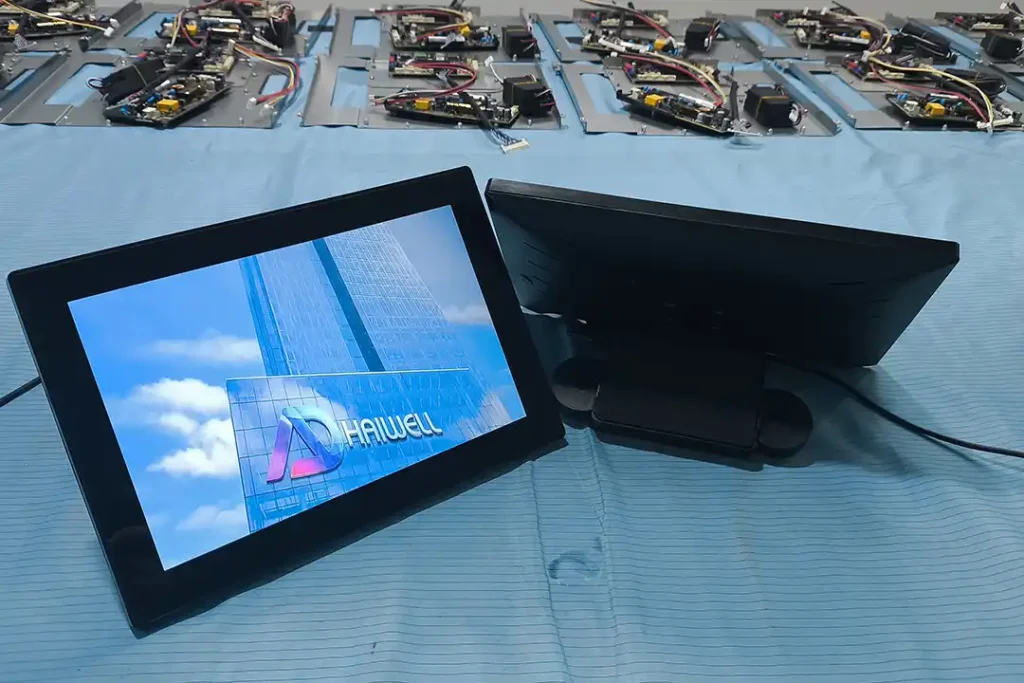
- Hardware: Purpose-built for in-vehicle environments with vibration resistance, temperature tolerance, and power management optimized for automotive use
The commercial outcome: fleet operators reported strong ROI from the new advertising revenue channel. The screens generate consistent advertising income without disrupting core taxi operations, turning vehicles into media assets that earn revenue during every trip.
Adhaiwell’s taxi LCD digital signage solution combines professional manufacturing, rigorous quality control (including aging tests, vibration tests, and QC inspection), and a proven CMS platform. The Armenia project demonstrates that taxi digital signage is not just a concept—it’s a deployable, profitable reality that can be replicated in other markets.
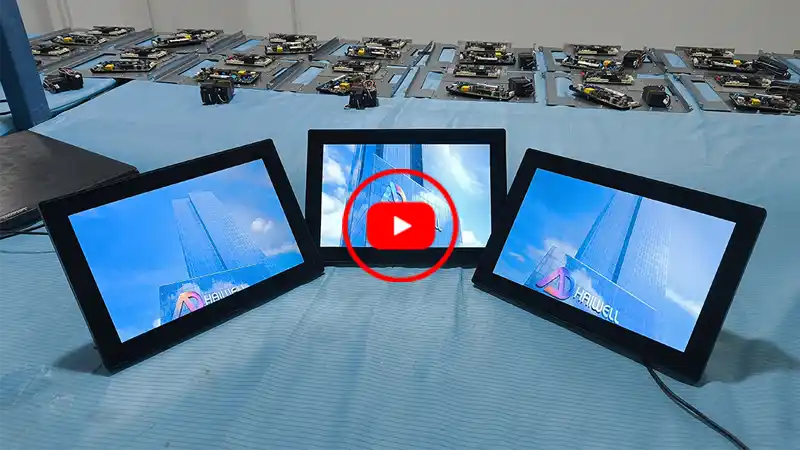
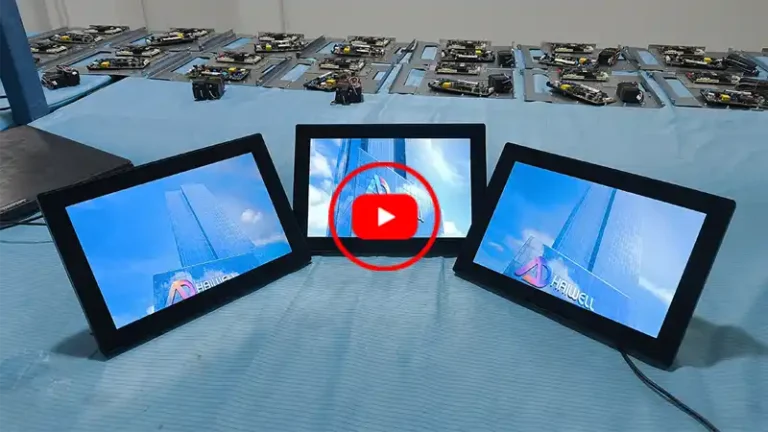
Watch the Adhaiwell taxi digital signage video to see the Armenia deployment in action.
How Can Fleet Operators Turn Screens into a New Revenue Channel?
Fleet operators can monetize in-car screens through advertising分成, self-operated media sales, or agency partnerships—each model offering different levels of control and revenue potential.
Three primary monetization models have emerged:
1. Ad Revenue Share (Platform Partnership)
The fleet operator partners with a media network or ad-tech platform that handles sales, content delivery, and campaign management. Revenue is shared based on impressions or a percentage of ad spend. This model requires minimal operational effort but offers lower per-screen revenue.
2. Self-Operated Media Sales
Larger fleets can build their own media sales teams and sell advertising inventory directly to local and national brands. This model captures higher margins but requires sales capability and advertiser relationships.
3. Programmatic-Enabled Hybrid
Fleet operators integrate their screen inventory with programmatic DOOH platforms, allowing automated buying from multiple demand sources. This model combines the reach of programmatic with the ability to reserve premium inventory for direct sales.
The Armenia case validated that even in smaller markets, a 1,000-screen network can generate meaningful advertising revenue. For fleet operators considering this transition, the key success factors are:
- Screen quality and reliability – Downtime means lost revenue
- CMS capability – Remote content management is essential for operational efficiency
- Advertiser trust – Verifiable metrics and proof-of-play build long-term relationships
Why Are Fleet Operators Switching from Static to Digital In-Car Advertising?
Static advertising has a ceiling—digital advertising is infinitely scalable, data-driven, and responsive to market demand.
The limitations of static in-car advertising are clear:
- Fixed content – Once printed, an ad cannot be changed until the next production cycle
- No performance data – Advertisers have no way to verify impressions or engagement
- Limited inventory – Each vehicle can only carry one static ad at a time
- Low yield – Static ads command lower CPMs than digital
Digital in-car advertising solves each of these problems:
- Dynamic content – Campaigns can be updated in real time, multiple advertisers can run simultaneously, and content can be tailored by location or time of day
- Measurable performance – Impressions, play verification, and engagement metrics provide advertiser accountability
- Scalable inventory – A single screen can rotate dozens of ads per hour
- Higher yield – Digital inventory commands premium CPMs due to targeting and measurability
The shift is also being driven by advertiser demand. Brands increasingly expect the same level of targeting and measurement from out-of-home that they receive from digital channels. In-taxi digital signage delivers on both fronts.
What Are the Main Challenges of Taxi Digital Signage?
Hardware durability, content inventory, driver acceptance, and network stability are the primary operational challenges that fleet operators must address.
- Hardware maintenance – Vehicles experience constant vibration, temperature extremes, and physical wear. Screens must be purpose-built for automotive environments with rigorous vibration testing, aging tests, and QC inspection. Even with quality hardware, maintenance and replacement costs are ongoing.
- Content inventory – A 1,000-screen network requires a steady flow of广告 content to fill inventory. Without sufficient advertiser demand, screens may run house ads or public service content, reducing revenue.
- Driver acceptance – Some drivers may resist screen installations due to concerns about distraction, passenger complaints, or perceived invasion of their workspace. Clear policies and driver incentives can address these concerns.
- Network stability – 4G connectivity can be inconsistent in tunnels, rural areas, or during network congestion. Cached playback and scheduled synchronization can mitigate this risk.
- Upfront capital – Hardware, installation, custom software, and ongoing maintenance require significant upfront investment, which can be challenging for smaller fleet operators.
- Privacy and compliance – Data collection must be anonymized, aggregated, and consent-aware. Driver distraction rules, screen brightness standards, and mounting requirements vary by municipality.
Successful deployments address these challenges through compliance-by-design—building privacy, safety, and quality into the hardware and software from the start rather than retrofitting later.
What Should Advertisers and Investors Watch for Going Into 2027~2035?
Programmatic integration, AI-powered optimization, and expansion into emerging markets will define the next phase of in-taxi digital signage growth.
For advertisers and investors, five trends deserve close attention:
1. Programmatic DOOH is going mainstream – pDOOH investment is projected to surge 44% over the next 18 months, with nearly half of all campaigns expected to use programmatic buying. The programmatic DOOH platform market is expected to grow from USD 5.84 billion in 2025 to USD 6.83 billion in 2026, a 17% CAGR.
2. AI is transforming content delivery – AI-enabled systems can select ads based on location, time, weather, traffic, and route patterns, delivering more relevant content to passengers. Predictive diagnostics will reduce downtime and improve network reliability.
3. Emerging markets are the next frontier – The Armenia 1,000-unit deployment validated the model in a smaller market. Similar opportunities exist in Eastern Europe, Latin America, Southeast Asia, and the Middle East, where taxi fleets are large but digital signage penetration remains low.
4. Consolidation is coming – As the market matures, fragmented local networks will consolidate into larger regional or national media networks with standardized inventory and programmatic access.
5. Sustainability matters – Fleet operators and advertisers are increasingly considering energy efficiency, repairability, and lifecycle management when selecting hardware
FAQ: Taxi Advertising LCD Display and In-Car Digital Signage
These questions are based on the information most relevant to fleet operators, advertisers, system integrators and buyers evaluating taxi digital signage projects. Adhaiwell’s experience in digital signage hardware and the 1,000-unit Armenia deployment provides practical context, while market statistics above are based on current industry sources.
What is in-taxi digital signage used for besides advertising?
It can display tourism information, local promotions, public information, entertainment and interactive services. The exact functions depend on the screen hardware, software, connectivity and local operating requirements.
How big is the in-car digital signage market expected to be?
There is no single standardized global figure for the taxi-only LCD segment. A better industry indicator is the broader DOOH market: WOO reported $25.5 billion in global DOOH expenditure in 2025 and forecasts $28 billion for 2026.
How many taxi digital signage units were deployed in the Armenia case?
Adhaiwell deployed 1,000 passenger-facing taxi digital signage units in Armenia, using 4G connectivity and centralized CMS management.
How do fleet operators monetize taxi advertising screens?
They can sell advertising directly, share revenue with a media operator, or work with agencies and media networks. Revenue depends on fleet size, screen utilization, advertising demand, pricing and operating costs.
Can taxi LCD screens support GPS-based advertising?
Yes, if GPS hardware and the appropriate software are integrated. GPS can provide location data, while geofencing and location-based advertising rules need to be implemented in the CMS or related software.
What should buyers check when sourcing taxi LCD displays from China?
Check the display specification, vehicle mounting method, power management, operating temperature, connectivity, CMS compatibility, GPS support, remote device management, warranty, spare parts and after-sales technical support. For fleet projects, also confirm that the supplier can support deployment beyond a small sample order.