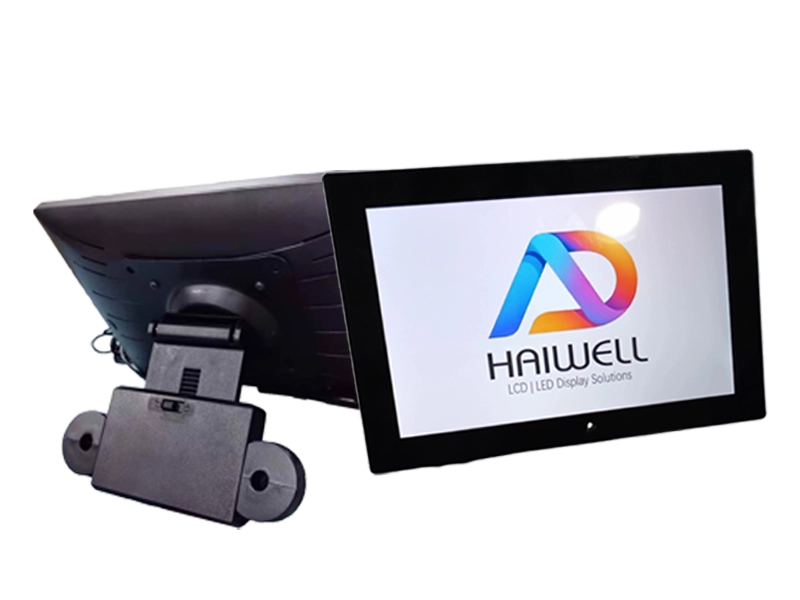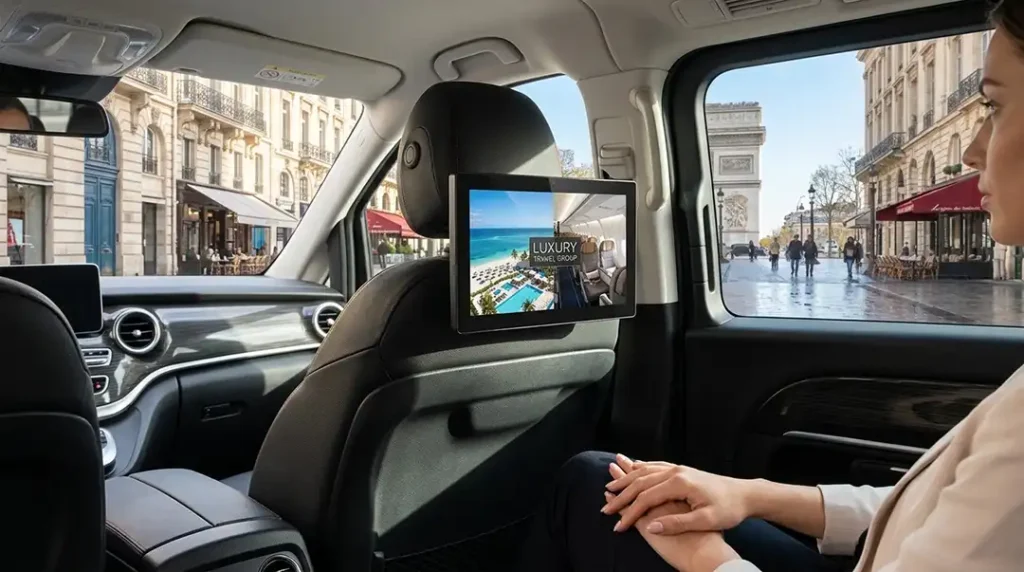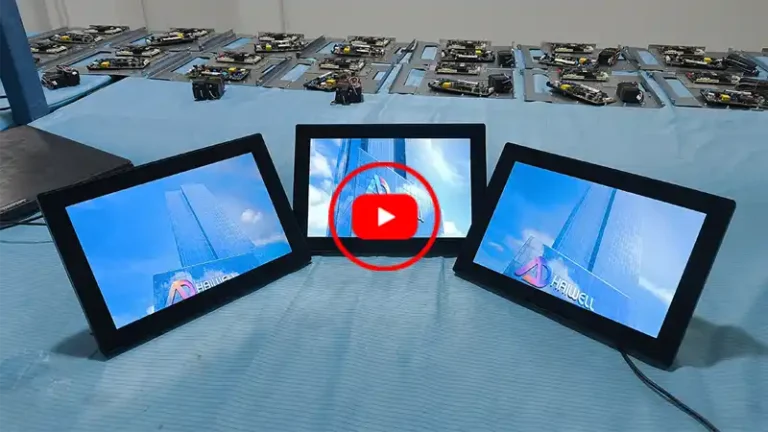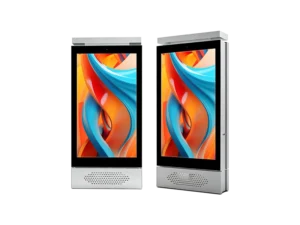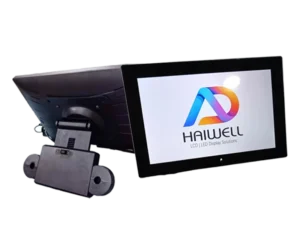
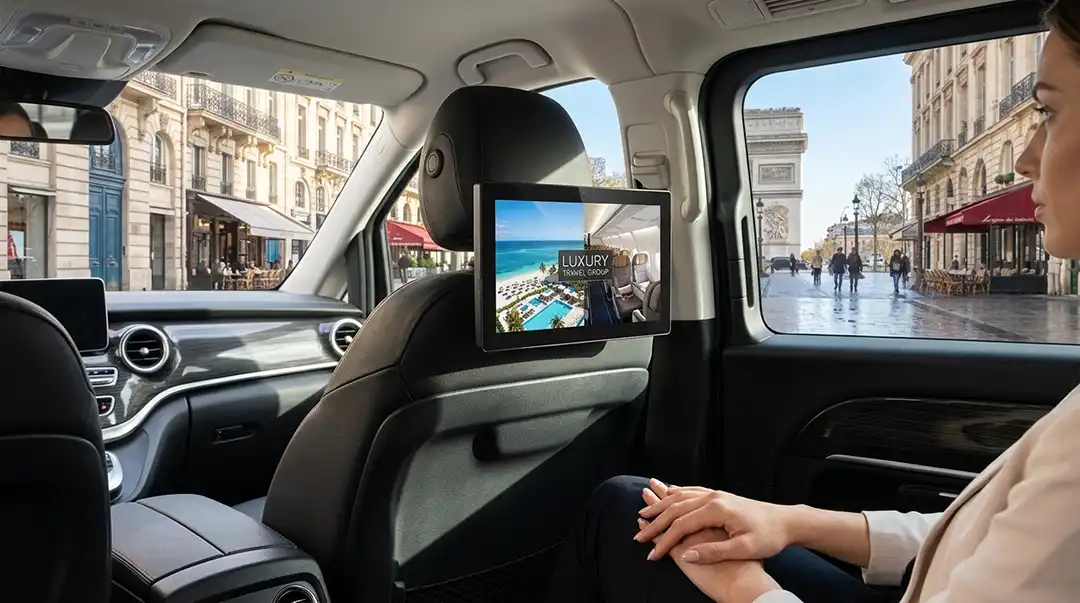
A Taxi headrest LCD advertising screen is a passenger-facing digital display mounted on the back of vehicle seats that delivers advertising content, promotional messages, and information to riders during their journey.
It‘s a 10.1-inch Android-based LCD monitor installed on taxi, ride-hailing, and shuttle vehicle headrest poles. It displays video ads, static images, and promotional content managed remotely through a cloud-based CMS. Fleet operators use it to generate advertising revenue, enhance passenger experience, and differentiate their service.
Key Takeaways
- The global in-taxi digital signage market is expanding from $756 million in 2025 to $963 million by 2031 at a 4.11% CAGR, signaling strong growth opportunities for fleet advertising projects.
- A 10.1-inch Android-based headrest display with 4G LTE connectivity and remote CMS provides the optimal balance of passenger visibility, content flexibility, and centralized fleet management.
- 4G connectivity is essential for real-time content updates in moving taxi fleets—WiFi alone cannot support dynamic advertising campaigns across distributed vehicles.
- Total project costs include hardware ($185–$200/unit), installation, connectivity, CMS, and maintenance—with advertising revenue typically recovering investment within 6–12 months for fleets of 100+ vehicles.
- Working with an experienced China manufacturer that offers OEM/ODM customization, sample testing, and 20–30 day lead times reduces procurement risk and ensures product-market fit.
What Is a Taxi Headrest LCD Advertising Screen and Why Should Fleet Operators Invest in One?
A Taxi headrest LCD advertising screen is a passenger-facing digital display mounted on the back of vehicle seats that delivers advertising content, promotional messages, and information to riders during their journey.
It‘s a 10.1-inch Android-based LCD monitor installed on taxi, ride-hailing, and shuttle vehicle headrest poles. It displays video ads, static images, and promotional content managed remotely through a cloud-based CMS. Fleet operators use it to generate advertising revenue, enhance passenger experience, and differentiate their service.
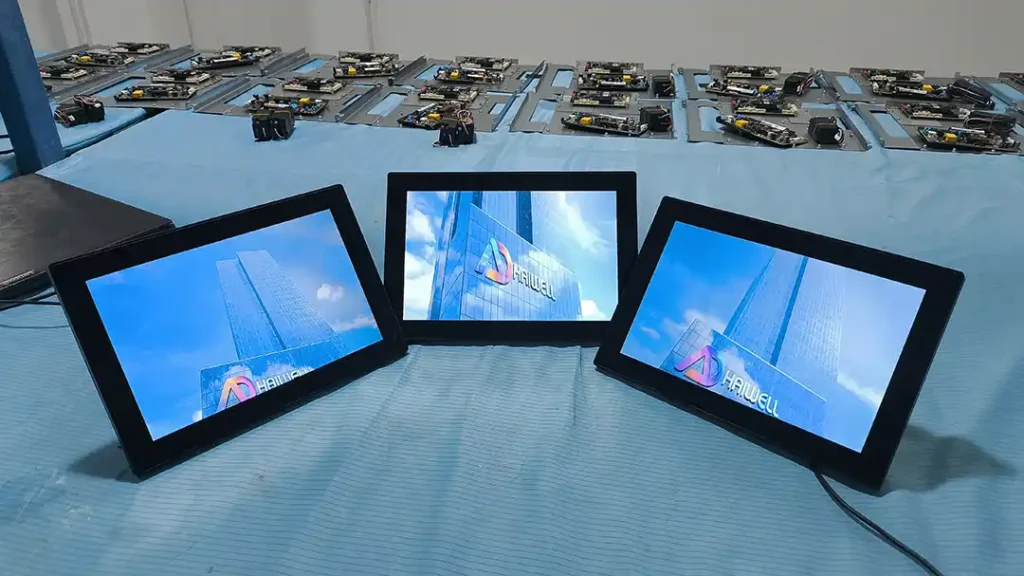
Why fleet operators should invest:
The business case is compelling. The global in-taxi digital signage market was valued at $756.43 million in 2025 and is forecast to reach $963.22 million by 2031, growing at a compound annual growth rate of 4.11%. Alternative estimates place the market at $0.42 billion in 2024, projected to reach $0.68 billion by 2031 at 5.20% CAGR. This growth is driven by three factors:
- New revenue streams – Fleet operators can monetize passenger dwell time through advertising partnerships, with successful networks like Curb‘s Taxi TV generating over 100 million monthly impressions across 1,200+ screens in New York City.
- Competitive differentiation – In ride-hailing markets, digital in-car media creates a more engaging passenger experience compared to static or ad-free competitors.
- Measurable advertising – Unlike traditional static ads, digital screens provide Proof of Play reporting, allowing operators to demonstrate campaign delivery to advertisers and command premium CPM rates.
The Adhaiwell 10.1-inch Android Taxi Headrest LCD Advertising Screen is engineered specifically for this application, with industrial-grade components rated for 24/7 commercial operation
How Does a Taxi Headrest LCD Advertising Screen Work?
The system operates through a complete digital signage chain: Screen → Android Player → 4G/WiFi → CMS → Content Server → Fleet Screens. Content is uploaded to a cloud-based CMS, distributed over 4G or WiFi networks, and played back on individual vehicle displays—all managed from a central dashboard.
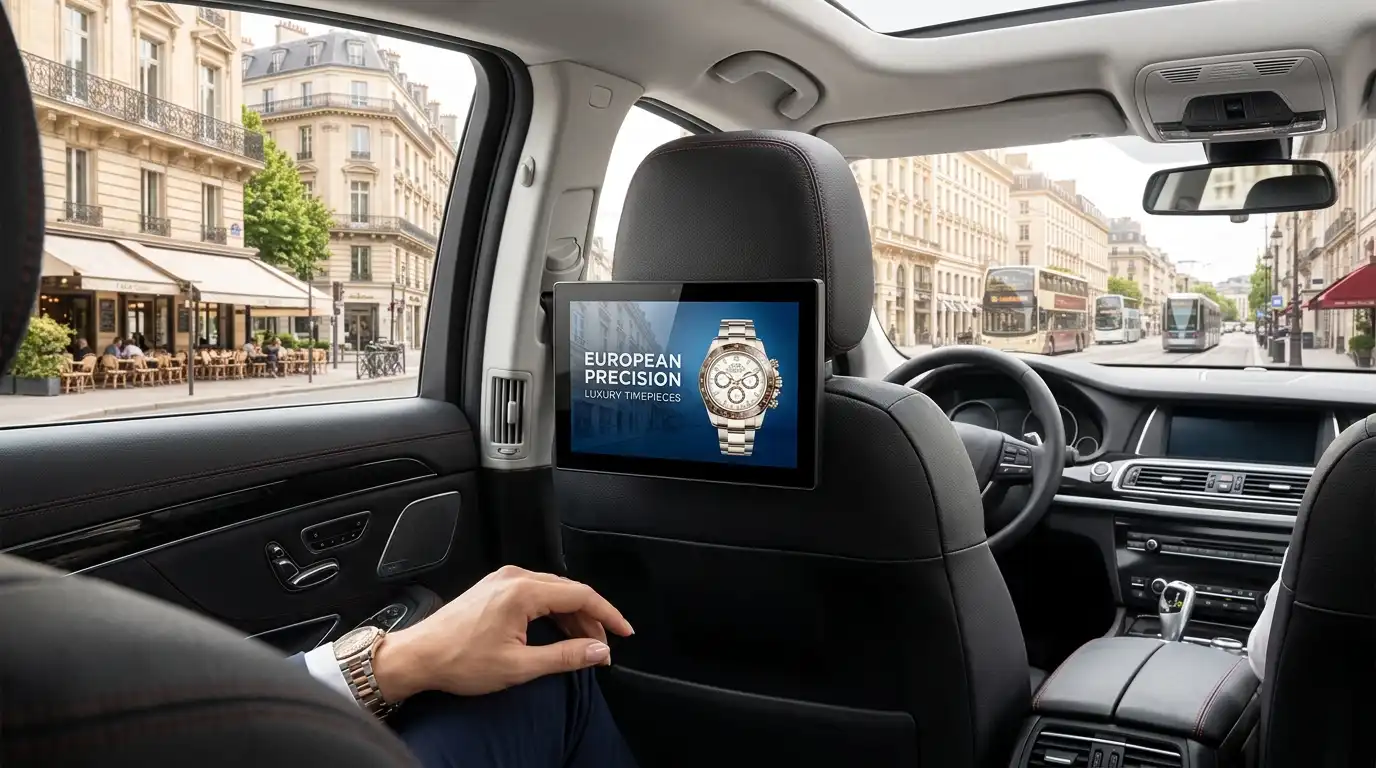
Here‘s how each component functions:
1. Screen Hardware – The 10.1-inch LCD panel with 1280×800 resolution mounts behind vehicle seats, positioning content directly in the passenger‘s line of sight.
2. Android Player – An integrated Android operating system powers the display, supporting flexible app deployment, multimedia playback (video, images, HTML5), and integration with third-party digital signage platforms.
3. Connectivity Layer – The screen connects to the internet via 4G LTE, WiFi, USB, or LAN. For moving taxi fleets, 4G is the recommended primary connection, enabling real-time content updates regardless of vehicle location.
4. Remote CMS – The web-based content management system allows operators to upload content, create playlists, schedule campaigns by time and date, group vehicles by region or route, push updates remotely, and monitor playback across the entire fleet.
5. Content Delivery – Advertisements, videos, and promotions are stored on cloud servers and pushed to individual screens based on schedules, vehicle groups, or GPS triggers (when integrated with location-based advertising logic).
What Specifications Matter Most When Buying a Taxi Advertising Display?
The five most critical specifications are screen size (10.1-inch), resolution (1280×800), operating system (Android), connectivity (4G LTE + WiFi), and power input range (9–30V DC). These determine passenger visibility, content flexibility, network reliability, and vehicle compatibility.
Detailed specification breakdown:
What experienced buyers look for:
Beyond the spec sheet, successful fleet operators evaluate build quality, vibration resistance, and temperature tolerance. In real-world deployments, failures often appear after 3–6 months of continuous use—not during initial testing. Industrial-grade construction and a 50,000+ hour panel life rating are non-negotiable for commercial applications.
The Adhaiwell screen is engineered with industrial-grade LCD panels and Android OS, built for 24/7 commercial performance. The HS code for this product category is 8528591090 for customs classification.
How Do You Install a Taxi Seatback LCD Advertising Screen?
Installation involves seven steps: check headrest compatibility, mount the bracket, connect power (9–30V DC), adjust the display angle, connect to the network (4G/WiFi), test playback, and register the device in the CMS. The process takes 1–2 hours per vehicle for the first few units.
Step-by-step installation guide:
1. Check headrest compatibility – Verify that the vehicle‘s headrest poles are compatible with the mounting brackets. Most taxi and ride-hailing vehicles use standard 10mm–14mm diameter posts. The Adhaiwell screen includes a mounting bracket, screws, hex wrench, and car power cable in the kit.
2. Install the mounting bracket – Remove the existing headrest, attach the monitor‘s mounting brackets to the headrest posts, and secure them using the provided hardware. The bracket design allows for pole width adjustment to fit various vehicle models securely.
3. Connect power – Connect the car power cable to the vehicle‘s electrical system. The screen supports 9–30V DC input, compatible with standard taxi and commercial vehicle electrical systems. This wide voltage range is critical—vehicle electrical systems can fluctuate significantly during operation.
4. Check display angle – Adjust the screen angle to ensure optimal passenger visibility without obstructing the driver‘s rear view or normal vehicle operation. The passenger-facing design positions content directly in the rider‘s line of sight.
5. Connect the network – Insert a 4G SIM card or configure WiFi settings for network connectivity. For moving fleets, 4G is the recommended primary connection.
6. Test playback – Power on the unit and verify that content plays correctly, display quality meets expectations, and all functions operate as intended.
7. Register device in CMS – Add the device to the remote CMS platform with its unique identifier, enabling remote management and content delivery.
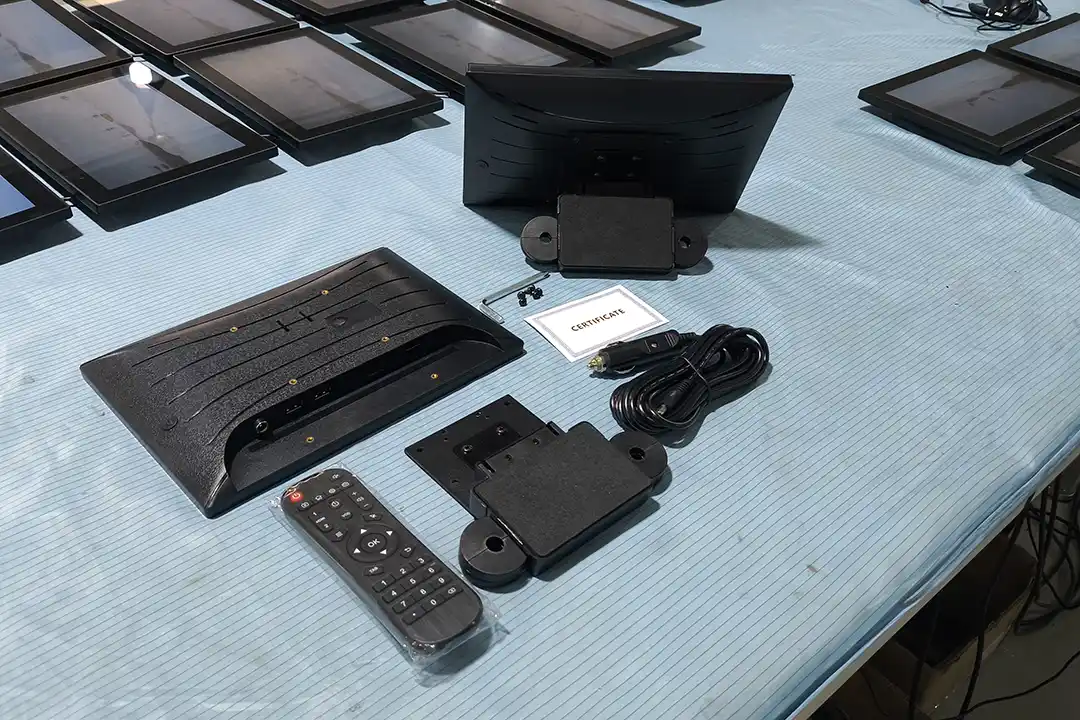
Pro tip for fleet deployments: Conduct a pilot installation on 5–10 vehicles before scaling to the full fleet. This validates the installation process, identifies any vehicle-specific issues, and allows your team to develop efficient installation procedures. Professional installation typically costs $50–$150 per vehicle depending on region and complexity.
How Do You Connect a Taxi Advertising Screen to the Internet and Manage Content Remotely?
The screen supports four connectivity methods—4G LTE, WiFi, USB, and LAN—with 4G being the recommended primary connection for moving taxi fleets. Remote CMS management allows operators to upload content, schedule campaigns, group vehicles, and monitor playback from anywhere.
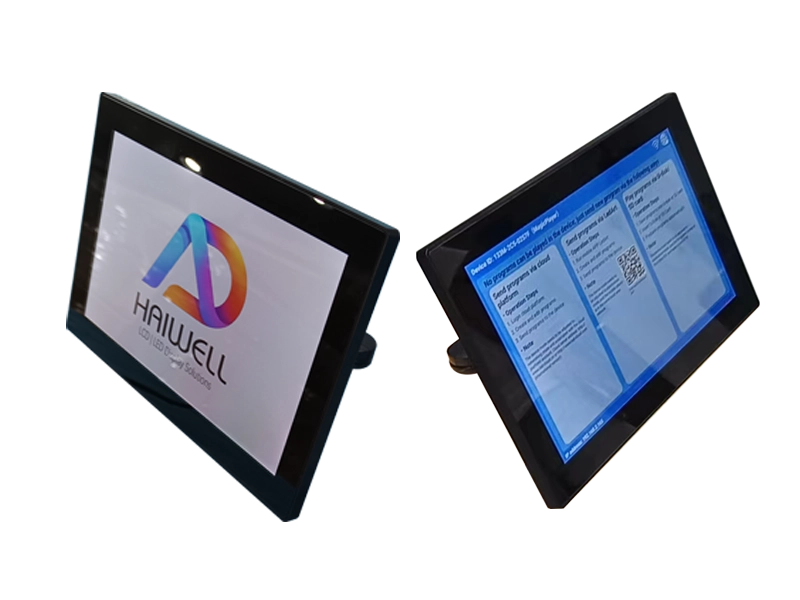
Connectivity method comparison:
| Method | Best For | Key Consideration |
|---|---|---|
| 4G LTE | Moving taxi fleets requiring real-time updates | Recommended primary connection; supports dynamic campaigns |
| WiFi | Depot-based fleets with central WiFi coverage | Ideal for bulk content loading when vehicles return to base |
| USB | Small deployments or offline content loading | Limited to manual updates; no remote management |
| LAN | Fixed testing or workshop configuration | Not suitable for moving vehicles |
Why 4G is essential for taxi advertising:
For commercial taxi advertising networks, 4G LTE is the preferred connectivity method. It enables:
- Real-time content updates – Change campaigns instantly based on time, location, or events without physical access to vehicles
- Campaign flexibility – Rotate advertisers, update promotions, or respond to market conditions in real time
- Remote monitoring – Track which screens are online, what‘s playing, and diagnose issues without dispatching technicians
- GPS integration – Enable location-based advertising when combined with geofencing software
How remote CMS management works:
The web-based CMS provides centralized control across the entire fleet:
- Upload content – Drag and drop videos, images, and HTML5 content into the CMS dashboard
- Create playlists – Build content sequences with specific durations and transitions
- Schedule ads – Set campaigns to run on specific dates, times, or recurring schedules
- Group vehicles – Organize by region, route, or fleet segment for targeted content delivery
- Update remotely – Push content changes to individual screens, groups, or the entire fleet with a single click
- Monitor deployment – Track online status, playback verification, and generate Proof of Play reports
Software costs typically scale with fleet size—often costing as little as $3–$5 per vehicle per month for larger deployments. Many manufacturers, including Adhaiwell, include the basic CMS free with hardware purchases
How Does GPS-Based Taxi Advertising Work?
GPS hardware provides vehicle location data, but geofencing and ad-triggering logic require additional software—either a buyer-supplied Android application or a third-party CMS with geofencing capabilities. The hardware outputs location; the software decides what to play based on that location.
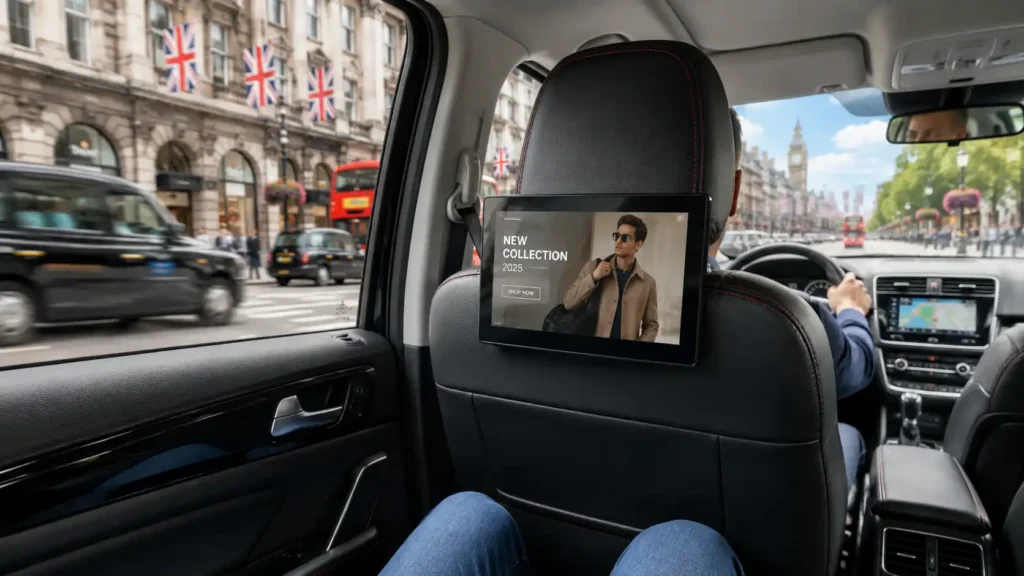
This distinction is important:
Many buyers assume GPS automatically triggers location-based ads. That‘s not how it works.
What the hardware provides: The Adhaiwell screen includes GPS as an optional feature that outputs real-time vehicle location data. This data can be used to track vehicle positions and enable basic location awareness.
What GPS alone does NOT do: GPS hardware alone does not automatically trigger ads based on location. Geofencing, zone management, and ad-triggering logic require either:
- A buyer-supplied application running on the Android system, or
- A third-party CMS platform with geofencing capabilities
How a complete GPS advertising system works:
- The screen‘s GPS module determines the vehicle‘s current coordinates
- This location data is transmitted to the CMS or onboard application
- The system compares the location against predefined geofences (e.g., airport zone, downtown district, tourist area)
- When the vehicle enters a specific zone, the system triggers relevant content
- The screen switches to the appropriate ad playlist for that location
Example use cases:
- Vehicles approaching an airport → hotel and car rental ads
- Downtown routes → restaurant and retail promotions
- Tourist areas → attraction and experience advertisements
Important consideration: Many fleet operators start with basic CMS scheduling (time-based and vehicle-group-based) before investing in GPS-triggered advertising. Location-based advertising typically commands higher CPM rates but requires additional software development or third-party integration. This is a strategic decision based on your advertising partners’ requirements and technical capabilities.
How Much Does a Taxi Digital Signage Project Cost?
The direct answer: Total project costs break down into hardware ($185–$200 per unit), installation ($50–$150 per vehicle), connectivity ($5–$20 per vehicle per month), CMS (often included free), content creation ($100–$500 per campaign), and maintenance (5–10% of hardware cost annually). For a 100-vehicle fleet, expect $25,000–$40,000 in Year 1 costs with advertising revenue potential of $60,000–$240,000 annually.
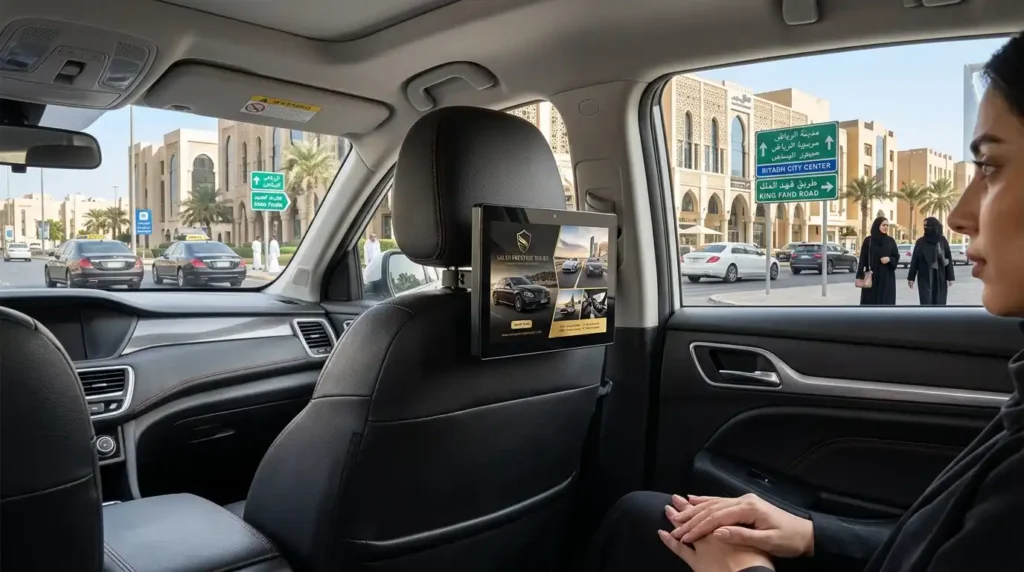
Cost breakdown:
1. Hardware – $185–$200 per unit for the headrest display. Bulk orders typically receive volume discounts. For a 100-vehicle fleet: $18,500–$20,000.
2. Installation – Labor costs vary by region. Professional installation ranges from $50–$150 per vehicle depending on complexity and local rates. Self-installation reduces costs but requires trained staff. For 100 vehicles: $5,000–$15,000.
3. Connectivity – 4G data SIM cards: $5–$20 per vehicle per month depending on data allowance and carrier. WiFi-only deployments have lower recurring costs. For 100 vehicles: $500–$2,000 monthly.
4. CMS/Software – Often included free with hardware for basic functionality. Advanced features or third-party platforms may cost $3–$15 per vehicle per month.
5. Content – Creative development costs: $100–$500 per campaign depending on complexity. In-house content teams reduce external costs.
6. Maintenance – Budget 5–10% of hardware cost annually for replacements, repairs, and spare units. Vibration and continuous operation mean some units will require service.
7. Fleet Operation – Administrative overhead, vehicle downtime during installation, and ongoing management.
Sample project cost estimates:
| Fleet Size | Hardware | Installation (est.) | Monthly Connectivity | Estimated Total Year 1 |
|---|---|---|---|---|
| 10 vehicles | $1,850–$2,000 | $500–$1,500 | $50–$200 | $2,500–$4,500 |
| 100 vehicles | $18,500–$20,000 | $5,000–$15,000 | $500–$2,000 | $25,000–$40,000 |
| 500 vehicles | $92,500–$100,000 | $25,000–$75,000 | $2,500–$10,000 | $125,000–$200,000 |
Revenue potential: With advertising rates of $50–$200 per screen per month, a 100-vehicle fleet could generate $60,000–$240,000 annually in advertising revenue. Successful networks like Curb‘s Taxi TV generate over 100 million monthly impressions across their fleet. At these rates, the investment is typically recoverable within 6–12 months.
Cost-saving strategies:
- Start with a pilot deployment (10–50 vehicles) before full fleet rollout
- Use WiFi for bulk content loading to reduce 4G data costs
- Negotiate volume discounts for hardware on orders of 100+ units
- Develop in-house content creation capabilities for recurring campaigns
How Can International Buyers Order Taxi LCD Displays from a China Manufacturer?
The procurement process follows a standard workflow: sample order (1–2 units for testing) → technical confirmation → OEM requirements discussion → certification verification → pilot deployment (10–50 units) → bulk production (MOQ 100 units) → QC → shipping. Lead time for OEM/ODM customization is typically 20–30 working days.
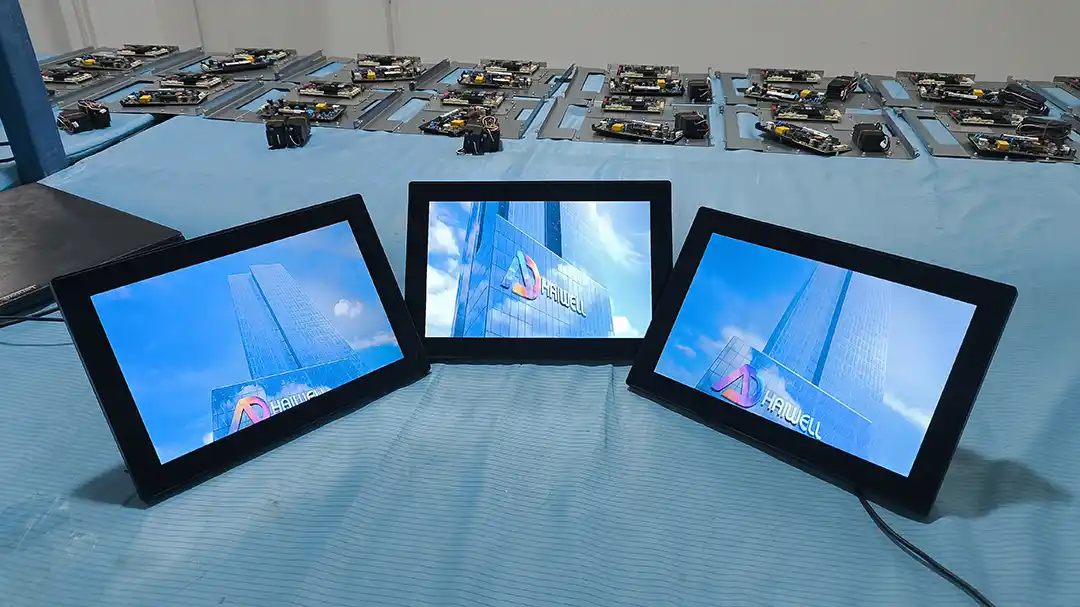
Step-by-step procurement guide:
1. Sample order – Request 1–2 samples for testing and validation. Samples allow technical confirmation, quality assessment, and compatibility verification before committing to bulk orders. Adhaiwell supports sample orders of 1–2 units.
2. Technical confirmation – Review specifications: Android version, connectivity options (4G/WiFi), GPS integration, mounting compatibility, and customization requirements. Confirm the screen works with your specific vehicle models.
3. OEM requirements – Discuss branding options (logo placement, packaging), custom software configurations, and any hardware modifications needed for your specific deployment. Adhaiwell supports OEM and ODM customization.
4. Certification – Verify that the manufacturer can provide necessary certifications for your target market (CE, FCC, RoHS, etc.). Confirm compliance with local transportation and electrical safety standards.
5. MOQ – The Adhaiwell screen has an MOQ of 100 units for OEM/ODM customization. Sample orders of 1–2 units are available for testing.
6. Pilot deployment – Many buyers order 10–50 units for a pilot deployment before committing to full production. This validates performance in real operating conditions and allows fine-tuning of installation procedures.
7. Bulk production – Lead time for bulk orders is typically 20–30 working days for OEM/ODM customization. Standard configurations may ship faster.
8. QC (Quality Control) – Reputable manufacturers conduct factory testing before shipment.
9. Shipping – Choose between air freight (faster, higher cost) or sea freight (slower, lower cost). Consider incoterms (FOB, CIF, DDP) and customs clearance requirements. HS code: 8528591090.
10. After-sales support – Confirm warranty terms, technical support availability, and spare parts policies before placing bulk orders.
Red flags to watch for:
- Manufacturers unwilling to provide samples
- No clear warranty or after-sales support policy
- Vague lead times or quality control processes
- Inability to provide certifications for your target market
Adhaiwell, as a professional China digital LCD display manufacturer, supports the full procurement cycle from sample to bulk production with 20–30 day lead times for OEM/ODM orders. For detailed pricing and customization options, Request a quote directly from the manufacturer.
Frequently Asked Questions About Taxi Headrest LCD Advertising Screens
As a digital signage procurement specialist with over a decade of experience in the transportation advertising industry, I‘ve helped fleet operators across North America, Europe, and Asia-Pacific deploy in-vehicle media networks. These are the questions I hear most often from buyers evaluating taxi headrest displays for the first time.
1. What is a taxi headrest LCD advertising screen?
A passenger-facing digital display mounted behind vehicle seats that delivers advertising, promotional content, and information to passengers during their ride. It‘s an Android-based system with remote CMS for fleet-wide content management.
2. Can it work with 4G?
Yes, the screen supports 4G LTE connectivity for real-time content updates and remote management. 4G is the recommended primary connection for moving taxi fleets.
3. Does it support WiFi?
Yes, WiFi connectivity is supported alongside 4G, USB, and LAN options. WiFi is ideal for depot-based bulk content loading.
4. Can I manage multiple taxi screens remotely?
Yes, the web-based remote CMS allows centralized management of content, schedules, and monitoring across an entire fleet. A single operator can manage hundreds of vehicles from one dashboard.
5. Does GPS automatically trigger ads?
GPS provides location data, but geofencing and ad-triggering logic require additional software—either a buyer-supplied Android app or a third-party CMS with geofencing capabilities.
6. Can I install my own Android APK?
Yes, the Android-based platform allows installation of custom applications for specialized functionality.
7. What power supply does it use?
The screen supports 9–30V DC input, compatible with standard taxi and commercial vehicle electrical systems. This wide voltage range ensures compatibility across different vehicle models.
8. Can it be customized?
Yes, Adhaiwell supports OEM and ODM customization for hardware configurations, branding, and software.
9. What is the MOQ?
The MOQ for OEM/ODM customization is 100 units. Sample orders of 1–2 units are available for testing.
10. Can I test a sample before bulk ordering?
Yes, sample orders are available to validate performance, compatibility, and quality before committing to large-scale production.
Conclusion
Deploying a taxi headrest LCD advertising screen network requires careful evaluation of hardware specifications, connectivity options, CMS capabilities, installation procedures, and total project costs. The market opportunity is clear—the global in-taxi digital signage market is projected to grow from $756 million in 2025 to $963 million by 2031 at 4.11% CAGR—and early movers in fleet media are positioned to capture significant advertising revenue.
The Adhaiwell 10.1-inch Android Taxi Headrest LCD Advertising Screen offers the key features fleet operators need: industrial-grade construction, 4G LTE connectivity, remote CMS, GPS option, and OEM/ODM customization—all at a competitive price point of $185–$200 per unit. As a professional China digital LCD display manufacturer, Adhaiwell supports the full procurement cycle from sample testing to bulk production.
For personalized pricing, technical specifications, or to request a sample unit, contact Adhaiwell through their inquiry form.