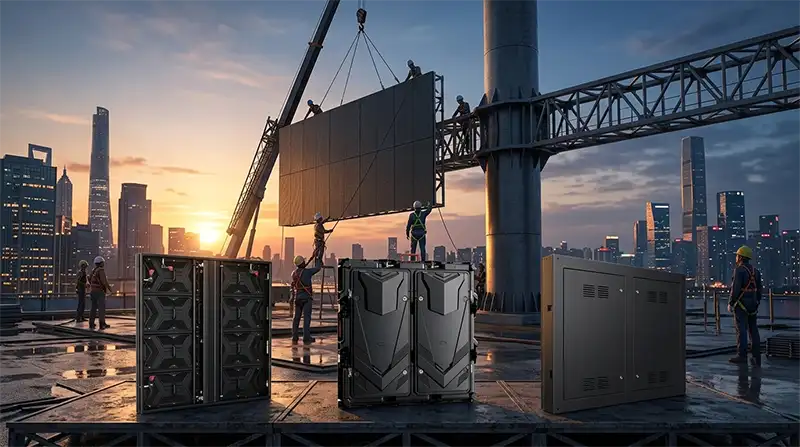
Most outdoor LED display specification meetings start with pixel pitch and brightness. But a screen that looks perfect in a climate-controlled warehouse can fail within three years if its cabinet material was chosen without asking one straightforward question: What exactly will this structure face, every single day?
Salt mist rolling in from the sea. Thermal shock from desert nights. Constant vibration from a highway bridge. These are not edge cases—they are normal operating conditions for outdoor digital signage. The cabinet, the metal skeleton that holds the modules in alignment, either handles them or degrades quietly until a maintenance crew finds rust blooms and misaligned panels.
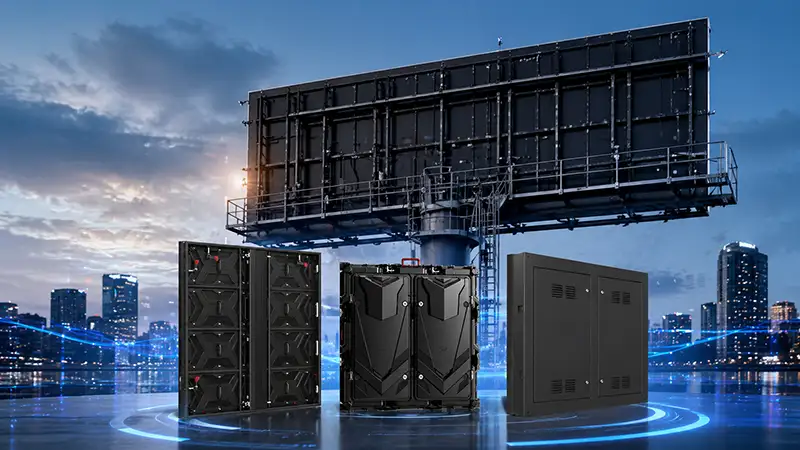
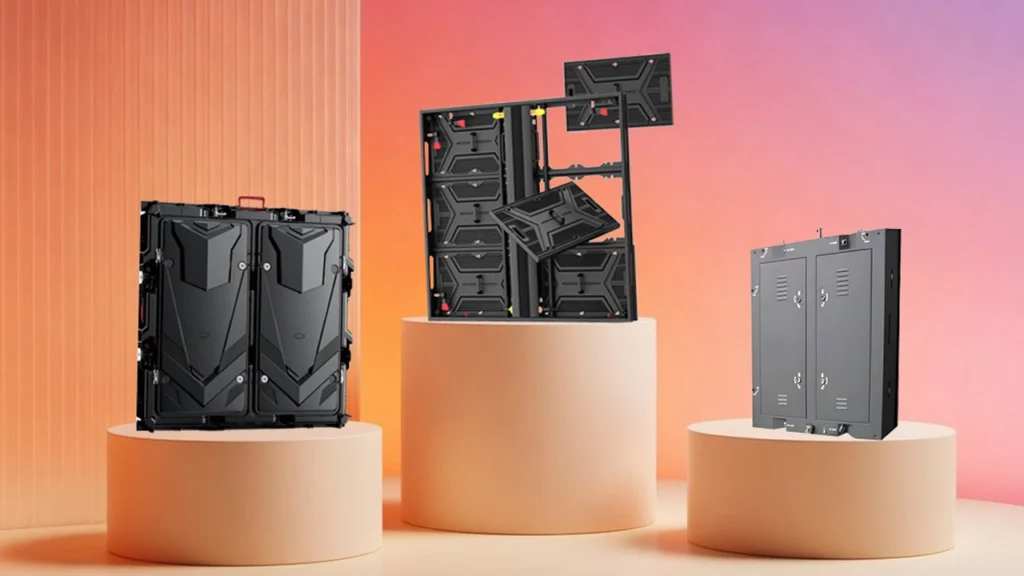
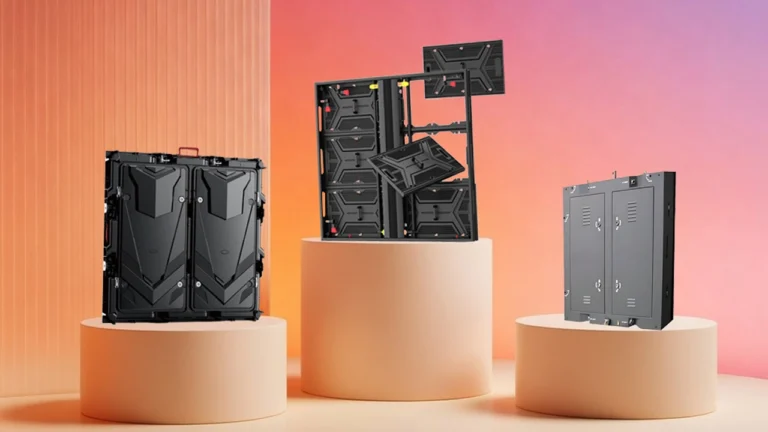
Adhaiwell manufactures outdoor LED displays in three cabinet materials: steel, aluminum-profile alloy, and die-cast aluminum. None is universally “better.” Each maps to a specific set of environmental demands and budget profiles. This guide walks through the matching logic so that your next specification starts from the site, not from a material preference.
1. Why the Installation Environment Governs Cabinet Material Choice
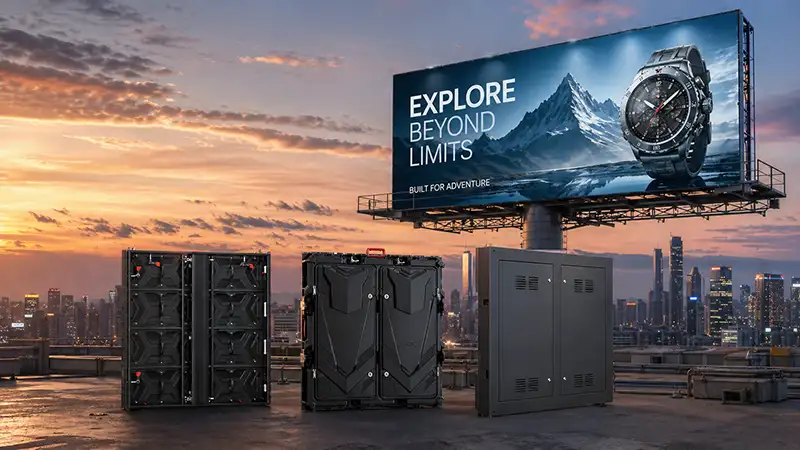
An outdoor LED cabinet has one job structurally: keep the modules perfectly aligned and electrically isolated from water, dust, and corrosive agents for 8–10 years. The challenge is that different environments degrade cabinets through completely different mechanisms.
The degradation pathways
- Coastal / high-humidity: Chloride ions penetrate coatings, initiating under-film corrosion. The metal itself matters more than the paint.
- High thermal cycling (desert, continental): Differential expansion between dissimilar metals and sealing gaskets creates micro-gaps. Thermal conductivity of the cabinet affects LED junction temperature and longevity.
- Heavy industrial zones: Airborne sulfur compounds and acidic rain chemically attack both steel and aluminum, but at different rates.
- Wind-load dominant sites (ridges, coastal fronts, high-rise facades): Cabinet weight and structural stiffness determine the mounting frame cost and safety margin.
Procurement implications
Choosing a cabinet material that is over-engineered for a mild inland climate wastes budget. Choosing one that is under-protected for a coastal site creates a maintenance liability. The decision should flow from a site audit, not from a general preference for “aluminum is better” or “steel is cheaper.”
Suggested image placement: A split-panel infographic showing the four environmental stressors (salt, heat, wind, pollution) with simple icons. Caption: “Four environmental stress categories that directly determine cabinet material suitability.”
2. Steel Cabinet Outdoor LED Displays: Inland Fixed Installations and Budget-Driven Projects
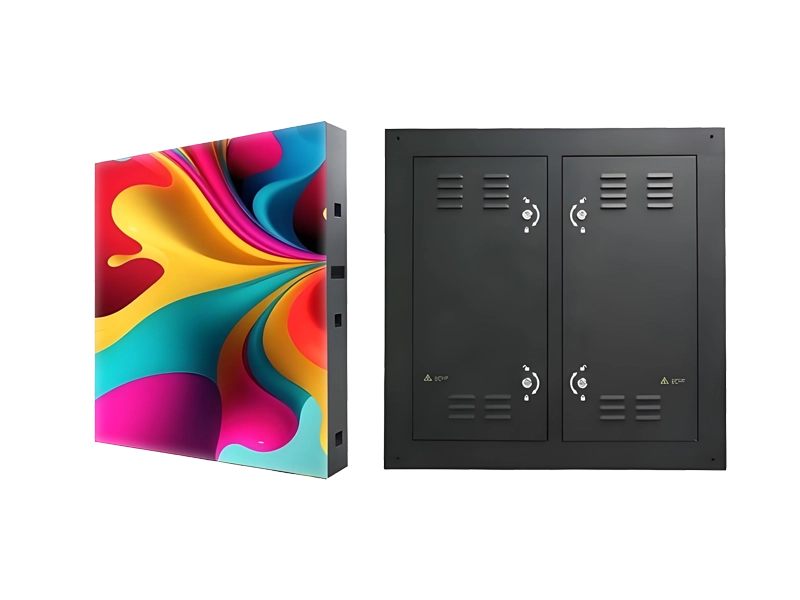
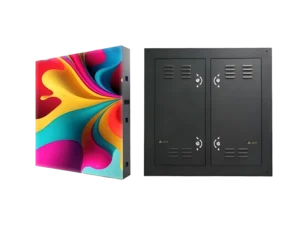
Steel remains the most common cabinet material for good reason: a properly coated steel box at large format costs significantly less per square meter than any aluminum alternative, and when the environment cooperates, it delivers a solid 10-year service life.
The environmental profile that suits steel
Steel cabinets perform best in inland environments with moderate humidity, no salt spray, and manageable temperature swings. Typical examples:
- Highway billboards on rural interstates and motorways
- Large-format stadium perimeter displays and scoreboards
- Industrial estate rooftop signage
- Urban DOOH screens in cities more than 50 km from the coast
In these settings, the primary stressors are rain, UV, and thermal cycling—all manageable with a sealed, well-coated steel structure.
The coating is the critical line of defense
Not all steel cabinets are equal. A plain mild-steel box will show rust within a single monsoon season. Adhaiwell’s steel cabinet outdoor LED displays go through zinc-rich priming and outdoor-grade powder coating, creating a barrier that isolates the steel from moisture and oxygen.
The key maintenance insight: the coating is a consumable with a finite outdoor life, typically 5–8 years before spot treatment is advisable. In a highway installation where access requires lane closures and a cherry picker, that recoating event is a real operational cost that should be built into the total cost of ownership from day one.
When steel is the right commercial decision
For a 100 m² roadside billboard with a dedicated steel column and foundation already designed for heavy dead loads, the cabinet weight penalty (~50 kg per 960×960 mm unit) is absorbed by the structure. The material cost savings can run 20–30% compared to aluminum, which often makes the difference in tender pricing for budget-conscious outdoor advertising contracts.
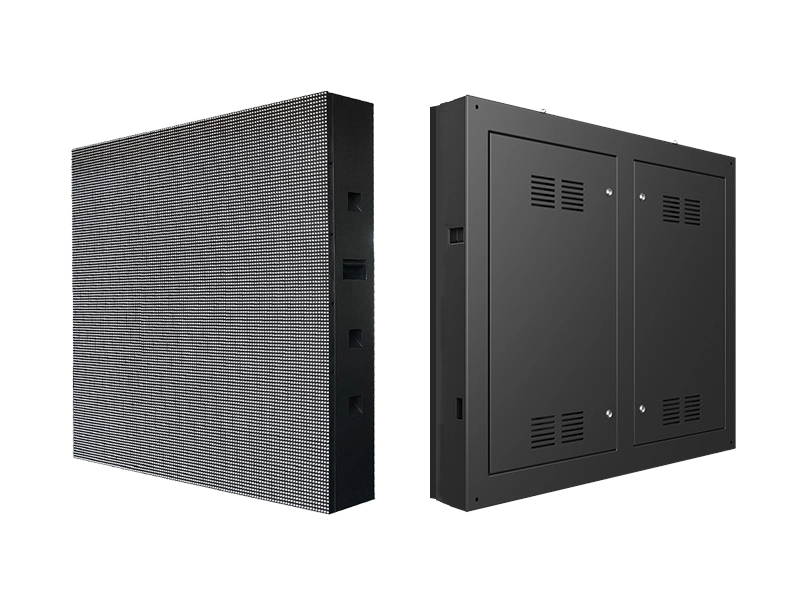
Internal link: Browse Adhaiwell steel cabinet outdoor LED display specifications → https://adhaiwelldisplay.com/steel-cabinet-outdoor-led-displays/
3. Die-Cast Aluminum Cabinets: Coastal Zones, Premium Urban Sites, and Harsh-Climate Reliability
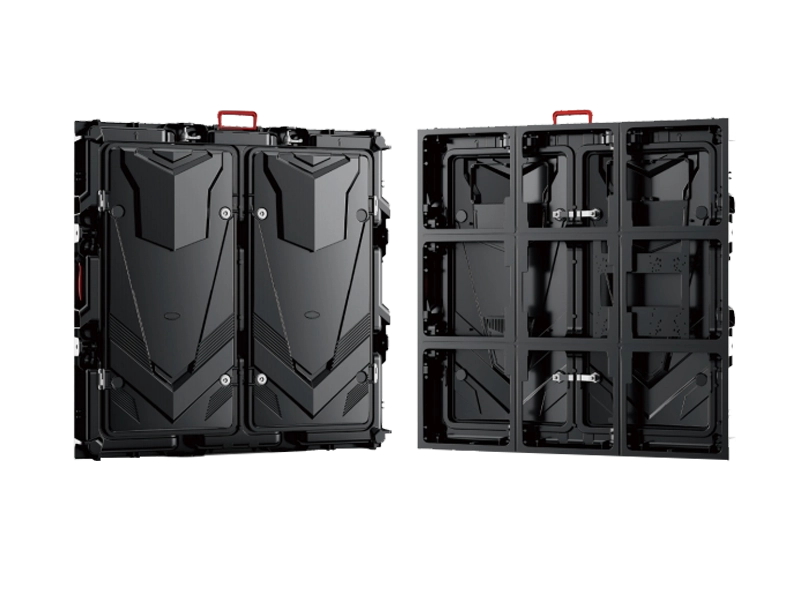
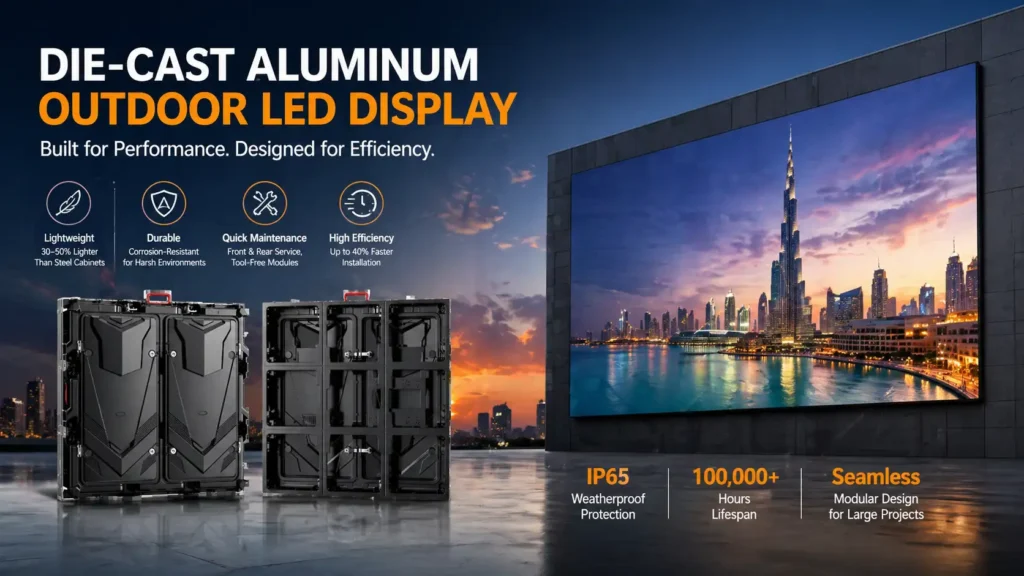
If the installation site is within sight of salt water, or if the screen sits flush on a landmark building where flatness is a brand statement, the conversation shifts to die-cast aluminum. This is not a “premium upgrade” for its own sake—it is an engineering response to conditions that steel handles poorly over time.
The environmental case for die-cast aluminum
Salt-laden coastal air is the strongest single driver. Chloride ions do not just sit on the surface; they migrate through micro-porosities in coatings and attack the steel substrate from underneath. Aluminum, by contrast, forms a self-passivating oxide layer. Even if the surface is scratched, the exposed metal re-oxidizes and stops corroding. For installations within 500 meters of breaking surf or in tropical port cities, this eliminates a recurring recoating cost entirely.
Extreme temperature environments also favor die-cast aluminum. Its thermal conductivity (around 200 W/(m·K)) is more than ten times that of structural steel (~16 W/(m·K)). In direct sunlight on a 45°C day, the front surface of an LED display can hit 65–70°C. Die-cast aluminum pulls that heat through the cabinet frame and radiates it from the rear, reducing the junction temperature of the LEDs. A 10°C reduction can measurably extend the half-life of the diodes—critical for 24/7 DOOH networks where replacement means revenue loss.
Flatness as an environmental consequence
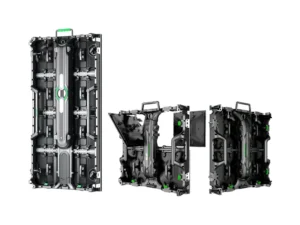
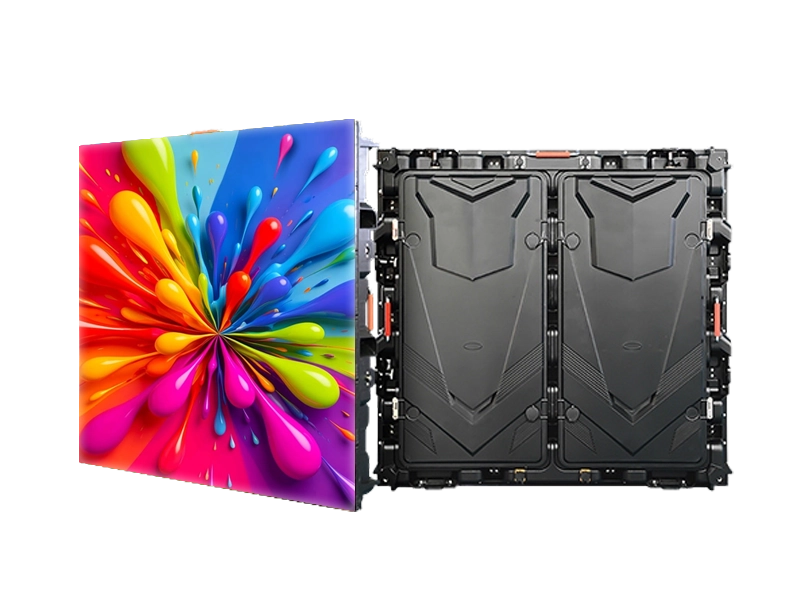
Die-cast aluminum cabinets are produced in precision molds with tolerances under ±0.1 mm. This flatness is not cosmetic. In a large video wall on a building facade, the accumulated error across 50 cabinets can create visible steps between modules. Wind pressure, thermal expansion, and building movement all punish cabinets that were not born flat. Die-cast aluminum holds its geometry better than folded sheet metal over years of environmental cycling.
Where die-cast aluminum is the rational specification:
- Coastal city DOOH networks
- Luxury retail facades where module alignment must be invisible at close viewing distance
- Fine-pitch outdoor displays (P4 and below)
- Airports, seaports, and industrial zones with airborne chemical agents
Internal link: View Adhaiwell die-cast aluminum outdoor LED display line → https://adhaiwelldisplay.com/die-cast-aluminum-outdoor-led-displays/
4. Aluminum-Profile Alloy Cabinets: The Middle Ground for Mixed Climates and Medium Budgets
Not every project faces salt spray, and not every budget can absorb die-cast tooling costs. For this broad middle ground—suburban retail parks, bus shelters, community information displays—aluminum-profile alloy cabinets offer a pragmatic blend of aluminum’s natural corrosion resistance and a more accessible price point than die-casting.
How the material sits between steel and die-cast
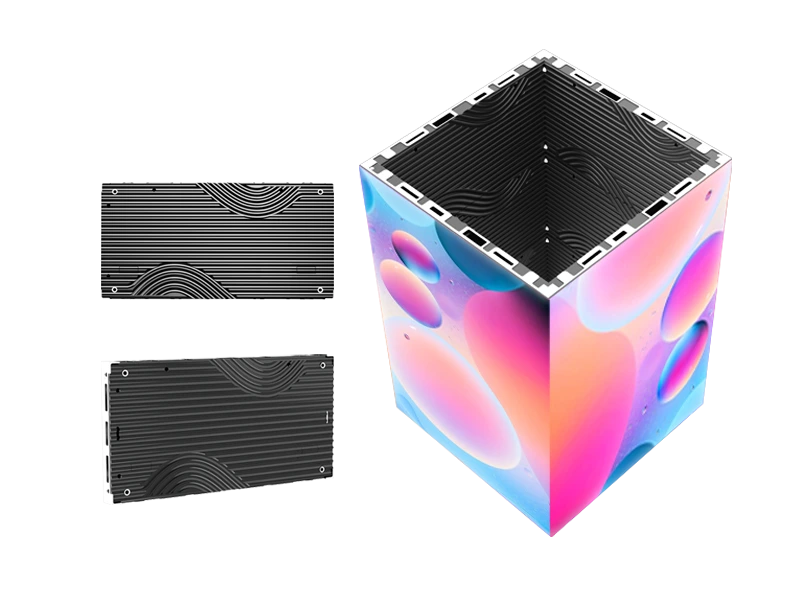
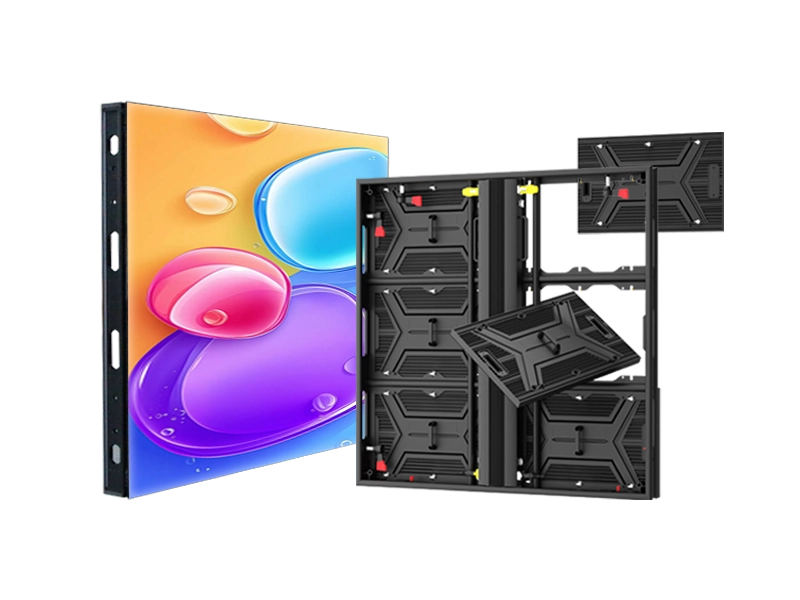
Aluminum-profile cabinets are built from extruded sections cut, joined, and sealed. The extrusion process cannot achieve the complex internal ribbing or sub-millimeter precision of a die-cast mold, but it shares aluminum’s fundamental advantages: low density (one-third that of steel), inherent oxidation resistance, and good thermal conductivity.
Environmental sweet spots
- Moderate humidity regions (inland cities with seasonal rain, no salt): Aluminum profile eliminates any long-term coating worries that accompany steel.
- Retrofit installations: The weight reduction (30–35 kg vs. 50 kg per cabinet) matters when mounting on existing structures not originally designed for heavy digital signage.
- Non-standard cabinet dimensions: Extrusion-based manufacturing allows flexible sizing without expensive mold changes, making it suitable for irregular facade openings or architecturally integrated displays.
Where aluminum profile is not the answer
In severe coastal conditions, the simpler frame construction of an extrusion-based cabinet can create more seal interfaces, which over many years in salt air may require more gasket maintenance than a one-piece die-cast frame. In heavy wind-load environments, its structural stiffness falls between steel and die-cast—adequate for most applications but may need additional reinforcement for typhoon-prone regions.
Internal link: Explore Adhaiwell aluminum-profile alloy outdoor LED cabinets → https://adhaiwelldisplay.com/aluminum-profile-alloy-outdoor-led-displays/
5. Environment-to-Material Matching Matrix
The following table provides a concise mapping of common installation environments to the recommended cabinet material, with the key reasoning summarized. Use this as a pre-specification filter before running detailed structural calculations.
| Installation Environment | Primary Stressors | Recommended Cabinet Material | Why |
|---|---|---|---|
| Inland highway ≥50 km from coast | Rain, UV, moderate temperature cycle | Steel | Lowest cost per m²; dedicated support structure absorbs weight; recoating intervals manageable |
| Coastal city center (<500m from sea) | Salt spray, humidity, wind | Die-cast aluminum | Self-passivating corrosion resistance; no recoating cycle; lightweight for building mounting |
| Beachfront promenade or pier | Direct saltwater mist, extreme UV, storm wind | Die-cast aluminum (marine-grade treatment) | Highest corrosion immunity; mold precision maintains flatness under thermal shock |
| Suburban shopping mall facade | Rain, moderate temperature, urban pollution | Aluminum-profile alloy | Aluminum’s corrosion resistance at a lower cost than die-cast; lighter than steel for facade loading |
| Desert highway (high diurnal temp swing) | Extreme thermal cycling, sand abrasion | Die-cast aluminum | Thermal conductivity reduces LED junction temp spikes; precise seals block fine dust |
| Industrial zone with chemical emissions | Acidic precipitation, airborne sulfides | Die-cast aluminum or heavily coated steel | Aluminum resists most industrial acids; if steel, coating spec must be validated for chemical exposure |
| Rooftop display in mid-rise urban building | Wind load, limited structural capacity | Aluminum-profile alloy or die-cast aluminum | Weight reduction critical for existing structures; aluminum avoids long-term rust staining on building facade |
| Large stadium perimeter (fixed) | Occasional impact, moderate weather | Steel | Impact resistance of steel; weight absorbed by ground-mounted steel truss; budget-efficient at scale |
| Mixed-budget city network | Varies (coastal + inland nodes) | Die-cast for premium sites, steel for periphery | Unified control system; allocate material budget where environmental severity and visibility justify it |
| Temporary or relocatable outdoor event screen | Frequent rigging, transport, variable weather | Aluminum-profile alloy or die-cast aluminum | Light weight reduces rigging cost and transport damage; aluminum survives repeated handling without coating damage |
6. Site Audit Checklist: What to Document Before Specifying Cabinet Material
An accurate material match starts with a proper site survey, not with a brochure comparison. For each proposed installation location, document the following before the cabinet specification is finalized.
- Distance from coastline and prevailing wind direction (salt transport)
- Local corrosion severity classification (ISO 9223 or equivalent, if available)
- 30-year temperature extremes (minimum winter, maximum summer, diurnal range)
- Rainfall intensity and typical standing water conditions on the mounting surface
- Air quality data: proximity to industrial emitters, major roads (NOx, SOx)
- Wind zone classification per local building code (determines structural load requirements)
- Mounting surface condition: existing structure load-bearing capacity, material compatibility (avoid galvanic corrosion between dissimilar metals)
- Access for maintenance: is rear clearance available or is front-access mandatory?
This data set allows an engineering team to move beyond “aluminum is better” and make a cabinet material decision that is defensible to both the project’s structural engineer and the finance controller reviewing the 10-year maintenance budget.
Suggested image placement: Photograph of an engineer on site with a tablet or checklist, facing an existing building facade being evaluated for a digital display retrofit. Caption: “A proper site audit identifies environmental stressors that a datasheet never will.”
7. Sourcing Outdoor LED Cabinets from a Manufacturer That Understands Environments
The cabinet material selection process does not end with the engineering decision; it extends to the manufacturer’s ability to execute the surface treatment, sealing, and quality control required for the chosen material.
Adhaiwell operates production facilities in Guangzhou and Zhaoqing, China, with over ten years of focus on LED and LCD digital signage. The company’s outdoor display line carries CE, FCC, and RoHS certification. For buyers specifying outdoor LED screens, direct factory engagement means:
- Engineering documentation (structural load data, thermal simulation results, coating specifications) comes from the team that designed and tested the cabinet, not from a reseller.
- Environmental adaptations—marine-grade treatment for die-cast, zinc-rich primer for steel—are applied in-house with auditable quality records.
- Standard lead times run 25–40 days, with both full-container and LCL shipping options globally.
The goal is not to promote a single material. It is to ensure that whichever material matches the installation environment is supplied as a fully engineered system, not as a commodity box with an IP65 label.
8. Frequently Asked Questions
Q1: How do I know if my site is “coastal enough” to require die-cast aluminum?
A: A practical rule of thumb: if the installation is within 500 meters of breaking surf, or within 2 kilometers and directly exposed to prevailing onshore winds, you are in a salt-spray zone. Aluminum cabinets—die-cast or high-end profile—should be specified. If the distance exceeds 5 kilometers, a well-coated steel cabinet is usually reliable, provided scheduled recoating inspections are budgeted.
Q2: Can a steel cabinet survive in a tropical monsoon climate if there is no salt?
A: Yes. High rainfall alone is not a disqualifier for coated steel, as long as the IP65 sealing system is properly maintained. The main risk in tropical climates without salt is prolonged condensation forming inside the cabinet if ventilation or drainage is inadequate, not the steel material itself.
Q3: Is die-cast aluminum always the best choice for a display that must last 10 years?
A: Not universally. In a dry inland city with no industrial pollution, a properly coated steel cabinet will also last 10 years, and the upfront savings may fund better LED modules or a higher-resolution configuration. Reserve die-cast aluminum for sites where corrosion, thermal management, or flatness tolerance truly justify the cost.
Q4: Can I use a mix of cabinet materials in one large DOOH network?
A: Absolutely. Many network operators specify die-cast aluminum for beachfront and city-center premium screens, and steel for peripheral highway billboards. The LED control system manages all screens uniformly. The key is ensuring that the structural engineering team accounts for the different weights on each mounting structure.
Q5: What is the single most common mistake in specifying cabinet material for outdoor LED?
A: Focusing on the cabinet price per square meter and ignoring the 10-year cost of maintenance access. A steel cabinet that saves 15,000 upfront but requires a 6,000 recoating operation with road closures every five years may cost more in total than a die-cast aluminum cabinet that requires zero recoating visits over the same period.
Q6: How does Adhaiwell support environmentally specific cabinet treatments?
A: Adhaiwell offers marine-grade surface treatment for die-cast aluminum destined for coastal installations, and industrial-grade anti-corrosion primer systems for steel cabinets. The specific treatment is confirmed during the order engineering review, not as a generic afterthought.
This article is prepared by the Adhaiwell engineering team as a decision-support resource for DOOH network planners, system integrators, and outdoor advertising procurement professionals. For site-specific cabinet material recommendations, including structural load data and project quotations, contact our technical support team directly.