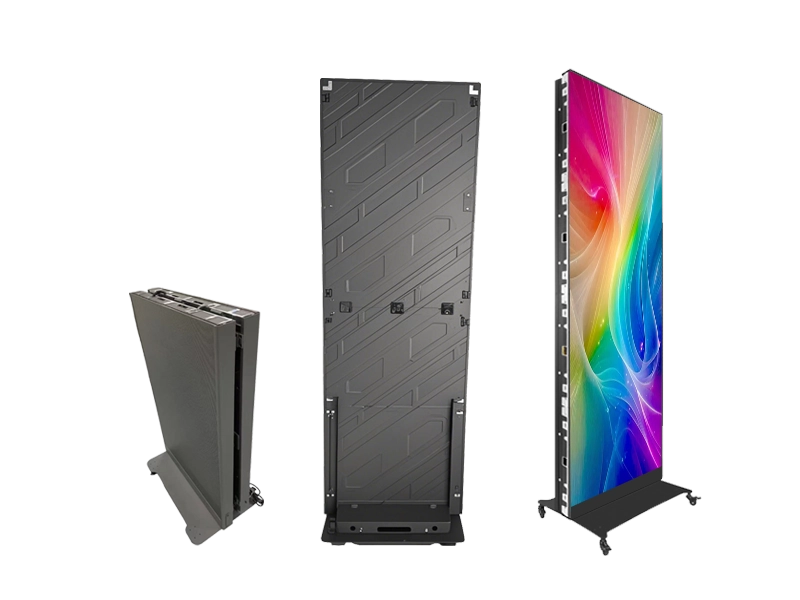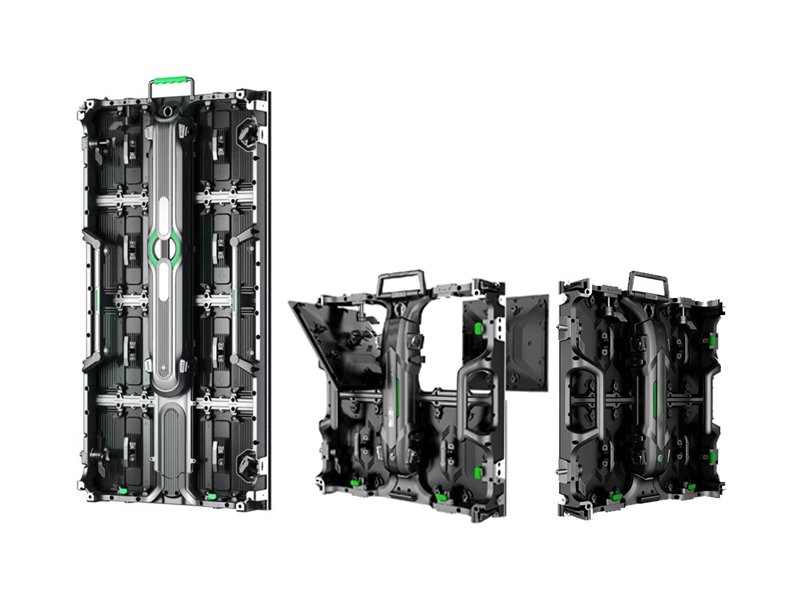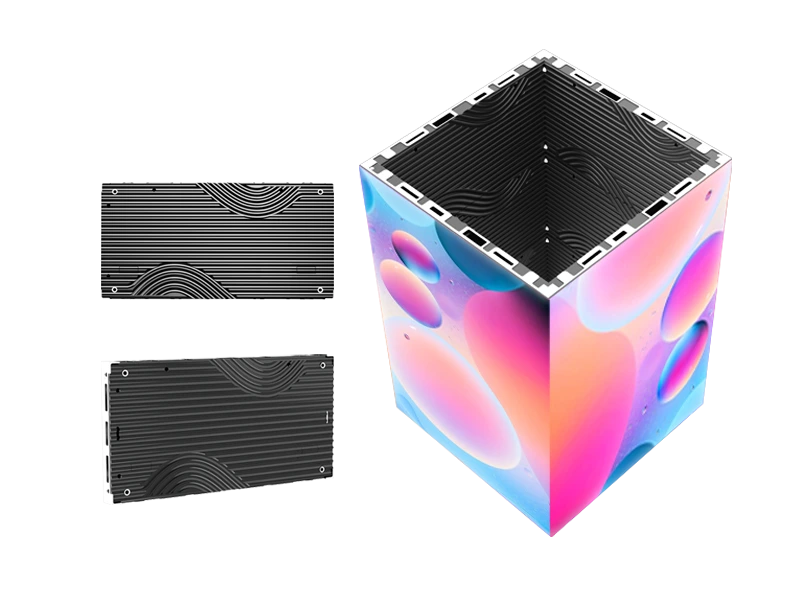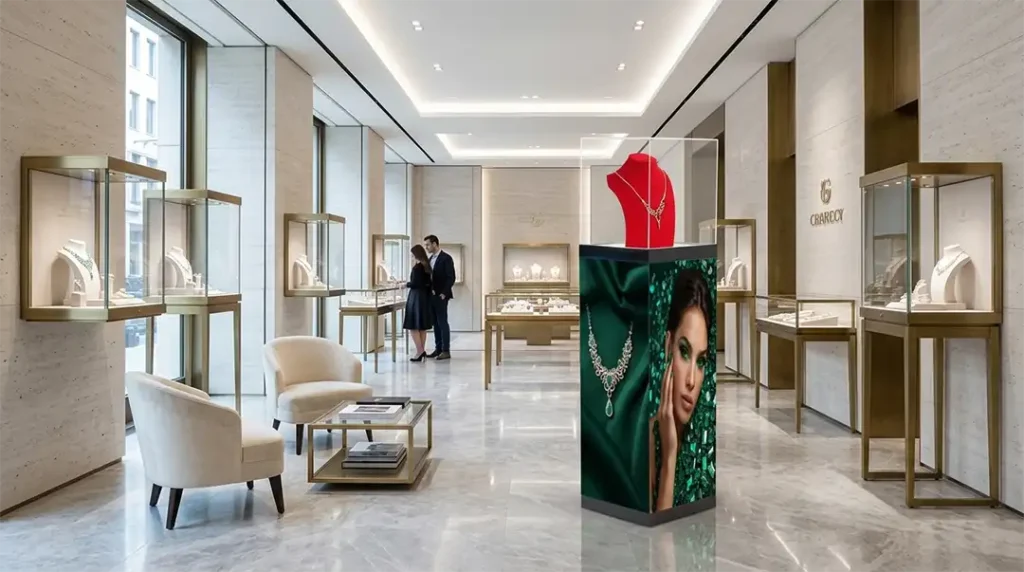
Let me paint a picture for you. A customer walks into your watch boutique. He’s seen the same Rolex or Omega displays in five other stores—black velvet, a spotlight, maybe a tiny placard with specs. He glances, nods, and walks out. Nothing stuck. No story. No reason to remember your shop over the one two blocks away.
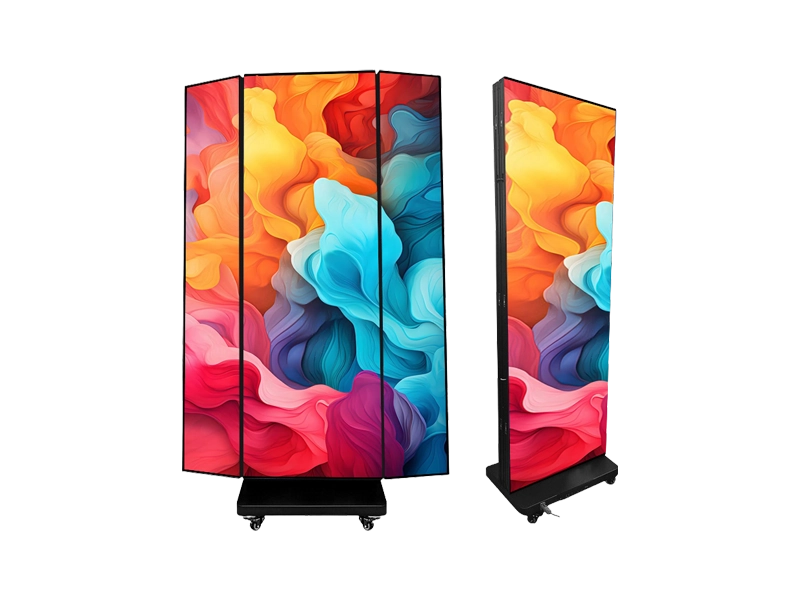
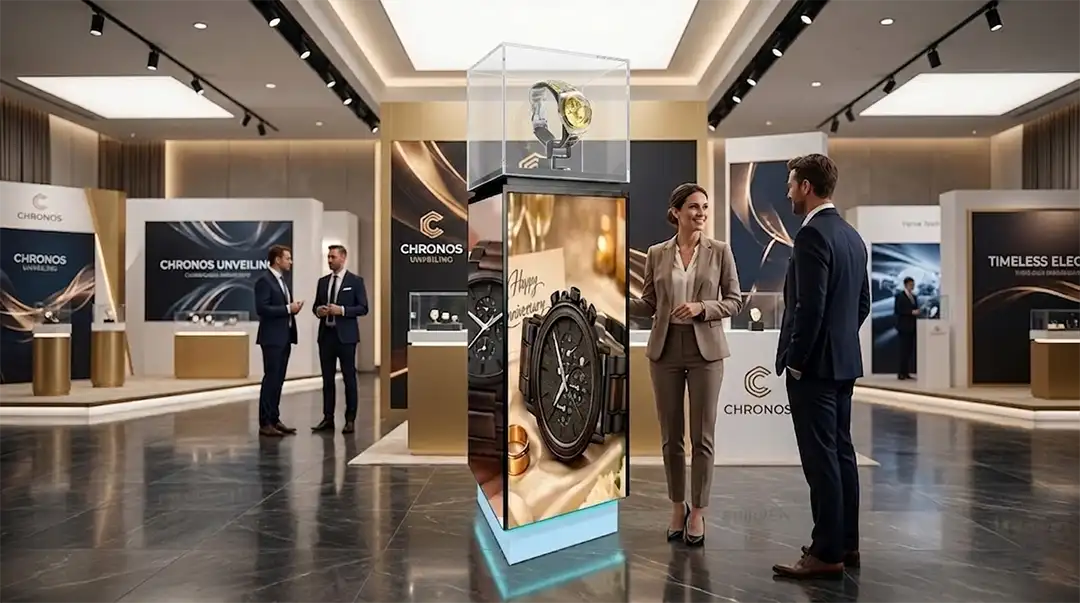
Now imagine the same customer walking past a pedestal that glows with 3D animations. Gears turn in slow motion around the base. The actual watch sits above on a crystal‑clear acrylic top, floating in soft white light. He stops. He circles it. He pulls out his phone. That’s what a 3D LED Pedestal Display Case does for watch retail.
Key Takeaways
- Traditional static watch displays fail to capture the intricate details of movements and finishing—digital pedestals solve this with motion graphics and 360° visibility.
- A 3D LED pedestal display case wraps your watch in animated content that mirrors its internal mechanics, creating a “living brochure” effect that stops foot traffic.
- The illuminated acrylic top keeps the physical watch secure and well‑lit, while the four LED screens tell a brand story from every angle.
- Watches are high‑consideration purchases; adding 30 seconds of immersive digital storytelling directly boosts dwell time and perceived brand value.
- Sourcing from a Shenzhen‑based custom manufacturer like Adhaiwell gives you full control over size, finish, and controller specs—without paying Western retail markups.
What a High‑End Watch Boutique Actually Needs
Watches are not just products. They’re mechanical art. A $5,000 automatic movement has hundreds of tiny parts interacting in perfect harmony—but under a standard glass case, the customer sees a still object. They can’t appreciate the sweep of the second hand, the polish on the bezel, or the depth of the dial unless they ask a salesperson to take it out.
A luxury watch boutique needs three things from a display:
- Attention – The case has to stop people from walking past.
- Education – It should communicate craftsmanship without a salesperson hovering.
- Desire – The presentation must make the watch feel worth its price tag.
Traditional cases deliver none of these. They’re passive. A digital LED pedestal, on the other hand, is active. It moves. It tells a story. And it works 24/7 without a single employee pushing a button.
Traditional vs Digital: A Side‑by‑Side Reality Check
| Feature | Traditional Glass Pedestal | 3D LED Pedestal Display Case |
|---|---|---|
| Visual impact | Static, blends in | Dynamic, draws eyes from across the room |
| Information | Printed card or QR code | Animated text, product callouts, movement graphics |
| Customer engagement | Walk‑up and look | Walk‑around, observe, discuss, share |
| Brand storytelling | Minimal | Full 360° brand narrative |
| Perceived product value | Standard retail | Gallery‑level or museum‑grade |
Ask any watch boutique owner who switched to digital pedestals: the first thing they notice is how customers start circling the display instead of just glancing from three feet away. That circling behavior adds seconds—sometimes minutes—to dwell time. And in luxury retail, more dwell time almost always means higher conversion.
The Visual Magnetism of a 3D LED Pedestal
Why does a 3D LED pedestal work so well for watches? Two reasons: motion and 360° visibility.
Human eyes are hardwired to notice movement. A static watch under glass is essentially invisible to peripheral vision. But an LED screen playing subtle animations—rotating gear trains, sweeping chronograph hands, floating dust particles that mimic a starry sky—triggers an automatic “what’s that?” response. People look up. They walk over.
Once they’re close, the 360° screen ensures that every angle of the pedestal delivers value. Traditional displays have a “front” and “back.” The back is usually blank or holds storage. With a four‑sided LED pedestal, there is no bad side. Customers can approach from any direction and see relevant content. This is critical for watch boutiques where floor layouts often have multiple entry points.
The Killer Combo: Acrylic Top + Screen Content
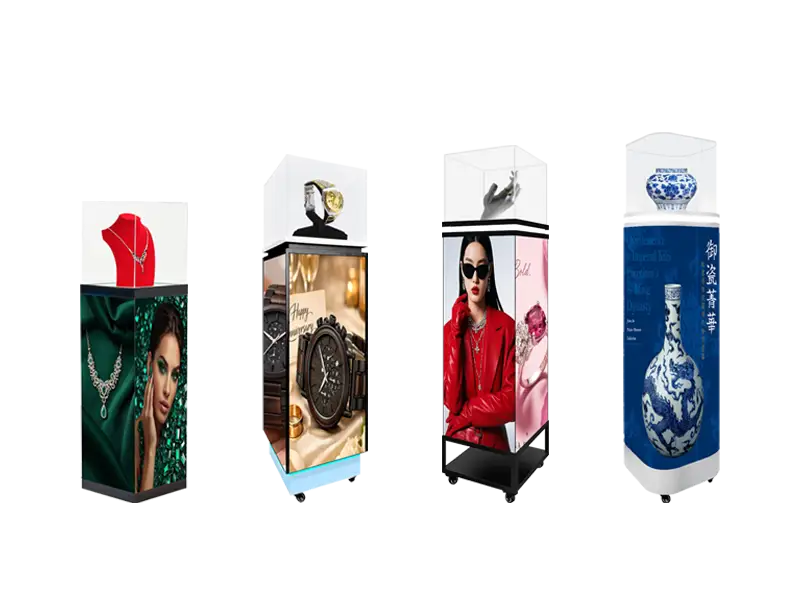
Here’s where the magic really happens. The pedestal isn’t just a screen—it’s a hybrid display. The top is an illuminated acrylic cover where you place the physical watch. The acrylic itself is crystal clear, with zero distortion, and it’s backlit from below so the watch receives even, shadow‑free light.
While the real watch sits up top, the four LED panels below play custom content that complements the product. For example:
- A diver’s watch → underwater bubbles, depth gauge animations, vintage diving footage.
- A pilot’s watch → cloud layers, altimeter dials, cockpit instrument visuals.
- A dress watch → elegant lines, gold dust particles, slow‑motion close‑ups of guilloché dials.
- A skeleton watch → animated exploded view of the movement, rotating balance wheel, gear train in motion.
The customer sees the real watch above and its mechanical soul visualized below. That combination is impossible with a static case. It’s also impossible with a pure digital screen that doesn’t hold a physical product. The hybrid format bridges the gap between e‑commerce convenience and physical retail trust.
What This Does to Dwell Time, Brand Perception, and Conversion
Let’s talk numbers—not fake ones, but observable retail behavior.
A typical watch counter sees an average dwell time of 30–45 seconds for a casual browser. With a 3D LED pedestal that easily extends to 60–90 seconds. Why? Because the customer watches the animation loop once, then walks to the other side to see how the content changes, then leans in to examine the watch under the acrylic light, then asks the salesperson a specific question about what they just saw.
That last part is crucial. Customers who engage with the digital content ask better questions. Instead of “how much is this?”, they ask “the animation showed a tourbillon—does this model have one?” That’s a qualified buyer. Your sales team spends less time explaining basics and more time closing.
Brand perception also jumps. A boutique with digital pedestals looks current, sophisticated, and invested in customer experience. It signals that the retailer cares about presentation as much as the watchmaker cares about movement finishing. That alignment of values is what turns a first‑time visitor into a repeat client.
Why Custom Manufacturing from Shenzhen (Like Adhaiwell) Makes Sense
If you’re an integrator, procurement manager, or retail designer sourcing for a watch brand or multi‑store chain, you have two options: buy off‑the‑shelf from a Western distributor, or go directly to a Shenzhen LED factory and customize exactly what you need.
Off‑the‑shelf sounds easier, but here’s what you actually get: limited sizes, generic black or white finishes, no control over controller brand, and a 200–300% markup because you’re paying for warehousing, sales commissions, and “brand” overhead.
Direct custom manufacturing from a Shenzhen factory like Adhaiwell gives you:
- Custom height and width – Standard watch boutiques might need a lower pedestal (720mm) for seated viewing or a taller one (1000mm) for open floor plans.
- Custom cabinet finishes – Match your boutique’s interior colors—brushed gold, matte black, rose gold, or any RAL code.
- Controller options – NovaStar H series for advanced playback, or a simpler USB‑only unit for basic loops.
- Branded details – Laser‑etched logos on the acrylic edge or the base plate.
- Rigorous testing – 72‑hour burn‑in before shipping, something most resellers skip.
Lead time is about 25–35 days for custom runs. Shipping by air gets you units in 5–7 days door‑to‑door. For large‑scale rollouts (10+ pedestals across multiple stores), the cost savings alone can cut your project budget by 40–50%.
A Real‑World Scenario
Imagine you’re outfitting a new watch boutique in a Dubai mall or a London arcade. You need ten pedestals, each tuned to a different brand or collection. With a custom Chinese manufacturer, you can order five different sizes, three finishes, and two controller variants—all in one production batch. Freight consolidation brings everything on one pallet. Your total cost, including shipping, lands well below what a local AV integrator would charge for just two units.
That’s not theory. That’s how global retail procurement works today.
What to Ask Any Supplier Before You Buy
Before you place an order, get answers to these five questions:
- What’s the exact pixel pitch? For watches viewed up close, demand P1.86 – P2.5 will look pixelated at 1.5 meters.
- Is the LED encapsulated with GOB? If no, skip it. GOB protects against dust, moisture, and accidental bumps.
- What’s the brightness? 650–800 nits is ideal for indoor retail. Anything higher will wash out under spotlights.
- Can I see a demo with watch‑specific content? Don’t accept generic stock footage – ask for a custom clip showing small text and fine lines.
- What is your quality control process? A reliable factory runs every module on a test bench and burns in the full pedestal for 48–72 hours.
Bringing It All Together
A watch boutique is not a supermarket. Your customers are not rushing to grab a gallon of milk. They are making considered, emotional, high‑value decisions. Give them a reason to pause, to circle, to ask a better question. A 3D LED pedestal display case does exactly that—by combining the physical presence of the actual watch with the storytelling power of 360° digital animation.
And when you’re ready to scale beyond one unit, remember: Shenzhen custom manufacturers like Adhaiwell exist to give you better specs, lower costs, and real control over your retail environment. No middlemen. No inflated prices. Just a display case that makes every watch look like the masterpiece it is.